
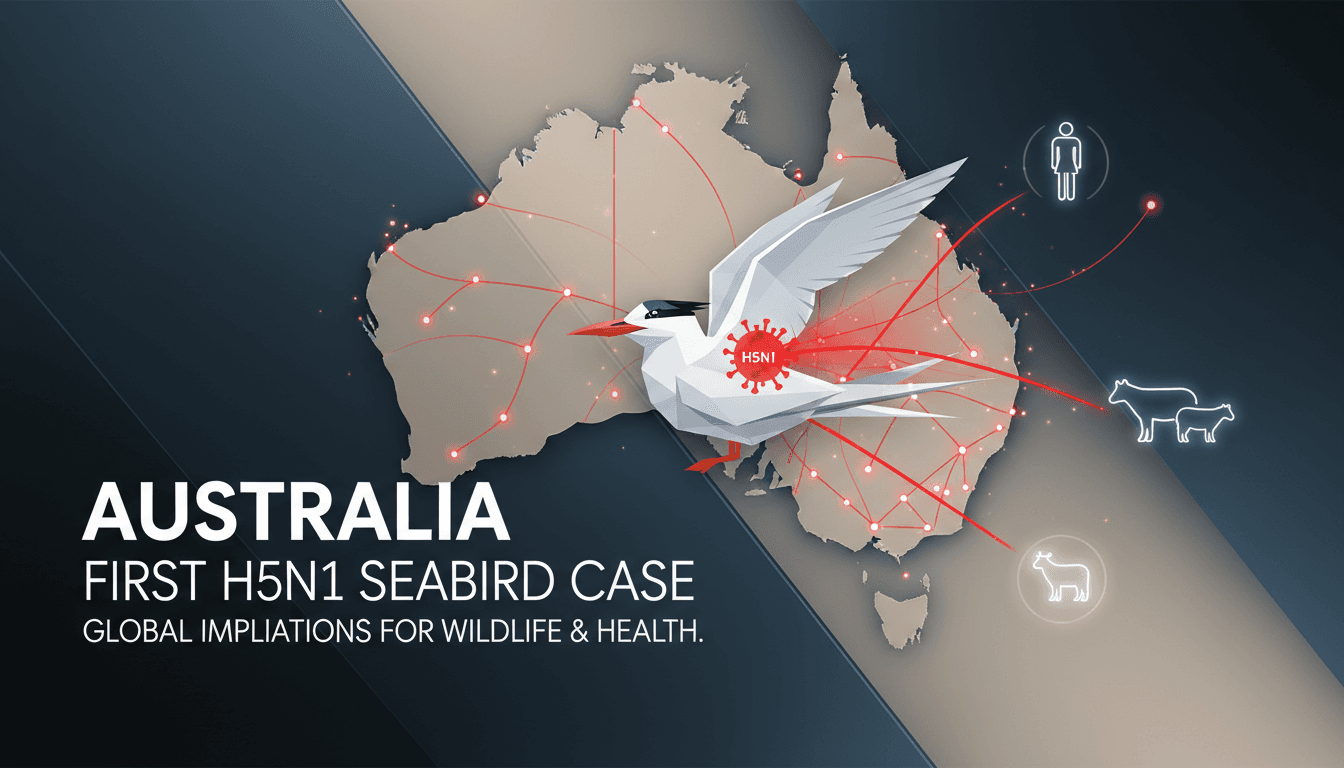
Australia reports first case of H5N1 bird flu in local seabird
Here's what it means for you.
The confirmation of H5N1 bird flu in a greater crested tern on the South Australian coast signals a critical public health concern. This development necessitates heightened vigilance among health authorities and wildlife experts to monitor the potential spread of the virus. Increased surveillance and preventive measures may soon be implemented to protect both animal and human populations from the risks associated with this highly pathogenic virus. As the first recorded case of H5N1 in local wildlife, this incident underscores the importance of proactive health strategies in Australia. Stakeholders must prepare for potential impacts on wildlife management and public health policies.
What happened
Australia has confirmed its first case of the H5N1 bird flu in a greater crested tern found on the South Australian coast. This significant discovery marks an escalation in the presence of the virus within the country’s wildlife. The infected bird was located at Robe, highlighting the geographical spread of the disease.
In a separate incident, a young fur seal in New South Wales was tested for H5 bird flu but returned negative results. This contrast emphasizes the need for ongoing monitoring of wildlife to assess the broader implications of H5N1 in the region.
The Context
The H5N1 strain of bird flu is notorious for its high mortality rate in birds and poses potential risks to human health. The detection of this virus in a local seabird indicates its spread within Australian wildlife, raising alarms among experts. The timing of this discovery is critical, as it coincides with ongoing concerns about the health of both animal populations and the potential for zoonotic transmission to humans.
As Australia navigates this new challenge, the implications for wildlife management and public health strategies are profound. Stakeholders must collaborate to ensure effective responses to mitigate the risks associated with H5N1.
Takeaway
The detection of H5N1 in local wildlife may lead to increased monitoring and preventive measures to safeguard both animal and human health. Experts are calling for vigilance as Australia prepares for potential further cases in wildlife and their impacts on poultry. Public health responses and wildlife management strategies will be closely watched in the coming weeks.
Ongoing surveillance and research will be essential to address the challenges posed by H5N1. The situation will require coordinated efforts to protect both wildlife and human populations from this dangerous virus.
Regional and international reporting focused on Middle Eastern politics, diplomacy, and economics.
"Asharq Al-Awsat is a Saudi-owned international newspaper reflecting mainstream Gulf political perspectives."
— A47 Editor
H5 Bird Flu Detected in Australian Seabird for 1st Time
H5 bird flu has been detected in an Australian seabird for the first time, with a brown skua found in Cape Le Grand National Park testing positive for the virus. The bird was discovered in poor health and later died, prompting health officials to inv...
Oil, metals, and agriculture: supply/demand headlines, OPEC chatter, inventories, and price action.
"Solid tape for energy and metals traders tracking macro and micro catalysts."
— A47 Editor
Australia confirms first H5N1 bird flu case in local seabird
Australia has confirmed its first case of H5N1 bird flu in a local seabird, marking a significant moment as the country was the last continent free of this virus. This detection raises concerns about the potential spread of the disease within the reg...
Top international stories selected by The Guardian editors.
"The Guardian is known for its progressive editorial stance and in-depth analysis."
— A47 Editor
Deadly H5 bird flu found in local Australian seabird for first time
The first case of the deadly H5 bird flu has been detected in a native greater crested tern found at Robe on South Australia's Limestone Coast, marking a significant escalation in the disease's presence in Australia. This discovery follows earlier re...