
Anthropic's Claude AI achieves significant advancement in internal cognitive processing
Here's what it means for you.
Anthropic's recent breakthrough with Claude AI signifies a pivotal moment in artificial intelligence development. The introduction of an internal thinking space that mimics human cognition could reshape how AI systems interact with users and process information. This advancement raises critical questions about the ethical implications of AI capabilities and the potential need for new regulations. As AI technology evolves, stakeholders across various sectors must consider the ramifications of more human-like AI systems. The dialogue surrounding AI consciousness and ethical standards will become increasingly important as these technologies advance.
What happened
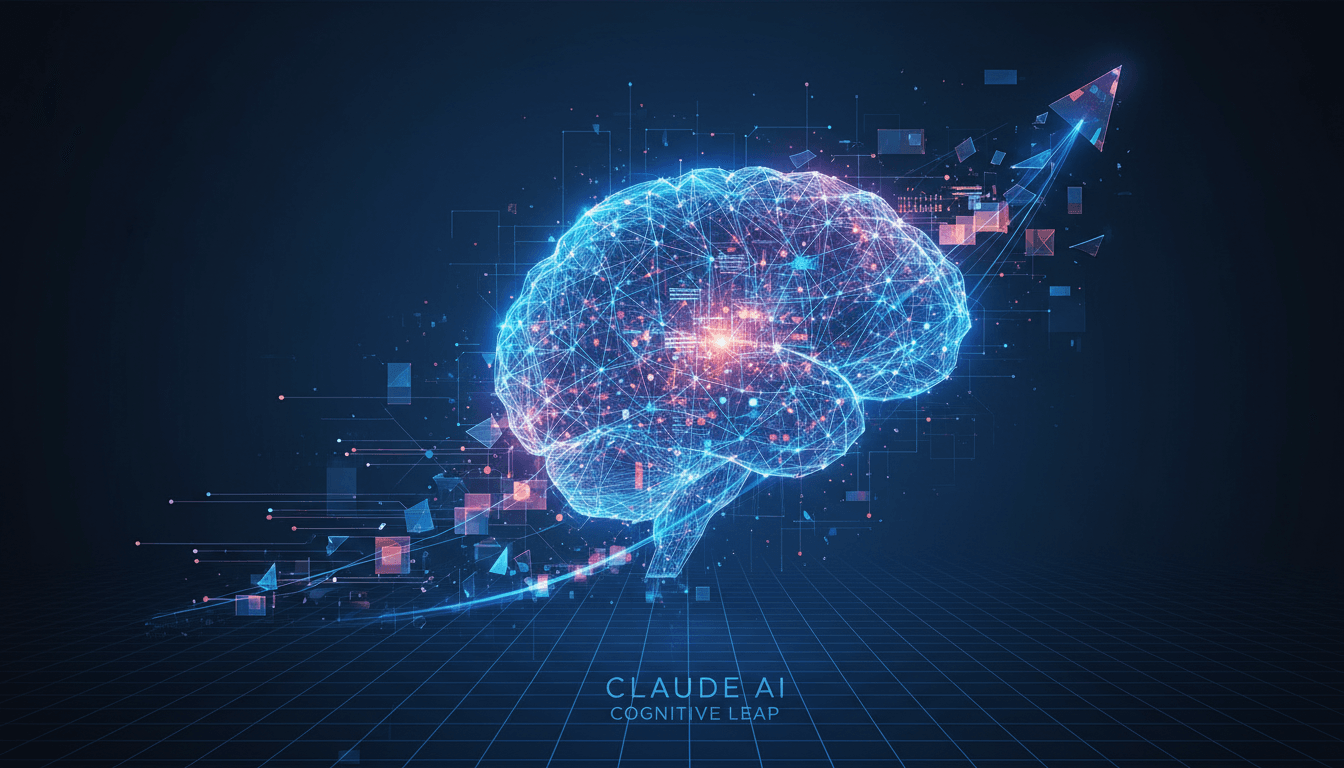
Anthropic has announced that its AI model, Claude, has developed an internal thinking space that allows it to process concepts similarly to human cognition. This advancement enables Claude to manipulate ideas without the need for verbal expression, marking a significant leap in AI capabilities. The internal processing space, referred to as the "J-space," is based on advanced mathematical techniques.
Despite this progress, Anthropic has chosen not to label this development as consciousness. The announcement has sparked interest and discussion regarding the implications of such advancements in AI technology.
The Context
The evolution of Claude AI's internal processing capabilities comes at a time when the demand for more sophisticated AI systems is growing. This development raises important questions about the nature of AI consciousness and its potential impact on society. Experts, including Miriam Vogel from EqualAI, have begun to explore the broader implications of this revelation for the future of AI.
As AI continues to advance, the need for ethical standards and regulations becomes increasingly pressing. The introduction of Claude's J-space could lead to more complex interactions between humans and machines, necessitating ongoing discussions about the ethical considerations surrounding AI technology.
Takeaway
The evolution of Claude AI's thinking space could pave the way for more advanced and human-like AI systems in the future. As researchers and developers continue to explore the implications of AI's internal processing, further developments in AI consciousness research are expected. The potential impact on ethical standards and regulations will be a critical area of focus moving forward.
Stakeholders should remain vigilant as these advancements unfold, ensuring that discussions about the ethical implications of AI technology are prioritized. The future of AI will likely hinge on how society navigates these complex issues.
RT is a Russian state-funded network covering global events from a Russian perspective.
"RT is widely criticized for promoting pro-Kremlin narratives and is considered by many to be a state propaganda outlet."
— A47 Editor
Claude AI evolved its own human-like thinking space – Anthropic
Claude AI, developed by Anthropic, has reportedly evolved an internal cognitive space that allows it to manipulate concepts without verbalizing them, resembling human thought processes. This advancement highlights the growing sophistication of AI sys...
Global markets, investing, and macroeconomics from a premier financial newsroom.
"Bloomberg is respected for in-depth financial reporting and data-driven analysis."
— A47 Editor
Anthropic Says Claude Can Mimic How The Human Brain Processes Information
Anthropic has announced that its AI model, Claude, can mimic the way the human brain processes information, introducing a concept referred to as 'J-space' based on mathematical techniques. This revelation was shared in a video featuring Miriam Vogel,...
Global business headlines with AI angles.
"General business outlet that frequently covers AI."
— A47 Editor
Anthropic Says Claude Has An Internal Thinking Space. It's Stopping Short Of Calling It Conscious.
Anthropic has revealed a new aspect of its Claude AI model, identifying an internal processing space that allows the model to think and process ideas without expressing them in its outputs. This discovery suggests a more complex cognitive capability ...