
U.S. and Israel Plan to Install Ahmadinejad as Iran's Leader Amid Military Operations
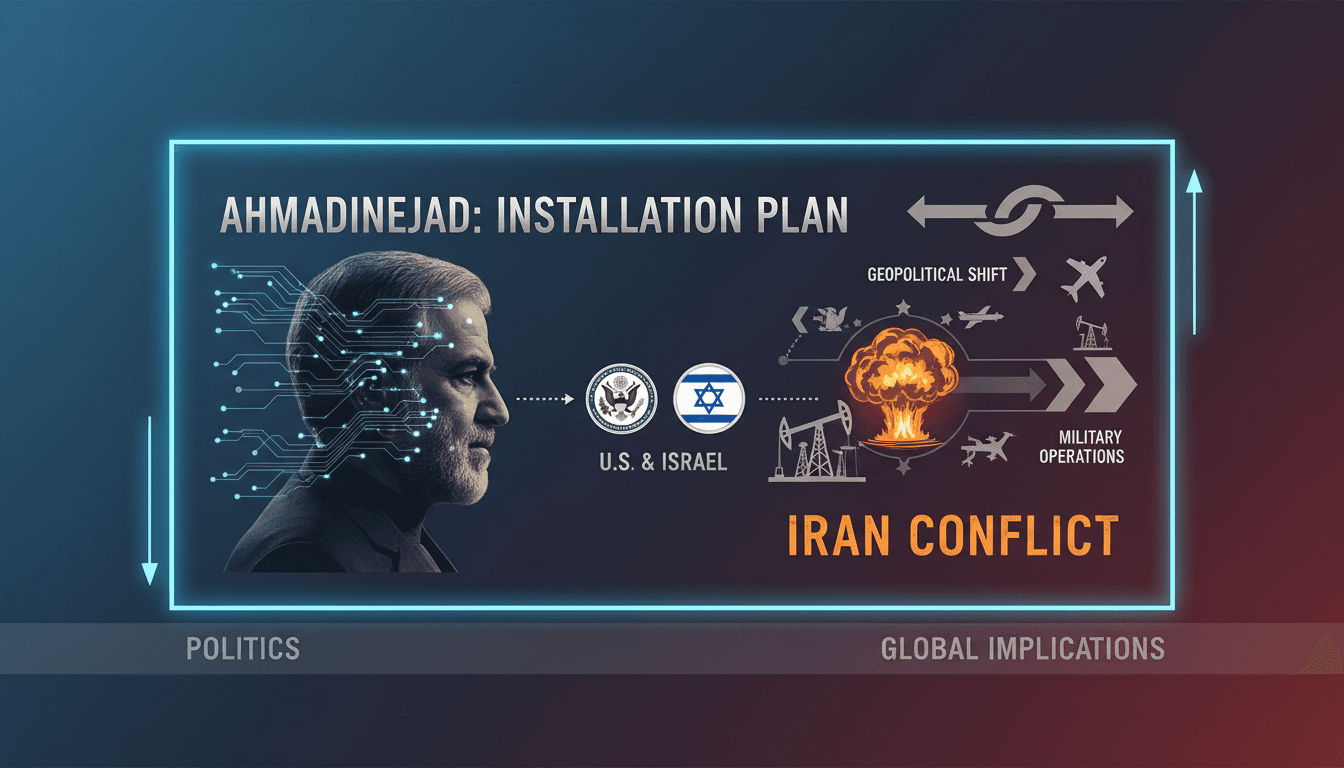
Here's what it means for you.
The reported plan by the U.S. and Israel to install Mahmoud Ahmadinejad as Iran's leader during military operations raises significant questions about the future of U.S.-Iran relations. This audacious strategy could have profound implications for regional stability and geopolitical dynamics. Stakeholders in international policy and security must closely monitor the unfolding situation, as it may redefine alliances and influence future military and diplomatic strategies.
What happened
Recent reports indicate that the U.S. and Israel aimed to install former Iranian President Mahmoud Ahmadinejad as a leader during military actions against Iran. This unexpected strategy has emerged amidst ongoing conflict, raising skepticism about its feasibility and implications. Ahmadinejad, who served as Iran's president from 2005 to 2013, was known for his confrontational stance towards the West, particularly the U.S. and Israel.
The plan reportedly involved freeing Ahmadinejad from house arrest, but it quickly unraveled, leaving his current whereabouts unknown. The revelation of this strategy has sparked significant debate among experts regarding its practicality and the motivations behind such military actions.
The Context
Ahmadinejad's presidency was marked by anti-U.S. and anti-Israel rhetoric, making him a controversial figure in Iranian politics. The timing of this plan coincides with heightened military operations in the region, suggesting a strategic pivot by the U.S. and Israel in their approach to Iran. The complexities of regime change strategies in the Middle East are underscored by this audacious proposal, which raises questions about the potential for future political dynamics in Iran.
As the international community observes these developments, reactions from Iranian officials and other global stakeholders will be critical in shaping the narrative. The implications of this plan could reshape U.S.-Iran relations and influence future geopolitical strategies in the region.
Takeaway
As the situation evolves, it is essential to monitor developments regarding Ahmadinejad's status and any potential role he may play in Iranian politics. Observers should also watch for reactions from Iranian officials and the international community regarding the U.S.-Israel strategy. The long-term impact of this plan could significantly alter the landscape of U.S.-Iran relations and broader geopolitical strategies in the Middle East.
The complexities surrounding this situation highlight the need for careful analysis and understanding of the motivations driving military actions in the region.
Arabic-language coverage of international news and geopolitics.
"RT Arabic is a Russian state-funded outlet often criticized for promoting Kremlin-aligned narratives."
— A47 Editor
هل "الخطة الاستخباراتية الإسرائيلية الأمريكية" حول أحمدي نجاد صحيحة؟ خبراء يعلقون
A report by The New York Times has raised doubts among experts regarding a potential intelligence plan by the United States and Israel to support former Iranian President Mahmoud Ahmadinejad in taking leadership in Iran. The report has sparked signif...
Regional and international reporting focused on Middle Eastern politics, diplomacy, and economics.
"Asharq Al-Awsat is a Saudi-owned international newspaper reflecting mainstream Gulf political perspectives."
— A47 Editor
Report: Early War Goal Was to Install Ahmadinejad as Iran’s Leader
A recent report indicates that an early objective of the war was to establish Mahmoud Ahmadinejad as the leader of Iran. This revelation sheds light on the geopolitical strategies and intentions behind military actions in the region.
Capitol Hill news, legislation, and policy insight.
"The Hill specializes in U.S. politics and policy, with a focus on Capitol Hill developments and a reputation for insider reporting."
— A47 Editor
Report: U.S., Israel eyed Ahmadinejad as Iran’s leader in regime change plan
A report from The New York Times indicates that the U.S. and Israel may have considered Mahmoud Ahmadinejad, Iran's former president, as a potential leader in a regime change plan amid ongoing military actions against Iran. This surprising choice hig...
International coverage from The Guardian's global desks.
"The Guardian is known for its progressive editorial stance and in-depth analysis."
— A47 Editor
US and Israel ‘hoped to install Ahmadinejad as Iran’s leader’
Recent reports indicate that the United States and Israel had plans to install Mahmoud Ahmadinejad as Iran's leader, aiming to leverage his populist appeal against the current regime. This claim has emerged amidst ongoing military conflicts and polit...
Global news coverage with extensive reporting on Middle Eastern conflicts and geopolitics.
"Al Jazeera is a Qatar-based broadcaster known for wide regional coverage and alternative perspectives."
— A47 Editor
US and Israel planned to install Ahmadinejad as Iranian leader, NYT says
A report by The New York Times reveals that the United States and Israel devised a plan to install Mahmoud Ahmadinejad as the leader of Iran. However, this 'audacious plan' quickly fell apart, leaving Ahmadinejad's current location unknown, according...
Comprehensive coverage of Middle Eastern and global issues.
"Al Jazeera is a prominent voice from the Global South, especially the Middle East, with an emphasis on underreported stories."
— A47 Editor
US and Israel planned to install Ahmadinejad as Iranian leader, NYT says
A report by The New York Times reveals that the United States and Israel devised a plan to install Mahmoud Ahmadinejad as the leader of Iran. However, this 'audacious plan' quickly fell apart, leaving Ahmadinejad's current location unknown, according...