
China's manufacturing activity stagnates amid rising energy costs and weakened demand
Here's what it means for you.
The stagnation in China's manufacturing sector signals potential economic challenges ahead. Rising energy costs and weakened global demand could impact various industries, affecting supply chains and operational costs. Stakeholders should closely monitor these trends as they may influence market stability and investment decisions.
What happened
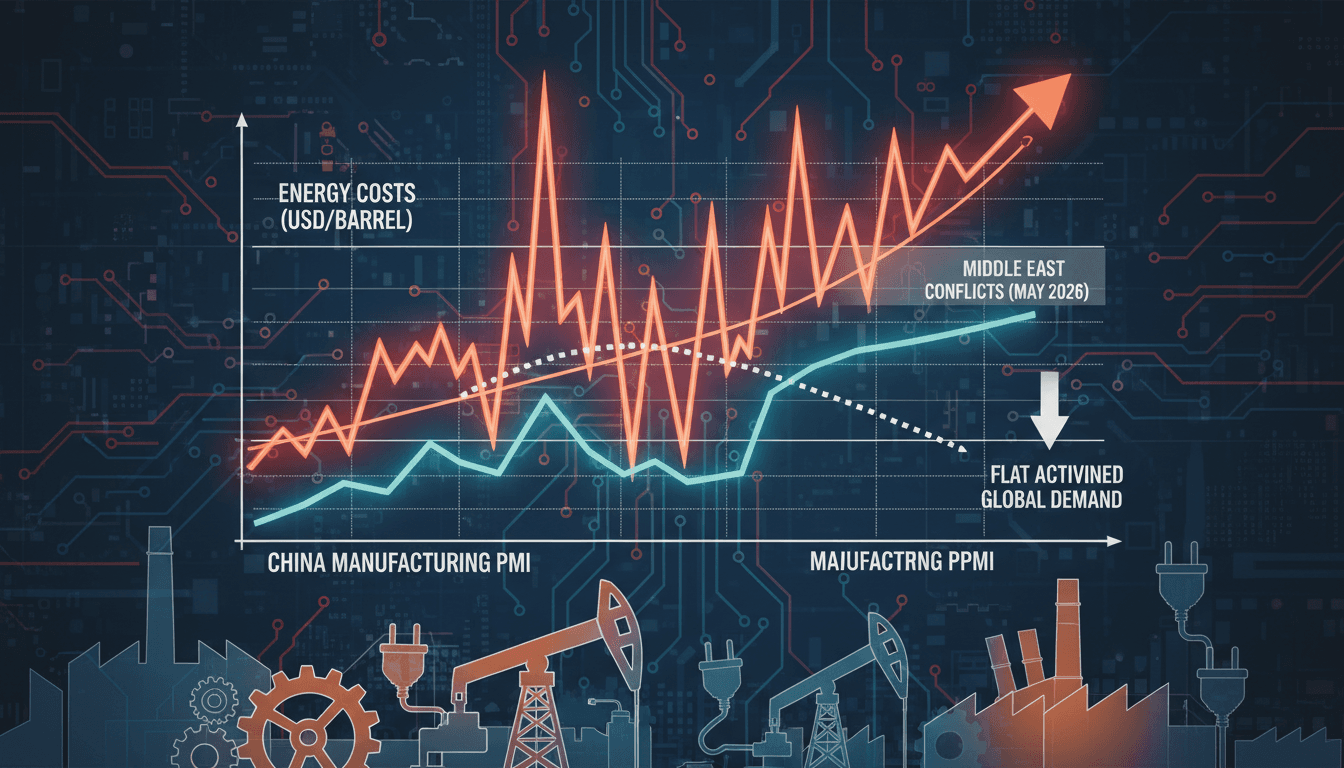
In May 2026, China's manufacturing activity remained flat, marking a halt in growth after two months of expansion. This stagnation is primarily attributed to rising energy costs linked to ongoing conflicts in the Middle East and a decline in global demand. Additionally, a five-day break in operations contributed to the slowdown, further complicating the sector's recovery.
The flat performance is reflected in the Purchasing Managers' Index (PMI), which indicates no growth in manufacturing. This lack of movement raises concerns about the overall health of the economy as input costs continue to rise.
The Context
The flat manufacturing activity follows two months of growth, highlighting a significant shift in the sector's trajectory. Rising energy costs and pressures from global demand are key factors impacting the manufacturing landscape. The ongoing conflicts in the Middle East have exacerbated these energy costs, creating a challenging environment for manufacturers.
As the world's second-largest economy, China's manufacturing sector plays a crucial role in global supply chains. The current stagnation could have ripple effects on international markets, influencing trade dynamics and economic policies.
Takeaway
The outlook for China's manufacturing sector remains uncertain, with potential risks stemming from fluctuations in global demand and rising operational costs. Stakeholders should monitor energy prices closely, as they directly impact manufacturing costs and overall economic stability. Changes in global demand trends will also be critical to watch, as they could either alleviate or exacerbate the current stagnation.
If demand does not recover, the manufacturing sector may face further economic challenges, necessitating strategic adjustments from businesses and policymakers alike.
Macro commentary, policy analysis, growth/inflation themes, and global outlooks.
"Contextual macro coverage that complements day-to-day market headlines."
— A47 Editor
China factory activity slips in May as economic momentum softens
China's factory activity experienced a decline in May, reflecting a broader economic slowdown that has raised concerns among analysts and investors. This downturn follows a period of weak industrial output and retail sales in April, indicating persis...
Social/economic commentary and analysis relevant to business and markets.
"WSJ blends data-driven economic insight with commentary on policy and society."
— A47 Editor
China’s manufacturing activity stayed flat in May after expanding for two straight months, reflecting the pressure from rising energy costs since the Middle East conflict began
China's manufacturing activity remained flat in May, following two months of growth, primarily due to rising energy costs linked to the ongoing conflict in the Middle East. This stagnation indicates challenges within the manufacturing sector amid flu...
Macro commentary, policy analysis, growth/inflation themes, and global outlooks.
"Contextual macro coverage that complements day-to-day market headlines."
— A47 Editor
China factory activity stalls in May as demand weakens
China's factory activity stalled in May, reflecting a significant decline in demand and ongoing challenges within the manufacturing sector. This stagnation follows a period of disappointing industrial output and retail sales growth in April, indicati...
Technology business and AI-related headlines.
"Data-driven tech newsroom with global scope."
— A47 Editor
China Factory Activity Worsens in Warning Sign for Economy
China's factory activity experienced a slowdown in May, attributed to disruptions from a five-day break and ongoing pressures from global demand and rising input costs due to the continuing conflict in the Middle East.
Technology business news, market impacts, and innovation trends.
"Bloomberg is a premier financial and tech news provider, respected for its in-depth reporting and analytical rigor."
— A47 Editor
China Factory Activity Worsens in Warning Sign for Economy
China's factory activity experienced a slowdown in May, attributed to disruptions from a five-day break and ongoing pressures from global demand and rising input costs due to the continuing conflict in the Middle East.
Macro commentary, policy analysis, growth/inflation themes, and global outlooks.
"Contextual macro coverage that complements day-to-day market headlines."
— A47 Editor
China’s factory activity flat in May, PMI shows
China's factory activity remained flat in May, as indicated by the Purchasing Managers' Index (PMI), reflecting ongoing challenges in the manufacturing sector amid a complex economic landscape. This stagnation follows a period of disappointing indust...