
Federal Reserve Beige Book Reports Rising Inflation Amid Geopolitical Tensions
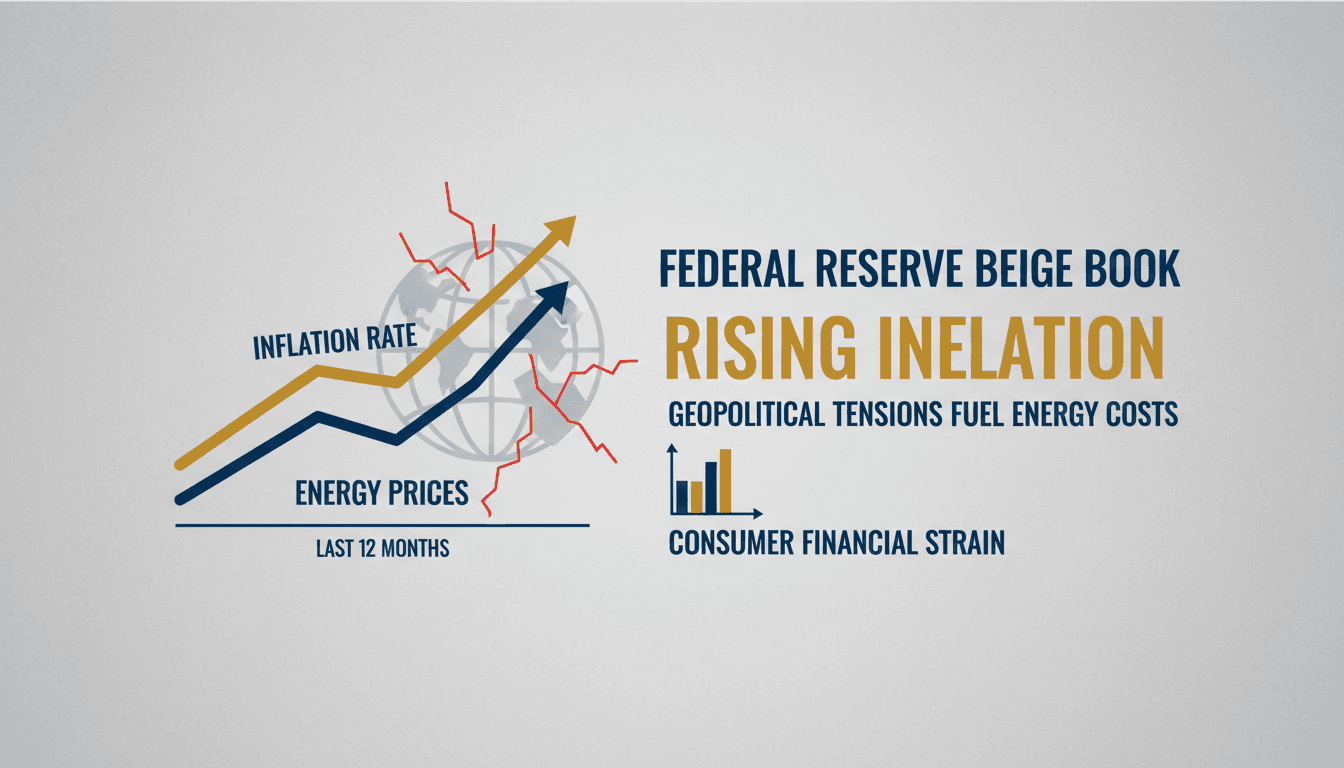
Here's what it means for you.
The Federal Reserve's latest Beige Book highlights the growing inflationary pressures that consumers and businesses are facing, primarily due to rising energy costs. As geopolitical tensions continue, particularly in the Middle East, the economic landscape is becoming increasingly complex. This situation necessitates that businesses adapt their strategies to navigate the financial strain experienced by consumers. With inflation on the rise, policymakers may need to consider adjustments to monetary policy to mitigate these pressures. The ongoing conflict underscores the interconnectedness of global events and domestic economic conditions, making it crucial for stakeholders to remain vigilant.
What happened
The Federal Reserve's Beige Book report, released on June 3, 2026, indicates a continued rise in inflation across most districts, primarily driven by energy prices. While employment levels have remained steady, consumers are increasingly feeling the financial strain from these rising costs. The report reflects the economic uncertainty that U.S. businesses are facing as they navigate these challenges.
This marks the third month of the ongoing conflict in the Middle East, which has significantly impacted energy prices and contributed to inflation. The Beige Book is based on a survey of regional business contacts, providing insights into the economic conditions across various sectors.
The Context
The rising inflation is largely attributed to energy prices, which have been exacerbated by geopolitical tensions in the Middle East. As consumers grapple with increasing costs, businesses are also feeling the pressure to adapt to a shifting economic environment. The report serves as a crucial indicator of the current economic climate, highlighting the challenges that both consumers and businesses face.
The timing of this report is particularly significant, as it comes amid ongoing conflicts that have direct implications for energy supply and pricing. Understanding these dynamics is essential for stakeholders who must navigate the complexities of the current economic landscape.
Takeaway
As inflation continues to rise, it is imperative for businesses and consumers to adapt to the changing economic conditions. Monitoring energy prices will be crucial in assessing further inflationary impacts, while potential policy responses from the Federal Reserve could shape the economic outlook. The uncertainty surrounding these issues suggests that vigilance will be necessary for all stakeholders moving forward.
In the coming months, businesses will need to remain agile in their strategies to mitigate the effects of rising costs. Consumers may continue to face financial challenges, making it essential for businesses to understand and respond to these evolving dynamics.
Social/economic commentary and analysis relevant to business and markets.
"WSJ blends data-driven economic insight with commentary on policy and society."
— A47 Editor
Energy Costs Continue to Feed Inflation, Fed’s Beige Book Shows
U.S. businesses are grappling with continued energy-driven price increases and economic uncertainty, as highlighted in the Federal Reserve's latest Beige Book report. The survey indicates that the ongoing conflict in Iran is a significant factor cont...
Macro commentary, policy analysis, growth/inflation themes, and global outlooks.
"Contextual macro coverage that complements day-to-day market headlines."
— A47 Editor
Fed’s Beige Book shows consumer strain amid rising prices
The Federal Reserve's Beige Book has revealed increasing consumer strain due to rising prices, highlighting the challenges faced by households amid inflationary pressures. This report underscores the growing concern regarding consumer sentiment and s...
Global markets, investing, and macroeconomics from a premier financial newsroom.
"Bloomberg is respected for in-depth financial reporting and data-driven analysis."
— A47 Editor
Fed Beige Book Shows Steady Employment, Higher Inflation
The Federal Reserve's Beige Book indicates that most districts are experiencing higher inflation compared to previous reports, primarily influenced by the ongoing conflict in the Middle East, which has affected energy prices.