
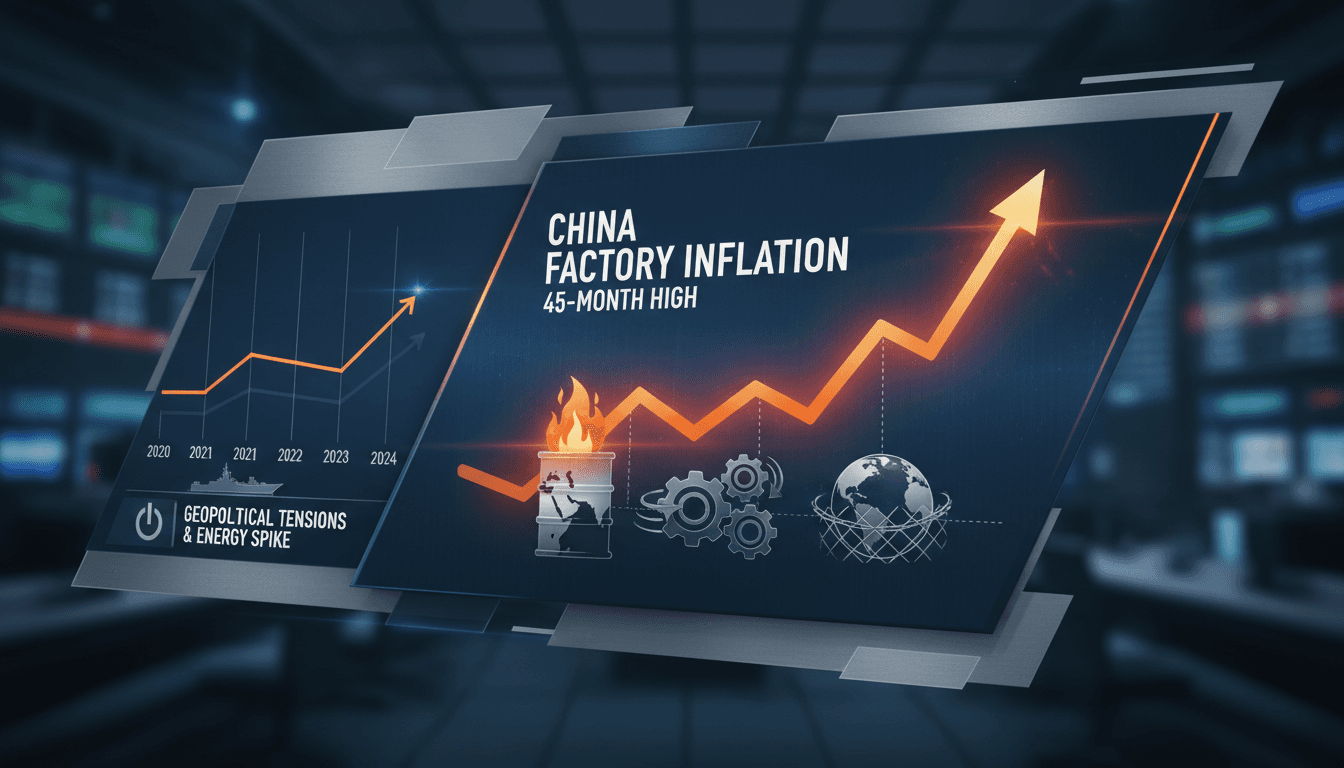
China's factory inflation reaches highest level since pandemic amid geopolitical tensions
Here's what it means for you.
Rising factory inflation in China signals potential challenges for global supply chains and economic stability.
What happened
China's factory-gate prices rose significantly in April, reflecting increased costs due to geopolitical factors.
The Context
- Rising energy costs are attributed to the fallout from the Iran war, impacting factory prices.
- April's producer inflation reached a 45-month peak, indicating a strong shift in the economic environment.
- China is emerging from a prolonged deflationary cycle, raising concerns about economic growth sustainability.
Takeaway
The ongoing geopolitical tensions may continue to influence China's economic recovery and inflation trajectory.
This article was generated by AI from 3 verified sources and reviewed by A47 editorial systems.
Social/economic commentary and analysis relevant to business and markets.
"WSJ blends data-driven economic insight with commentary on policy and society."
— A47 Editor
China Factory-Gate Prices Rise for Second Straight Month
China's factory-gate prices have risen for the second consecutive month in April, marking a shift from a nearly four-year deflationary period. This increase is attributed to heightened geopolitical tensions in the Middle East, which have kept energy ...
Key macro releases (CPI, jobs, PMIs), surprise indexes, and market implications.
"Great for data-print awareness and instant read-through to rates and risk assets."
— A47 Editor
China’s April producer inflation at 45-month peak on energy price shock
China's producer inflation reached a 45-month high in April 2026, primarily driven by a significant shock in energy prices. This surge in inflation reflects the ongoing economic pressures faced by the country, particularly in the context of rising gl...
Global markets, investing, and macroeconomics from a premier financial newsroom.
"Bloomberg is respected for in-depth financial reporting and data-driven analysis."
— A47 Editor
China’s Factory Inflation Hits Post-Covid High After Cost Shock
China's factory prices have surged to their highest level since the onset of the COVID-19 pandemic, driven by rising costs linked to the ongoing conflict in Iran. This inflationary pressure reflects the broader economic fallout as supply chains face ...