
Gold prices rise amid geopolitical tensions and oil price surge
Here's what it means for you.
The recent rise in gold prices signals a heightened sensitivity to geopolitical events and economic indicators. Investors are likely to remain cautious as they navigate the complexities of the market, particularly with the potential for U.S. interest rate hikes looming. This volatility could impact investment strategies and asset allocations in the near term. As oil prices surge and conflicts in the Middle East escalate, the gold market is responding accordingly. Stakeholders should prepare for continued fluctuations as these external factors evolve.
What happened
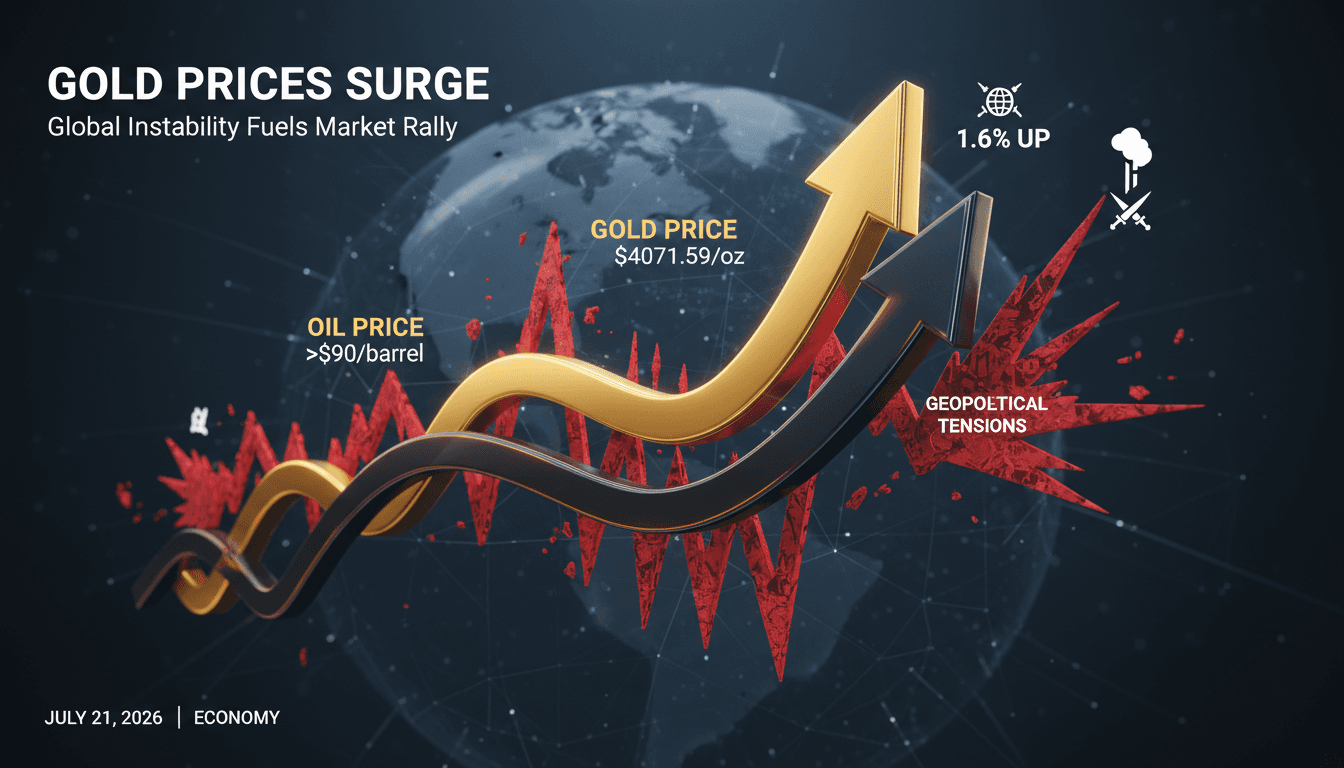
On July 21, 2026, gold prices increased by 1.6%, reaching $4071.59 per ounce after experiencing earlier declines. This rebound was primarily driven by rising oil prices, which surpassed $90 per barrel, alongside ongoing geopolitical tensions in the Middle East. Market participants are also closely monitoring speculation regarding potential interest rate hikes by the U.S. Federal Reserve.
The increase in gold prices reflects a response to these pressures, indicating a shift in market sentiment. Investors are reacting to the interplay of oil prices and geopolitical developments, which have historically influenced gold's value.
The Context
Gold prices have shown significant volatility recently, influenced by both geopolitical tensions and market expectations regarding U.S. interest rates. The price of Brent crude oil has risen sharply, contributing to the overall market dynamics. As conflicts in the Middle East continue, the implications for oil and gold prices remain critical for investors.
The fluctuations in gold prices are not isolated; they are part of a broader narrative involving economic indicators and global events. Stakeholders, including investors and policymakers, must remain vigilant as these factors evolve, shaping the landscape of the gold market.
Takeaway
Looking ahead, the gold market is expected to remain sensitive to ongoing geopolitical developments and economic indicators. Investors should closely monitor announcements from the U.S. Federal Reserve regarding interest rates, as these could significantly impact market dynamics. Additionally, developments in the Middle East will be crucial in determining the trajectory of both oil and gold prices.
As the situation unfolds, stakeholders should prepare for potential volatility, with both upward and downward movements likely based on external influences. The interplay of these factors will continue to shape investment strategies in the coming months.
Jordanian news and regional updates.
"Roya News is a Jordanian outlet focused on breaking news and local affairs."
— A47 Editor
ارتفاع أسعار الذهب واستقرار الدولار مع تقييم الأسواق للجهود الدبلوماسية في الشرق الأوسط
Gold prices have risen by 1.6% in spot trading, reaching $4,071.59 per ounce, while the dollar remains stable as markets assess diplomatic efforts in the Middle East. This increase in gold prices reflects ongoing economic dynamics and investor sentim...
Arabic-language economic and business reporting with strong UAE market relevance.
"Emarat Al Youm business coverage often centers UAE property, banking, consumer issues, and economic policy."
— A47 Editor
الذهب والدولار يسجلان مكاسب جديدة قرب ذروة أسبوعية الذهب والدولار يسجلان مكاسب جديدة قرب ذروة أسبوعية
Gold prices increased during trading today, supported by a decline in oil prices, with spot gold rising by 0.5%. This marks a significant upward trend as gold approaches a weekly peak.
Pan-Arab news coverage spanning politics, business, sports, and regional affairs.
"Asharq Al-Awsat reflects a broad Arab editorial perspective with strong attention to regional geopolitics."
— A47 Editor
الذهب يتراجع مع صعود النفط وتزايد الرهانات على رفع الفائدة الأميركية
Gold prices declined on Monday amid escalating conflict in the Middle East, which has driven Brent crude oil prices above $90 per barrel. This drop in gold prices reflects market reactions to geopolitical tensions and rising energy costs.