
Eni CEO Warns Oil Prices May Exceed $100 by 2027 Due to Middle East Tensions
Here's what it means for you.
The warning from Eni's CEO signals a potential shift in the oil market that could impact global economies and energy policies. If oil prices surpass $100 per barrel, consumers and businesses may face increased costs, influencing inflation and economic stability. Policymakers will need to monitor these developments closely, as sustained high prices could lead to significant changes in energy consumption and investment strategies.
What happened
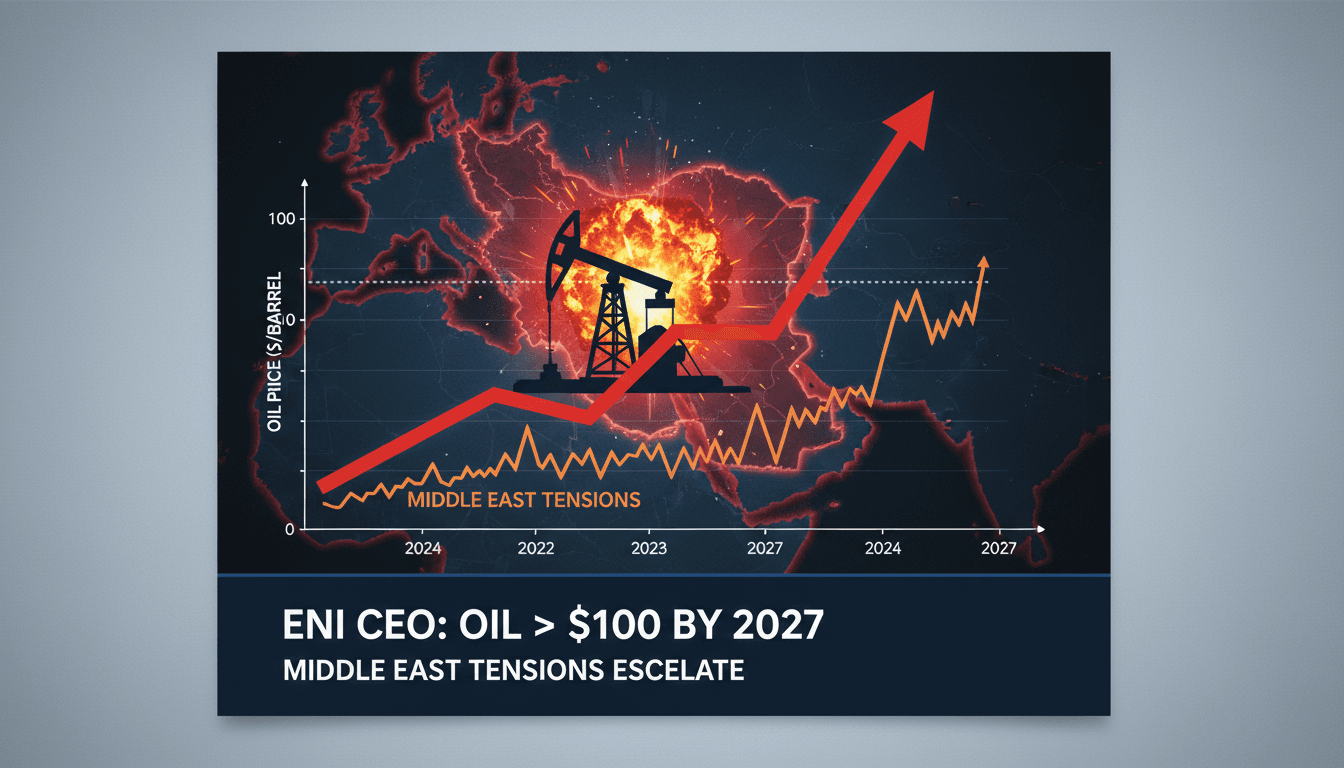
Eni's CEO has cautioned that oil prices could exceed $100 per barrel by 2027 if geopolitical tensions in the Middle East, particularly concerning Iran, continue to escalate. This prediction comes as the oil market currently fluctuates between $80 and $100 per barrel. The ongoing conflict in Iran is a significant factor influencing these price forecasts, suggesting that the market may experience increased volatility in the coming years.
The warning highlights the potential for a major shift in market dynamics, with Eni's leadership emphasizing the need for vigilance regarding geopolitical developments. If tensions persist, the oil market could see substantial price surges, impacting both producers and consumers alike.
The Context
The current state of the oil market is characterized by fluctuating prices between $80 and $100 per barrel, a range that has been stable but is now under threat from geopolitical factors. The conflict in Iran has emerged as a critical element affecting oil price predictions, with Eni's forecast indicating that the situation could lead to significant market instability by early 2027.
Stakeholders in the energy sector, including governments and corporations, are closely monitoring these developments, as they could have far-reaching implications for energy policies and economic conditions. The potential for increased volatility in oil prices underscores the interconnectedness of global markets and the importance of geopolitical stability in maintaining price equilibrium.
Takeaway
As geopolitical tensions remain high, the oil market is likely to experience continued volatility, with prices potentially breaking out of their current range if conflicts escalate further. Observers should monitor developments in the Iran conflict closely, as any significant changes could have immediate impacts on oil prices. Additionally, market reactions to diplomatic efforts aimed at reducing tensions in the region will be crucial in shaping future price trajectories.
The stability of oil prices is highly contingent on these geopolitical developments, making it essential for stakeholders to stay informed and prepared for potential shifts in the market landscape.
Regional and international reporting focused on Middle Eastern politics, diplomacy, and economics.
"Asharq Al-Awsat is a Saudi-owned international newspaper reflecting mainstream Gulf political perspectives."
— A47 Editor
Eni Warns Oil Market Risks Breaking Out of Current Range if Iran War Continues
Eni has issued a warning regarding the oil market, indicating that ongoing military conflicts involving Iran could lead to significant price fluctuations, potentially breaking the current price range. This warning comes amid escalating tensions follo...
Oil, metals, and agriculture: supply/demand headlines, OPEC chatter, inventories, and price action.
"Solid tape for energy and metals traders tracking macro and micro catalysts."
— A47 Editor
Eni CEO warns oil could break above $100 in 2027 if Middle East tensions persist
Eni's CEO has warned that oil prices could exceed $100 per barrel by 2027 if tensions in the Middle East continue to escalate. This prediction comes amid ongoing geopolitical instability, particularly involving Iran and the U.S., which has already le...
Pan-Arab news coverage spanning politics, business, sports, and regional affairs.
"Asharq Al-Awsat reflects a broad Arab editorial perspective with strong attention to regional geopolitics."
— A47 Editor
«إيني» تحذر من عودة ارتفاع أسعار النفط حال استمرار حرب إيران
The CEO of the Italian energy company Eni has warned that global oil prices could rise again if the conflict in Iran continues, predicting that prices will move out of the current range of $80 to $100 per barrel by the first quarter of 2027.