
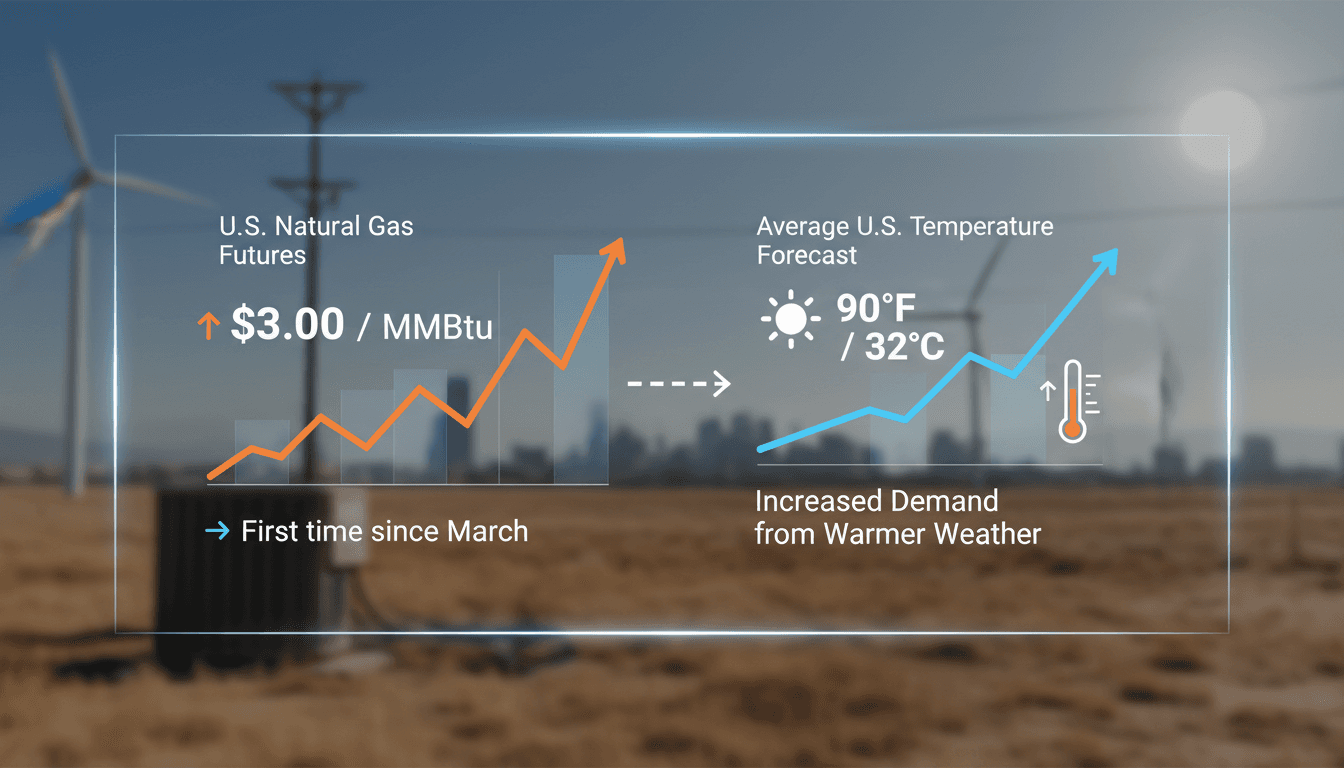
U.S. natural gas futures rise above $3 due to increased demand from warmer weather
Here's what it means for you.
Rising natural gas prices may impact energy costs for consumers and businesses as summer approaches.
What happened
U.S. natural gas futures prices increased significantly due to rising demand from warmer weather forecasts.
The Context
- Natural gas futures have risen for four straight sessions.
- Forecasts indicate hotter weather in the coming weeks, increasing demand for air conditioning.
- Production levels have decreased slightly, contributing to the price increase.
Takeaway
The ongoing rise in natural gas prices suggests a continued demand increase as summer approaches.
Sports reporting with a focus on Saudi and regional competitions.
"Okaz sports coverage is broad and audience-friendly, with strong attention to Saudi teams and leagues."
— A47 Editor
إلى أي مستوى وصلت عقود الغاز بأمريكا؟
U.S. natural gas futures have seen a slight increase, reaching their highest levels in seven weeks, driven by forecasts of warmer weather and a decrease in production over recent weeks. The June futures rose by 3.9 cents, or 1.3%, to $2.999 per milli...
Markets desk coverage, trading insights, and investor updates.
"WSJ’s markets reporting provides in-depth analysis and context for investors."
— A47 Editor
U.S. Natural Gas Futures Gain As Weather Heats Up
U.S. natural gas futures have gained for four consecutive sessions, driven by increased power-sector demand as temperatures rise in the southern U.S. and on the East Coast, although cooler weather is anticipated later in the week.
Global markets, investing, and macroeconomics from a premier financial newsroom.
"Bloomberg is respected for in-depth financial reporting and data-driven analysis."
— A47 Editor
US Natural Gas Futures Top $3 for First Time Since March
US natural gas futures have surpassed $3 per million British thermal units for the first time since March, driven by forecasts indicating hotter weather ahead, which is expected to boost demand for natural gas as air-conditioning usage increases.