
University of Minnesota researchers create first synthetic cell capable of growth and division
Here's what it means for you.
The development of SpudCell by researchers at the University of Minnesota represents a pivotal moment in synthetic biology, with potential implications across various sectors. This innovation could redefine our understanding of life itself, prompting new avenues for research and application in biotechnology. As synthetic life forms gain traction, ethical considerations surrounding their creation and use will become increasingly critical. The emergence of SpudCell may also influence policy discussions regarding the regulation of synthetic organisms, impacting how society approaches biotechnology in the future. Stakeholders in medicine, environmental science, and ethics will need to engage in ongoing dialogue to navigate the complexities introduced by such advancements.
What happened
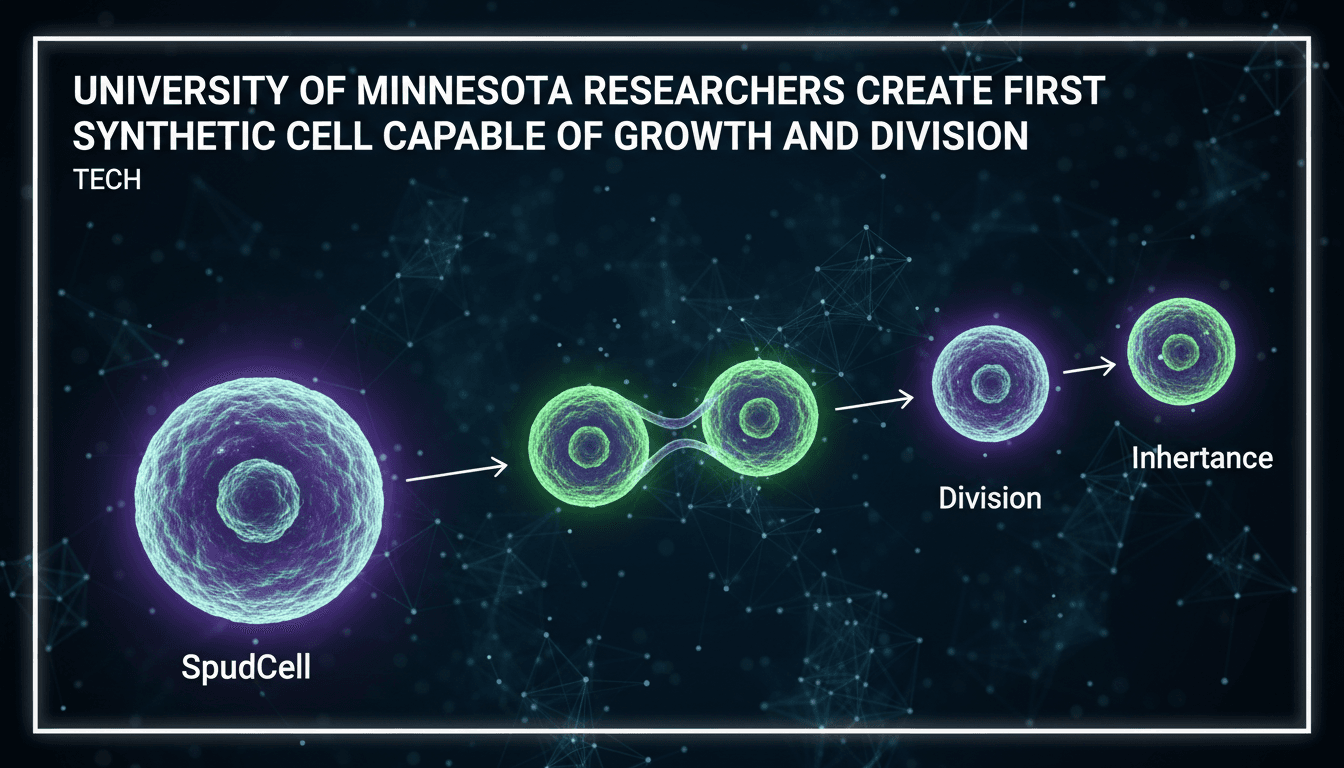
Researchers at the University of Minnesota have successfully created SpudCell, a synthetic cell capable of growth, division, and inheritance of traits. This groundbreaking achievement marks the first instance of a synthetic cell mimicking essential life processes, representing a significant milestone in the field of synthetic biology. The team’s work has sparked interest and discussion about the nature of life and the potential applications of artificial life forms.
SpudCell can grow, feed, divide, and even compete, showcasing its life-like capabilities. The announcement of this development was made on July 2, 2026, and has since garnered media attention for its implications. As researchers continue to explore the boundaries of synthetic life, the conversation around these advancements is expected to evolve.
The Context
The creation of SpudCell is the most sophisticated synthetic cell developed to date, raising important questions about what constitutes life. As technological advancements continue to progress, the interest in synthetic organisms has surged, prompting researchers to explore their potential applications. This breakthrough not only enhances scientific understanding but also invites ethical discussions regarding the manipulation of life.
Concerns have been raised about the implications of creating artificial life, particularly in terms of environmental impact and bioethics. As society grapples with these questions, the role of synthetic biology in shaping future innovations will be closely scrutinized. The timing of this development aligns with a growing recognition of the need for responsible research and application in the field.
Takeaway
The creation of SpudCell could lead to revolutionary advancements in biotechnology, with far-reaching implications for various fields. As research progresses, the focus will likely shift toward understanding the ethical dimensions of synthetic life forms and their potential applications. Ongoing discussions will be essential to navigate the complexities introduced by such innovations.
Future research will explore the implications of synthetic cells like SpudCell, influencing areas such as medicine and environmental science. The dialogue surrounding the ethical considerations of creating artificial life will continue to evolve, prompting stakeholders to engage in meaningful discussions about the future of synthetic biology.
Scientific breakthroughs and research updates.
"Fox News is a highly influential conservative news outlet known for right-leaning political commentary and coverage."
— A47 Editor
'Milestone': Scientists claim to build synthetic cell, raising concerns in step toward artificial life
Researchers at the University of Minnesota have developed 'SpudCell', a synthetic cell that exhibits life-like characteristics such as growth, division, and the ability to pass traits to offspring, marking a significant milestone in synthetic biology...
Conservative-leaning coverage of current events.
"Fox News is a highly influential conservative news outlet known for right-leaning political commentary and coverage."
— A47 Editor
'Milestone': Scientists claim to build synthetic cell, raising concerns in step toward artificial life
Researchers at the University of Minnesota have developed a synthetic cell named 'SpudCell', which is reported to be the most life-like synthetic cell to date, capable of growth, division, and passing traits to its offspring. This advancement marks a...
Discoveries, research, environment, and health innovations.
"New Scientist is a well-respected publication offering accessible science news, commentary, and expert analysis."
— A47 Editor
Synthetic biology may finally be ready to solve life's biggest mystery
Synthetic biologists have made significant strides in understanding the essence of life with the creation of SpudCell, a synthetic cell-like structure that demonstrates characteristics such as growth, feeding, and division. This development marks a p...
Arabic-language sports reporting covering UAE competitions and major international events.
"Emarat Al Youm sports coverage is mainstream and accessible, with strong emphasis on UAE and regional sport."
— A47 Editor
اختراق علمي غير مسبوق.. تطوير أول خلية اصطناعية تنمو وتنقسم ذاتيًا اختراق علمي غير مسبوق.. تطوير أول خلية اصطناعية تنمو وتنقسم ذاتيًا
A team of researchers at the University of Minnesota has achieved a groundbreaking milestone in the field of bioengineering by developing the first synthetic cell capable of self-growth and division. This unprecedented scientific advancement marks a ...
RT is a Russian state-funded network covering global events from a Russian perspective.
"RT is widely criticized for promoting pro-Kremlin narratives and is considered by many to be a state propaganda outlet."
— A47 Editor
Synthetic cell marks new step toward artificial life – researchers
Researchers at the University of Minnesota have developed a synthetic cell capable of copying DNA and dividing, marking a significant advancement in the field of synthetic biology. This breakthrough represents a step closer to creating artificial lif...
Scientific research, space, environment, and health coverage.
"The New York Times is a globally recognized newspaper offering authoritative reporting with a center-left editorial stance."
— A47 Editor
Scientists React to the Lab-Made, Yet Lifelike, SpudCell
Scientists have created SpudCell, a synthetic cell-like structure capable of growth, feeding, division, and competition, prompting discussions about its implications for synthetic biology and the definition of life.