
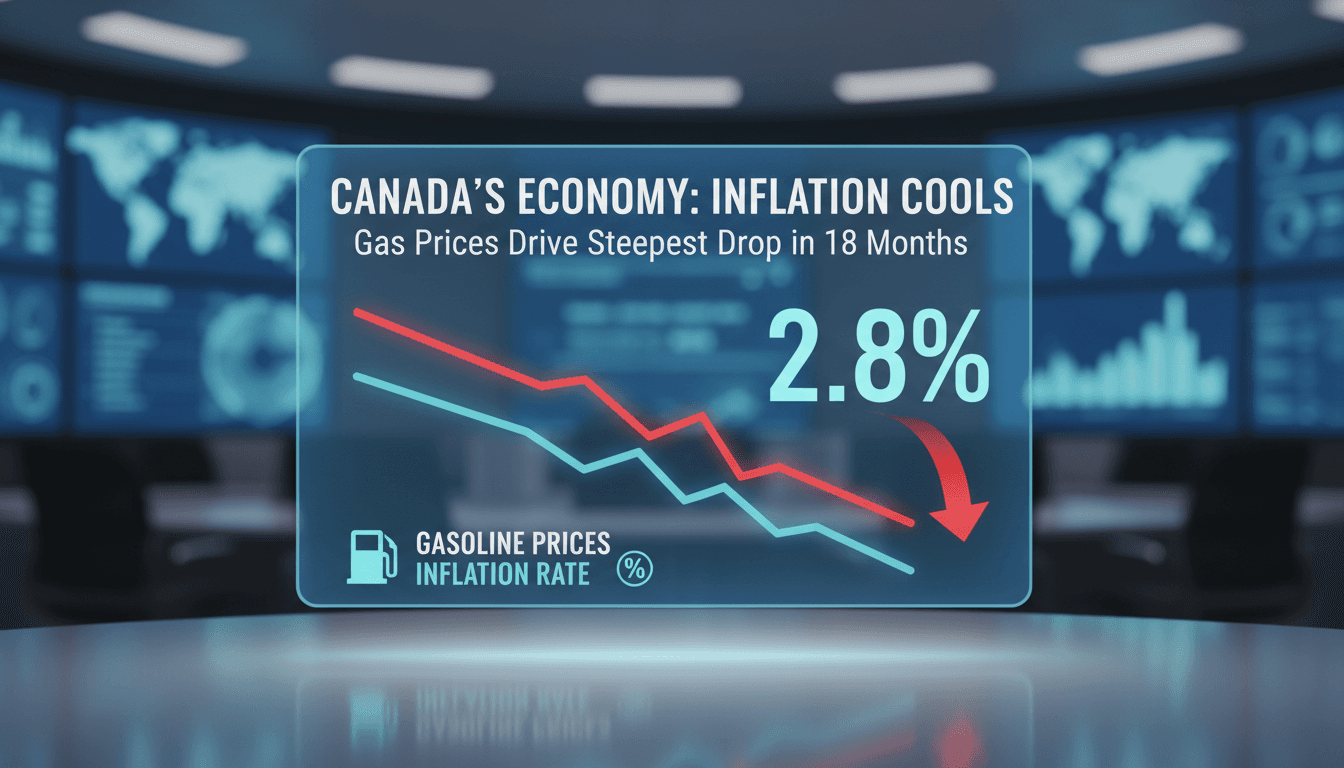
Canada's inflation rate drops to 2.8% as gasoline prices fall
Here's what it means for you.
The recent drop in Canada's inflation rate to 2.8% signals a potential shift in economic stability, primarily influenced by falling gasoline prices. This decline may affect consumer behavior and spending patterns, as lower inflation can lead to increased purchasing power. Additionally, the Bank of Canada may reassess its monetary policy in light of these developments, impacting interest rates and economic forecasts.
What happened
In June 2026, Canada's annual inflation rate decreased to 2.8%, largely due to a significant drop in gasoline prices. This marks the steepest decline in the consumer-price index in 18 months, reflecting broader trends in fuel costs. The consumer-price index fell by 0.4% during this period, indicating a notable cooling of inflation.
This decrease of 0.4 percentage points from the previous month suggests a shift in economic conditions. Statistics Canada reported these findings on July 20, 2026, highlighting that the inflation rate was below forecasts, primarily driven by cheaper fuel.
The Context
The decline in inflation is significant as it reflects changing economic conditions in Canada. Gas prices played a crucial role in this decrease, impacting the overall consumer-price index. Stakeholders, including policymakers and consumers, will be closely monitoring these trends to understand their implications for the economy.
The timing of this report is critical, as it comes after a prolonged period of rising inflation. The Bank of Canada may need to consider adjustments to its monetary policy in response to these developments, which could influence interest rates and economic growth moving forward.
Takeaway
The cooling inflation rate suggests potential stability in the Canadian economy, but ongoing monitoring of fuel prices will be essential. Future gas price trends could significantly impact inflation and consumer spending. As the situation evolves, the Bank of Canada may need to adapt its monetary policy to maintain economic balance.
Stakeholders should remain vigilant as these changes unfold, as they could have far-reaching implications for both consumers and the broader economy.
Social/economic commentary and analysis relevant to business and markets.
"WSJ blends data-driven economic insight with commentary on policy and society."
— A47 Editor
Canada Inflation Cools to 2.8% in June as Gasoline Decelerates
Canada's inflation rate cooled to 2.8% in June, marking a 0.4 percentage point decline, as reported by Statistics Canada. This decrease is attributed to a 0.4% drop in the consumer-price index, the most significant reduction in 18 months, largely dri...
Macro commentary, policy analysis, growth/inflation themes, and global outlooks.
"Contextual macro coverage that complements day-to-day market headlines."
— A47 Editor
Canada’s annual inflation rate cools below forecast on cheaper fuel
Canada's annual inflation rate has cooled below forecasts, primarily due to a decrease in fuel prices, reflecting a broader trend of easing inflationary pressures in the economy.
National coverage of politics and current events across Canada.
"Global News is a mainstream Canadian outlet with a centrist editorial stance, focusing on factual reporting."
— A47 Editor
Inflation cooled to 2.8% in June as gas prices fell, says StatCan
Inflation in Canada cooled to 2.8% in June, driven by a decrease in gas prices, according to Statistics Canada. This marks a notable decline from the previous month's inflation rate of 3.2%, which was influenced by rising oil and gasoline costs.