
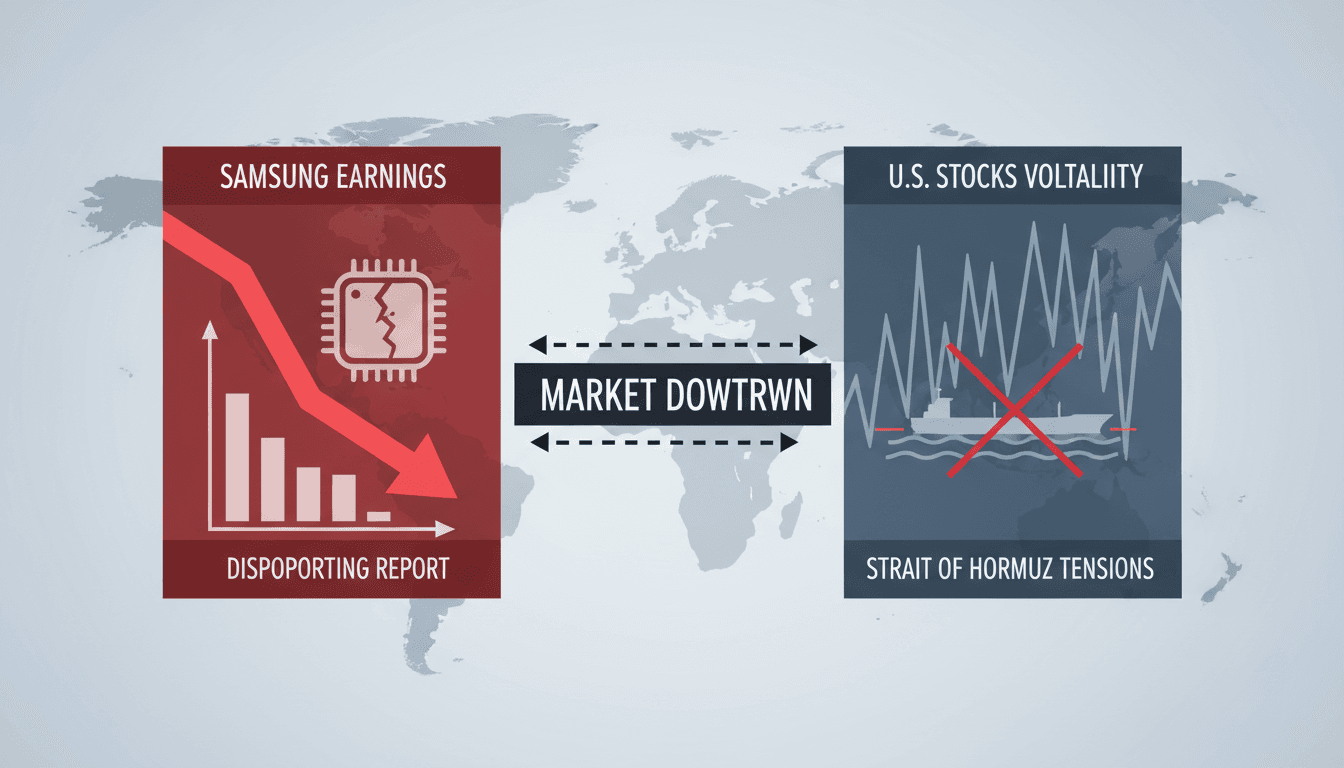
U.S. stocks decline amid disappointing Samsung earnings and Strait of Hormuz tensions
Here's what it means for you.
The recent decline in U.S. stocks signals a cautious sentiment among investors, driven by disappointing earnings from Samsung Electronics and rising geopolitical tensions. This environment may lead to increased volatility, particularly in the technology and semiconductor sectors, as market participants reassess their strategies. Investors are likely to prioritize safety and closely monitor upcoming earnings reports and geopolitical developments.
What happened
U.S. stocks fell sharply as investors reacted to disappointing earnings from Samsung Electronics and renewed geopolitical tensions in the Strait of Hormuz. Despite a remarkable 19-fold profit surge reported by Samsung, the company failed to meet investor expectations, leading to a decline in confidence. Additionally, escalating concerns over U.S.-Iran relations, particularly following renewed attacks on ships in the region, further contributed to the market downturn.
The volatility in the artificial intelligence sector also played a role in this decline, prompting a flight to safety among investors. As a result, the overall market sentiment turned negative, reflecting the interconnectedness of corporate performance and geopolitical stability.
The Context
Samsung Electronics' earnings report, released on July 7, 2026, highlighted a significant profit increase, yet it was not enough to bolster investor confidence. The ongoing NATO Summit in Ankara, Turkey, adds another layer of complexity to the situation, as discussions there may influence global market sentiments. The renewed tensions in the Strait of Hormuz, which escalated on the same day, have raised alarms regarding the stability of oil prices and broader economic implications.
These developments underscore the delicate balance between corporate earnings and geopolitical factors that can sway market dynamics. Investors are now faced with the challenge of navigating this uncertain landscape, where both technology performance and international relations are critical.
Takeaway
Looking ahead, investors will need to remain vigilant as they monitor the potential impacts of the NATO Summit on global markets. Further developments in U.S.-Iran relations will also be crucial, particularly regarding their effects on oil prices and overall market stability. As earnings reports continue to roll in, market participants must adapt to the evolving conditions and reassess their investment strategies accordingly.
The combination of geopolitical tensions and corporate performance will likely keep volatility at the forefront of market discussions in the coming weeks. Staying informed and agile will be essential for navigating this complex environment.
Markets desk coverage, trading insights, and investor updates.
"WSJ’s markets reporting provides in-depth analysis and context for investors."
— A47 Editor
U.S. Stocks Retreat on Worries About AI Trade, Hormuz Fears
U.S. stocks experienced a decline as investors reacted to heightened volatility in artificial intelligence investments, particularly following disappointing earnings from Samsung Electronics and renewed tensions in the Strait of Hormuz.
Global business headlines with AI angles.
"General business outlet that frequently covers AI."
— A47 Editor
Stocks Drop As Chipmakers Fall Again; Oil Climbs With Renewed Tensions At The Hormuz Strait
Stocks experienced a decline on Tuesday as chipmakers faced another downturn, coinciding with rising oil prices due to renewed tensions between the U.S. and Iran. The U.S. has revoked a sanctions waiver following Iranian attacks on vessels in the Str...
Global markets, investing, and macroeconomics from a premier financial newsroom.
"Bloomberg is respected for in-depth financial reporting and data-driven analysis."
— A47 Editor
US Stocks Fall as Samsung Results Fail to Impress | Bloomberg Brief 7/07/2026
US equity futures declined following disappointing reactions to Samsung's earnings report, which, despite a remarkable 19-fold profit increase, failed to meet investor expectations. This downturn in the tech sector was exacerbated by concerns over ge...