
U.S. Military Escorts Commercial Vessels in Strait of Hormuz Amid Rising Tensions
Here's what it means for you.
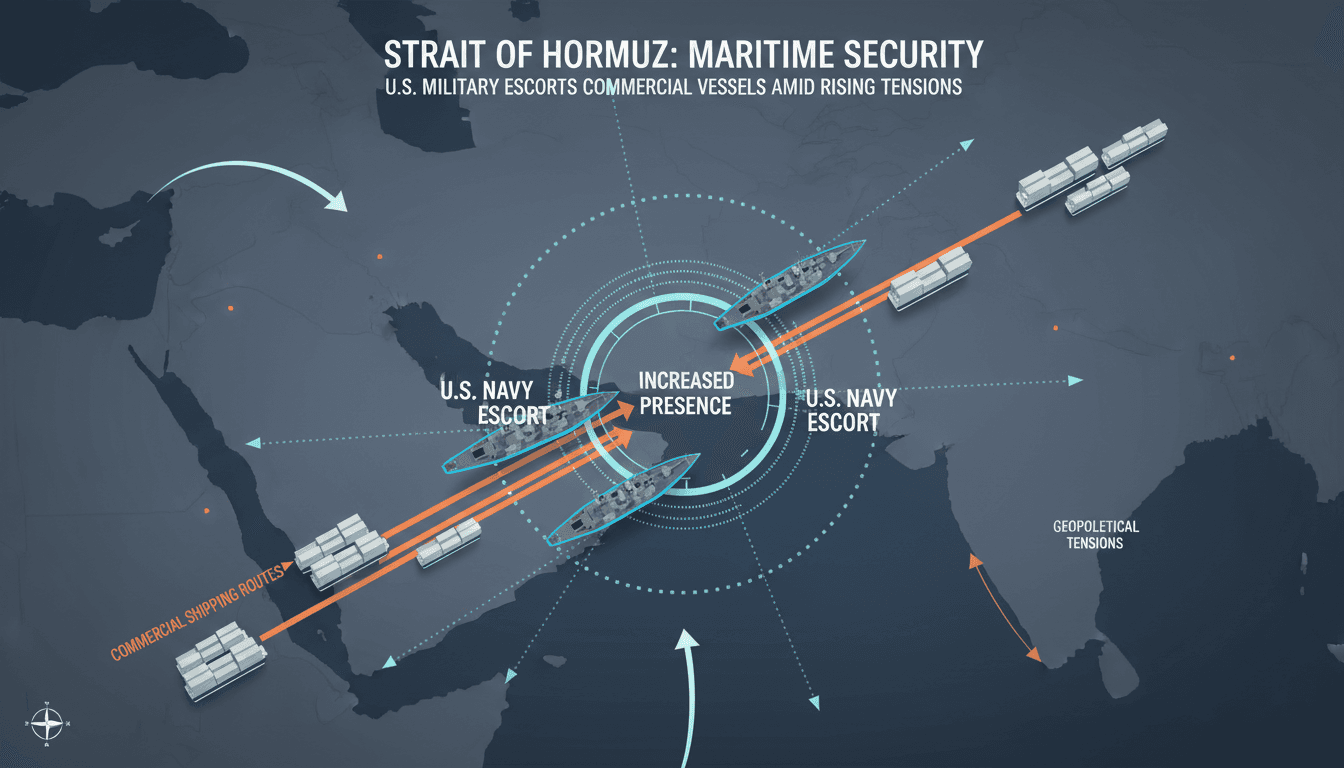
The U.S. military's recent escort of commercial vessels in the Strait of Hormuz highlights the ongoing geopolitical tensions affecting global trade routes. This action underscores the importance of maritime security, particularly for oil shipments that are vital to the world economy. Stakeholders in shipping and energy sectors should remain vigilant as these developments may influence market stability and operational costs. As the U.S. increases its military presence, the potential for escalated conflict or diplomatic negotiations becomes more pronounced. Companies reliant on these shipping lanes may need to reassess their risk management strategies in light of these developments.
What happened
In the last 24 hours, U.S. military forces have escorted approximately 20 commercial vessels through the Strait of Hormuz. This operation was initiated in response to rising tensions in the region, which have raised concerns about maritime security. The U.S. Central Command confirmed the escort, emphasizing its commitment to ensuring safe navigation for commercial shipping.
The escort operation involved coordination with the vessels, although some ships managed to transit without prior arrangements with the U.S. military. This proactive measure reflects the strategic importance of the Strait of Hormuz, a critical maritime route for global oil shipments.
The Context
The Strait of Hormuz is a vital chokepoint for international oil trade, making it a focal point for geopolitical tensions. Recent events have heightened concerns among stakeholders, particularly as various geopolitical factors contribute to instability in the region. The U.S. military's involvement aims to safeguard these critical shipping routes against potential threats.
As tensions escalate, the implications for global trade and energy markets become increasingly significant. The U.S. military's actions signal a commitment to maintaining maritime security, which is essential for the uninterrupted flow of goods and resources.
Takeaway
Looking ahead, the U.S. is likely to maintain or even increase its military presence in the Strait of Hormuz to ensure maritime security. This ongoing military engagement may lead to further escalations or prompt diplomatic efforts to address the underlying tensions. Stakeholders should monitor U.S. military operations closely, as well as any responses from regional actors, particularly Iran.
The situation remains fluid, and the potential for conflict or negotiation will shape the future of maritime operations in this strategically important area.
Arabic-language coverage of international news and geopolitics.
"RT Arabic is a Russian state-funded outlet often criticized for promoting Kremlin-aligned narratives."
— A47 Editor
"أكسيوس": القوات الأمريكية قامت بمرافقة 20 سفينة في مضيق هرمز خلال اليوم الأخير
Axios reported that U.S. forces escorted 20 commercial vessels through the Strait of Hormuz in the last 24 hours, according to an American official on Sunday. This action highlights the ongoing military presence and operational readiness of U.S. forc...
Pan-Arab political news and analysis.
"Al-Quds Al-Arabi is a London-based Arabic newspaper known for political coverage."
— A47 Editor
أكسيوس: نحو 20 سفينة تجارية عبرت مضيق هرمز بتنسيق مع الجيش الأمريكي
Axios reported that approximately 20 commercial vessels have crossed the Strait of Hormuz in coordination with the U.S. military, highlighting ongoing maritime activities in a strategically vital region. This development underscores the importance of...
Egyptian politics, economy, and society coverage.
"Al Masry Al Youm is a major Egyptian newspaper with broad national coverage."
— A47 Editor
أكسيوس: نحو 20 سفينة تجارية عبرت مضيق هرمز خلال 24 ساعة
Axios reported that approximately 20 commercial vessels transited the Strait of Hormuz within a 24-hour period. The U.S. Central Command (CENTCOM) dismissed Iranian claims regarding casualties as propaganda.