
Suicide bombing in Quetta, Pakistan kills over 30 people
Here's what it means for you.
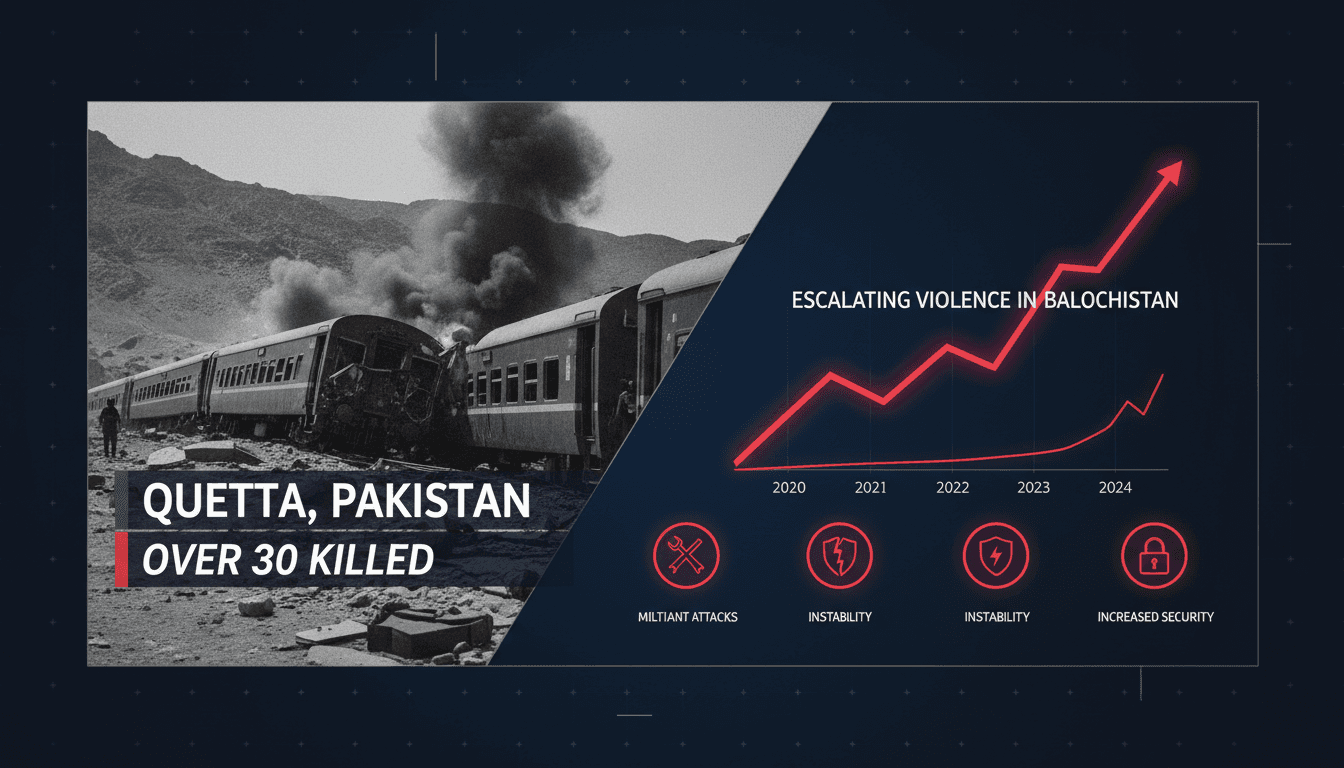
The recent suicide bombing in Quetta underscores the escalating violence in Balochistan, which poses significant challenges for local governance and security. This incident not only highlights the risks faced by civilians but also raises concerns for policymakers regarding the stability of the region. As the death toll rises, the potential for further attacks necessitates a reassessment of security measures and political strategies in Balochistan.
What happened
On May 25, 2026, a suicide bomber detonated an explosives-laden vehicle alongside a passenger train in Quetta, Pakistan, resulting in at least 30 fatalities. Initial reports indicated 23 deaths, but the toll increased as more victims were identified. The attack has been attributed to Balochistan separatist militants, marking one of the deadliest incidents in the region in recent years. Additionally, at least 70 people were reported wounded in the attack, further emphasizing the devastating impact of this violence.
The Context
The bombing is part of a broader trend of rising violence in Balochistan, linked to ongoing separatist movements. The region has seen an increase in attacks targeting civilians and infrastructure, reflecting a deteriorating security situation. This incident raises alarms about the potential for further instability, as the conflict continues to escalate. Stakeholders, including local authorities and security forces, are now faced with the urgent need to address these threats and protect the civilian population.
Takeaway
The escalation of violence in Balochistan suggests a high potential for further attacks, prompting a need for increased security measures. Observers should monitor the response from Pakistani authorities and security forces in the aftermath of this tragedy. Additionally, potential retaliatory actions from separatist groups may emerge, complicating the already tense situation. The ongoing conflict necessitates a reassessment of the political landscape in the region to mitigate future violence.
Global news coverage with extensive reporting on Middle Eastern conflicts and geopolitics.
"Al Jazeera is a Qatar-based broadcaster known for wide regional coverage and alternative perspectives."
— A47 Editor
Train bomb in Pakistan’s Baloch region: Why violence is on the rise
Deadly blast in Pakistan marks uptick in Balochistan separatist violence.
Comprehensive coverage of Middle Eastern and global issues.
"Al Jazeera is a prominent voice from the Global South, especially the Middle East, with an emphasis on underreported stories."
— A47 Editor
Train bomb in Pakistan’s Baloch region: Why violence is on the rise
Deadly blast in Pakistan marks uptick in Balochistan separatist violence.
Regional coverage and analysis focused on politics, diplomacy, and business across the Middle East.
"Al-Monitor is known for analytical reporting on Middle East politics and policy developments."
— A47 Editor
Pakistan train bombing kills more than 30 people, official says
A suicide bombing targeting a train in southwestern Pakistan's Balochistan province resulted in the deaths of more than 30 individuals, with officials confirming the toll on May 25. The attack, attributed to separatist militants, involved a bomber ra...
Conservative-leaning coverage of current events.
"Fox News is a highly influential conservative news outlet known for right-leaning political commentary and coverage."
— A47 Editor
Deadly suicide blast rips through Pakistan train route, killing at least 23
A suicide bomber detonated an explosives-laden vehicle alongside an incoming passenger train in Quetta, Pakistan, resulting in at least 23 fatalities and 70 injuries. This attack underscores the ongoing security challenges faced by the region, partic...