
Saudi Arabia enhances global crowd management expertise during Hajj
Here's what it means for you.
Saudi Arabia's advancements in crowd management during the Hajj pilgrimage highlight the importance of innovative strategies in handling large-scale events. As the nation aims to host 100 million visitors by 2030, its methods may serve as a model for other countries looking to improve their event management capabilities. This development underscores the growing significance of technology, particularly AI, in ensuring safety and efficiency in crowded environments. The implications extend beyond the pilgrimage itself, as effective crowd management can enhance tourism and public safety in various sectors. As nations observe and learn from Saudi Arabia's practices, we may see a shift in how large gatherings are organized globally.
What happened
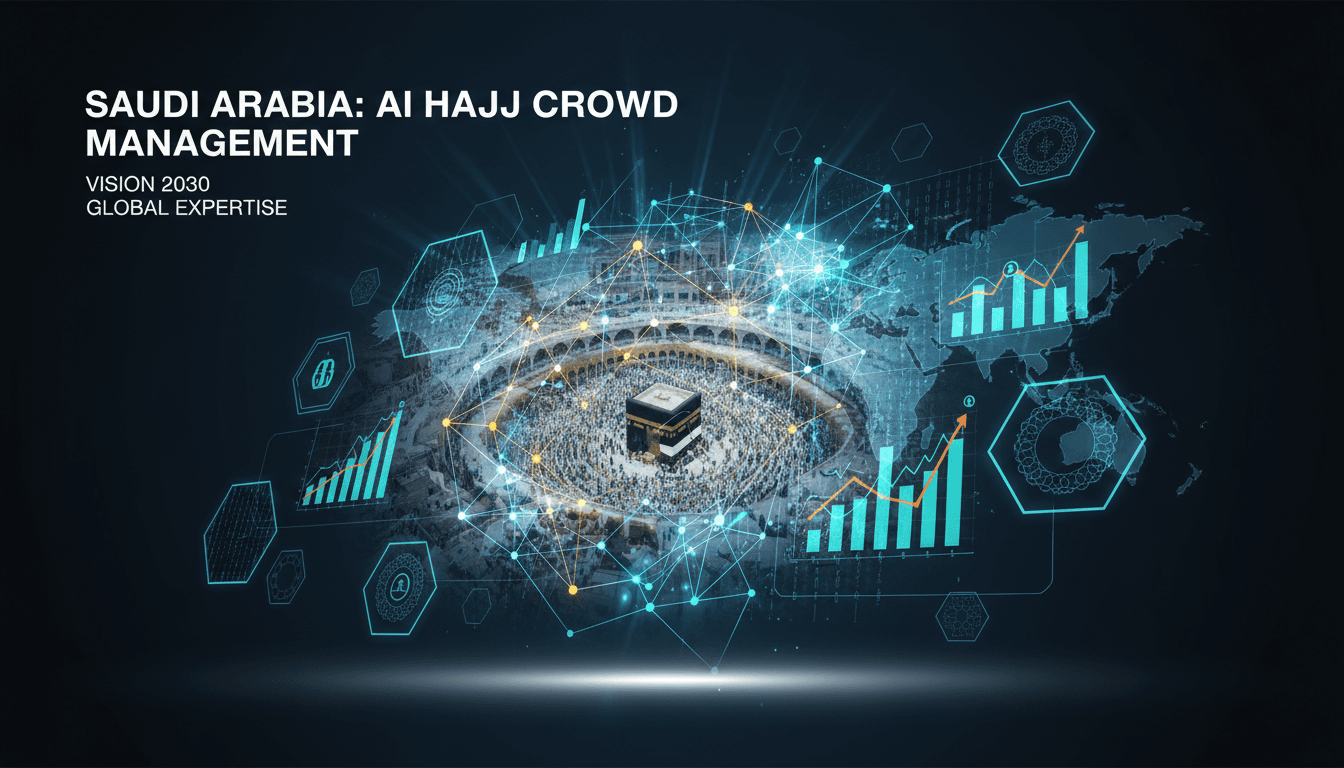
Saudi Arabia successfully managed the influx of millions of pilgrims during the recent Hajj season through advanced crowd management techniques. The country utilized a smart operations center and innovative technologies, including artificial intelligence, to analyze crowd movements and improve logistics. This year marked the first implementation of a smart crowd management system, which played a crucial role in ensuring the safety and smooth movement of pilgrims from 164 different nationalities.
The meticulous planning and execution of these strategies have established Saudi Arabia as a global leader in crowd management. The nation's commitment to excellence in this field has garnered attention from other countries seeking to host large-scale events.
The Context
Saudi Arabia's Vision 2030 initiative aims to host 100 million visitors by 2030, emphasizing the need for effective crowd management. The Ministry of Interior has identified crowd management as a national priority, reflecting the government's dedication to enhancing the pilgrimage experience. The successful management of millions of pilgrims during Hajj not only showcases the country's capabilities but also sets a benchmark for other nations.
As global events become increasingly complex, the strategies employed by Saudi Arabia may influence how other countries approach crowd management. The integration of technology and innovative planning is essential for ensuring safety and efficiency in large gatherings.
Takeaway
As Saudi Arabia continues to refine its crowd management strategies, it sets a standard for other countries hosting large events. The ongoing advancements in technology and the focus on enhancing the pilgrimage experience position the nation as a leader in global event management. Observers should monitor how other countries implement lessons learned from Saudi Arabia's practices, particularly in the realm of smart crowd management systems.
The future of crowd management will likely be shaped by the successful strategies demonstrated during Hajj, paving the way for safer and more efficient large-scale events worldwide.
Arabic-language reporting focused on domestic developments in Saudi Arabia.
"Okaz is a mainstream Saudi newspaper that often reflects domestic priorities and official-facing coverage."
— A47 Editor
فن إدارة الحشود..صُنع في السعودية
Saudi Arabia has established itself as a global leader in crowd management, showcasing its ability to organize millions of pilgrims during the Hajj and Umrah seasons with remarkable efficiency and harmony. This success is the result of years of exper...
Regional and international reporting focused on Middle Eastern politics, diplomacy, and economics.
"Asharq Al-Awsat is a Saudi-owned international newspaper reflecting mainstream Gulf political perspectives."
— A47 Editor
Crowd Management: A Saudi Industry Built on Advanced Planning, Coordination
Saudi Arabia is enhancing its crowd management capabilities through advanced planning and coordination, particularly in preparation for the Hajj pilgrimage, which is expected to attract over 860,000 attendees this year. The Kingdom is implementing ex...
Pan-Arab news coverage spanning politics, business, sports, and regional affairs.
"Asharq Al-Awsat reflects a broad Arab editorial perspective with strong attention to regional geopolitics."
— A47 Editor
إدارة الحشود صناعة سعودية قائمة على التكامل والتخطيط المسبق
The Saudi Ministry of Interior has emphasized that the management and organization of Hajj is a distinctive achievement crafted by national hands, supported by leadership that prioritizes the service of the Two Holy Mosques and their visitors.