
Japanese yen reaches 40-year low against US dollar
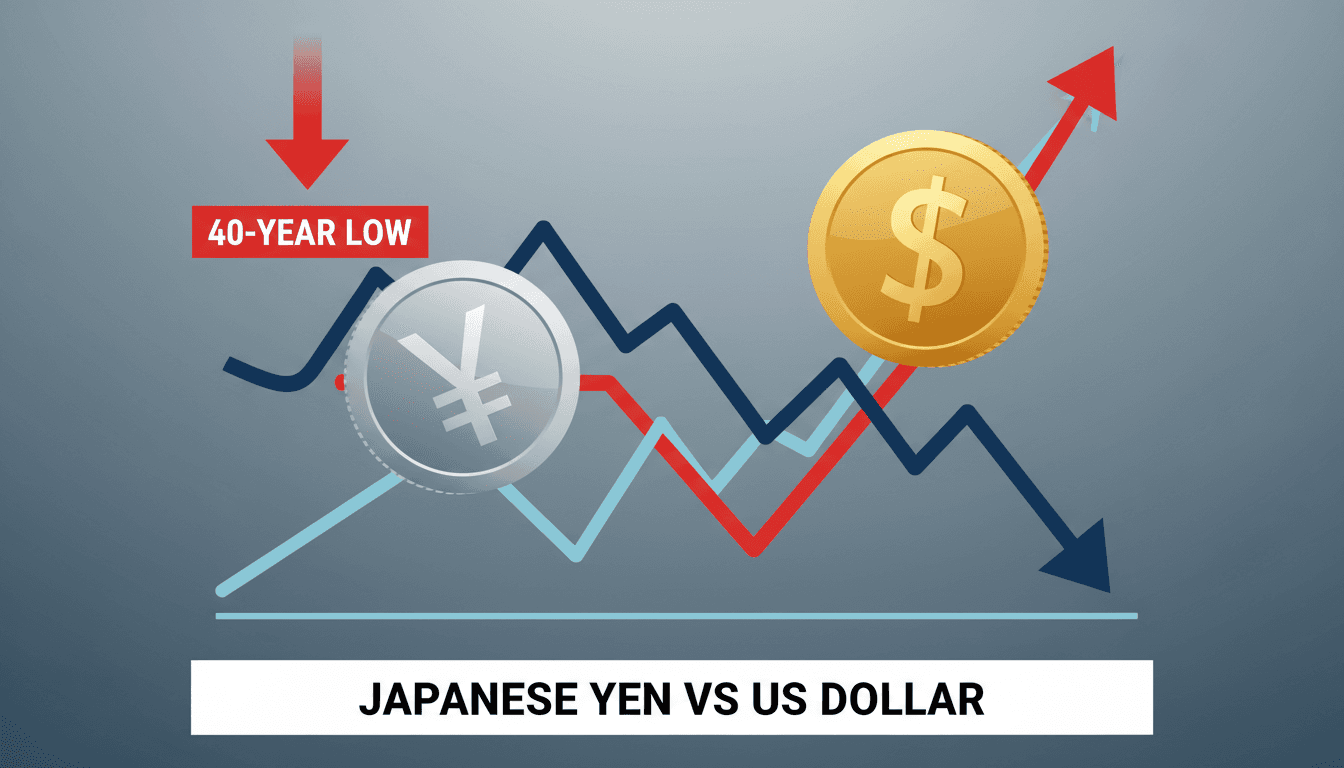
Here's what it means for you.
The Japanese yen has reached its weakest point against the US dollar in four decades, raising significant concerns for investors and policymakers alike. This depreciation could lead to increased volatility in currency markets, impacting trade and investment decisions. As the situation unfolds, market participants will be closely monitoring potential interventions from Japanese authorities to stabilize the currency.
What happened
The Japanese yen has fallen to its lowest value against the US dollar since 1986, marking a significant economic milestone. This decline has been ongoing for several weeks, prompting alarm among traders and analysts. The depreciation of the yen has raised questions about Japan's financial stability and the potential for government intervention in the currency markets.
As the yen continues to weaken, the implications for Japan's economy are becoming increasingly concerning. Market analysts are on high alert, anticipating possible actions from the Bank of Japan to address the situation. The current exchange rate reflects a critical moment in Japan's economic landscape.
The Context
The yen's decline is not an isolated event but part of a broader trend that has been developing over recent weeks. This historic low raises alarms about the overall economic stability in Japan, a country that has faced various financial challenges in recent years. Stakeholders, including traders and policymakers, are particularly focused on the potential for government intervention to stabilize the currency.
The significance of this event is underscored by the fact that it has not been seen in 40 years, highlighting the severity of the current economic situation. As the yen's value continues to drop, the pressure on Japanese authorities to respond grows. The timing of any potential intervention will be crucial in determining the future trajectory of the yen.
Takeaway
Looking ahead, the ongoing depreciation of the yen may lead to increased volatility in the currency markets. Traders should remain vigilant for any announcements from the Bank of Japan regarding intervention strategies. Additionally, market reactions to forthcoming economic data releases from Japan will be critical in shaping the outlook for the yen.
The future of the yen will depend on both market forces and the response from Japanese authorities. As the situation develops, stakeholders will be watching closely for signs of stabilization or further decline. The potential for government action remains a key factor in navigating this challenging economic landscape.
Pan-Arab news coverage spanning politics, business, sports, and regional affairs.
"Asharq Al-Awsat reflects a broad Arab editorial perspective with strong attention to regional geopolitics."
— A47 Editor
الين الياباني يهبط لأدنى مستوى أمام الدولار منذ 40 عاماً
The Japanese yen has fallen to its lowest level against the US dollar since 1986 during trading on Monday, continuing its downward trend that has persisted for several weeks.
Currency market headlines, FX rates, central-bank chatter, and macro drivers moving major pairs.
"Investing.com’s forex stream is useful for fast updates across USD, EUR, JPY, GBP and emerging-market FX."
— A47 Editor
Japanese Yen falls to 40-year low against dollar
The Japanese yen has fallen to a 40-year low against the US dollar, reflecting significant volatility in the currency market and raising concerns among traders and economists about potential government intervention. This decline is attributed to ongo...
Global markets, investing, and macroeconomics from a premier financial newsroom.
"Bloomberg is respected for in-depth financial reporting and data-driven analysis."
— A47 Editor
Yen Hits Four-Decade Low in Historic Slide That’s Rattled Japan
The Japanese yen has fallen to its weakest level against the US dollar since 1986, marking a significant decline that has raised concerns among traders and analysts regarding potential government intervention in the currency market.