
Egypt's non-oil private sector contracts sharply amid rising inflation pressures
Here's what it means for you.
The contraction of Egypt's non-oil private sector signals significant challenges for businesses and the economy at large. Rising inflation and shipping disruptions are creating an environment of uncertainty that could impact consumer spending and investment. Stakeholders must closely monitor these developments to understand their implications for future growth and stability.
What happened
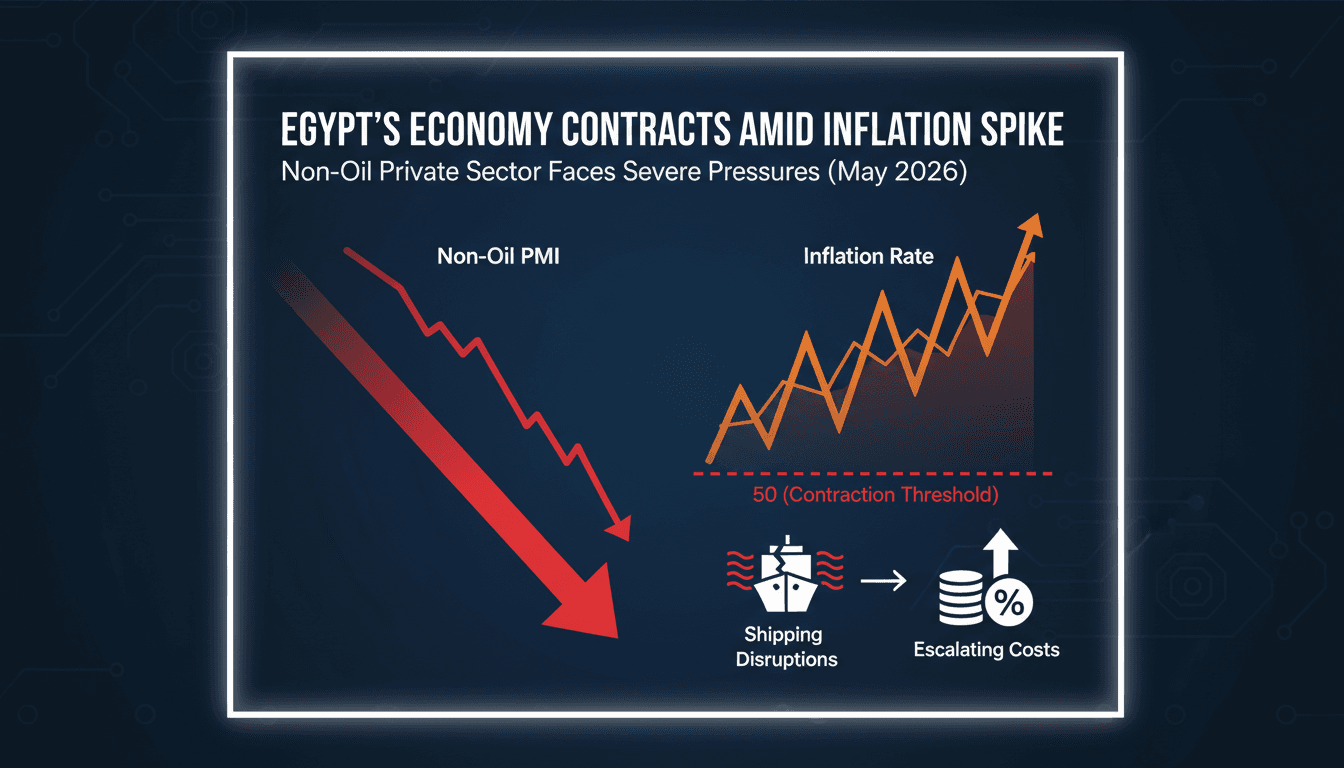
In May 2026, Egypt's non-oil sector experienced a sharp contraction, marking the most severe cost pressures in three years. This downturn is primarily driven by escalating inflation and ongoing shipping disruptions that are straining businesses. The data from S&P Global underscores the severity of operational conditions faced by non-oil enterprises, highlighting the challenges they encounter in this turbulent economic landscape.
The contraction reflects broader economic difficulties that are affecting the private sector. As costs continue to rise, businesses are finding it increasingly difficult to maintain operations and profitability. This situation raises concerns about the long-term viability of the non-oil sector in Egypt.
The Context
The current economic climate in Egypt is characterized by rising inflation and significant shipping disruptions, which are exacerbating the challenges faced by the non-oil private sector. These factors are contributing to a contraction that indicates deeper economic issues within the region. The timing of this downturn is critical, as it comes at a moment when businesses are already grappling with various operational hurdles.
The implications of this contraction extend beyond individual businesses, affecting the overall economic landscape. As the private sector struggles, the potential for prolonged economic instability looms, which could hinder recovery efforts. Stakeholders, including policymakers and business leaders, must navigate these challenges to foster a more resilient economic environment.
Takeaway
The ongoing contraction in Egypt's non-oil sector raises concerns about future economic stability if cost pressures persist. Monitoring inflation trends and their impact on consumer spending will be crucial in the coming months. Additionally, government responses aimed at supporting the private sector will be vital in mitigating these challenges.
As the situation evolves, stakeholders should remain vigilant and prepared to adapt to changing economic conditions. The outlook remains uncertain, and without effective measures, Egypt may face prolonged difficulties that could stifle growth and recovery.
Regional and international reporting focused on Middle Eastern politics, diplomacy, and economics.
"Asharq Al-Awsat is a Saudi-owned international newspaper reflecting mainstream Gulf political perspectives."
— A47 Editor
Egypt’s Private Sector Slump Deepens as Cost Pressures Hit Three-Year High
Egypt's private sector is experiencing a significant downturn, with cost pressures reaching a three-year high, indicating a troubling economic environment for businesses. This slump is attributed to rising inflation and increased operational costs, w...
Pan-Arab news coverage spanning politics, business, sports, and regional affairs.
"Asharq Al-Awsat reflects a broad Arab editorial perspective with strong attention to regional geopolitics."
— A47 Editor
ضغوط التضخم واضطرابات الشحن تفاقم انكماش القطاع غير النفطي في مصر خلال مايو
Recent data from S&P Global indicates a continued strong contraction in operating conditions for non-oil private sector companies in Egypt during May. This trend highlights ongoing economic challenges faced by the sector amid rising inflation and shi...
Key macro releases (CPI, jobs, PMIs), surprise indexes, and market implications.
"Great for data-print awareness and instant read-through to rates and risk assets."
— A47 Editor
Egypt’s non-oil sector contracts as costs surge in May
Egypt's non-oil sector has contracted significantly in May, reflecting rising costs and economic pressures exacerbated by ongoing regional conflicts, particularly the war involving Iran. This contraction indicates a challenging environment for busine...