
NASA's Psyche spacecraft successfully performs Mars flyby for asteroid mission
Here's what it means for you.
NASA's Psyche mission is a significant step forward in our understanding of the solar system, particularly regarding asteroids and planetary formation. The successful flyby of Mars not only showcases the spacecraft's capabilities but also highlights the importance of gravity assists in space exploration. As scientists analyze the data collected, we can expect insights that may reshape our knowledge of both Mars and the metal-rich asteroid Psyche aims to explore. This mission underscores the growing interest in asteroid research, which could have implications for future resource utilization and planetary defense strategies. The findings from Psyche may also inform broader discussions about the origins of our solar system.
What happened
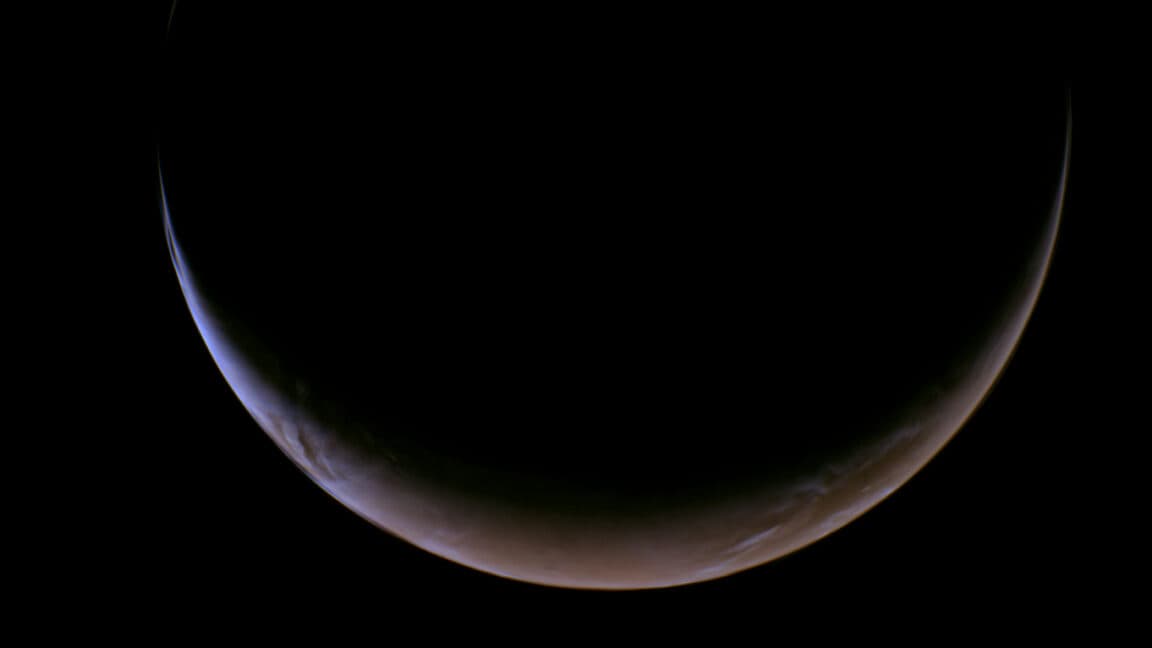
NASA's Psyche spacecraft recently completed a flyby of Mars, capturing stunning images of the planet during its gravity assist maneuver. This maneuver was strategically executed to utilize Mars' gravity, providing a speed boost on its extensive journey toward a metal-rich asteroid located in the asteroid belt. The spacecraft's flyby offered a unique perspective of Mars, showcasing its crescent shape and various surface features.
The images taken during this flyby are expected to enhance our understanding of Mars, contributing valuable data to ongoing planetary studies. This event marks a significant milestone in the Psyche mission, which is on a remarkable 2-billion-mile journey to its final destination.
The Context
The Psyche mission aims to explore a unique metal-rich asteroid, which is believed to be a remnant from the early solar system. By studying this asteroid, scientists hope to gain insights into the building blocks of planetary formation and the history of our solar system. Gravity assists, like the one performed during the Mars flyby, are commonly employed in space missions to increase speed and alter trajectories, making them a crucial aspect of long-distance space travel.
As the Psyche spacecraft continues its journey, the data collected from the Mars flyby will be analyzed to provide a deeper understanding of both the planet and the asteroid. This mission is part of NASA's broader efforts to explore asteroids and understand their composition, which could have significant implications for future exploration and resource utilization.
Takeaway
The successful flyby of Mars sets the stage for the Psyche mission's upcoming exploration of the asteroid. As scientists sift through the data from this maneuver, they anticipate valuable insights that could enhance our understanding of both Mars and the target asteroid. The findings may reveal new information about the solar system's formation and the materials that constitute its building blocks.
Looking ahead, updates on the Psyche mission's progress toward the asteroid will be closely monitored. The upcoming data analysis from the Mars flyby is expected to provide critical information that could inform future missions and research in planetary science.
In-depth reporting on tech, policy, and science including AI.
"Respected analysis for technically savvy readers, including AI topics."
— A47 Editor
NASA's Psyche spacecraft returns unfamiliar views of a familiar world
NASA's Psyche spacecraft has returned unique images of Mars, showcasing the planet from an unusual perspective as it utilizes a gravity assist to enhance its trajectory towards the asteroid Psyche. This maneuver is part of a mission aimed at studying...
In-depth coverage of hardware, software, science, and policy.
"Ars Technica provides expert technology news, hardware reviews, and analysis for a technically savvy audience."
— A47 Editor
NASA's Psyche spacecraft returns unfamiliar views of a familiar world
NASA's Psyche spacecraft has returned unique images of Mars, showcasing the planet from an unusual perspective as it utilizes a gravity assist to enhance its trajectory towards the asteroid Psyche. This maneuver is part of a mission aimed at studying...
News in science and technology, with a focus on consumer and innovation stories.
"Popular Science simplifies complex scientific topics for general audiences and celebrates innovation."
— A47 Editor
Mars shines in ethereal photo from Psyche space probe
<p>NASA's asteroid explorer is on a 2-billion-mile mission.</p> <p>The post <a href="https://www.popsci.com/science/mars-photo-psyche/">Mars shines in ethereal photo from Psyche space probe</a> appeared first on <a href="https://www.popsci.com">Popul...
Science and technology stories including AI.
"Longstanding science magazine with thoughtful AI coverage."
— A47 Editor
NASA’s Psyche captures gorgeous Mars crescent photo on way to asteroid
NASA's Psyche spacecraft recently captured stunning images of Mars as it flew by the planet, utilizing its gravity to gain momentum on its journey to the metal-rich asteroid Psyche, which is set for exploration in 2029.
Scientific research, technology, environment, and society.
"Scientific American is one of the oldest and most authoritative science magazines, known for deep dives into science, technology, and society."
— A47 Editor
NASA’s Psyche captures gorgeous Mars crescent photo on way to asteroid
NASA's Psyche spacecraft recently captured stunning images of Mars as it flew by the planet, utilizing its gravity to gain momentum on its journey to the metal-rich asteroid Psyche, which is set for exploration in 2029.
Space science news, astronomy updates, and spaceflight developments.
"Space.com delivers space science news, astronomy updates, and spaceflight developments with engaging coverage."
— A47 Editor
NASA's Psyche probe takes awesome images of Mars on way to (possibly) precious asteroid
NASA's Psyche spacecraft successfully conducted a flyby of Mars, coming within 3,000 miles of the planet to utilize its gravity for a trajectory assist towards a metal-rich asteroid, scheduled for exploration in 2029. During this maneuver, the spacec...