
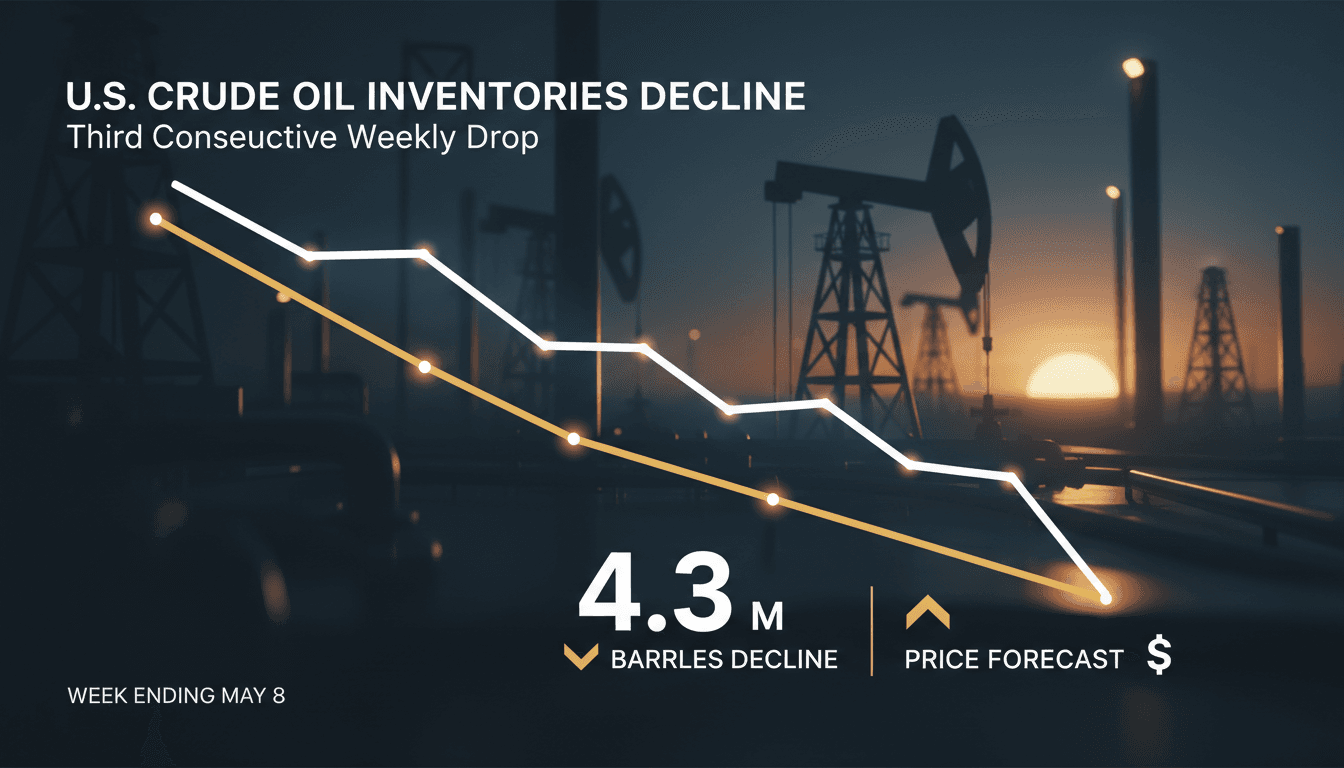
U.S. crude oil inventories decline by 4.3 million barrels marking third consecutive weekly drop
Here's what it means for you.
The decline in U.S. crude oil inventories signals potential upward pressure on prices, impacting global markets.
What happened
U.S. crude oil inventories fell by 4.3 million barrels in the week ending May 8.
The Context
- The drop was larger than the anticipated decrease of 2.3 million barrels.
- Inventories are approximately 0.3% below the five-year average for this time of year.
- This trend reflects ongoing changes in supply and demand dynamics in the oil market.
Takeaway
Continued declines in inventory levels may lead to upward pressure on crude oil prices in the near future.
This article was generated by AI from 3 verified sources and reviewed by A47 editorial systems.
Markets desk coverage, trading insights, and investor updates.
"WSJ’s markets reporting provides in-depth analysis and context for investors."
— A47 Editor
U.S. Crude Oil Inventories Post Third Straight Weekly Drop
U.S. crude oil inventories experienced a decline of 4.3 million barrels for the week ending May 8, marking the third consecutive weekly drop, as reported by the Energy Information Administration (EIA). This decrease brings inventories to approximatel...
U.S. business news, corporate developments, and economy.
"The Wall Street Journal is respected for deep financial and economic reporting with a center-right editorial perspective."
— A47 Editor
U.S. Crude Oil Inventories Post Third Straight Weekly Drop
U.S. crude oil inventories fell by 4.3 million barrels for the week ending May 8, marking the third consecutive weekly decline, as reported by the Energy Information Administration (EIA). This drop brings inventories to approximately 0.3% below the f...
Key macro releases (CPI, jobs, PMIs), surprise indexes, and market implications.
"Great for data-print awareness and instant read-through to rates and risk assets."
— A47 Editor
Crude Oil Inventories Drop Sharply, Surpassing Forecasts
Crude oil inventories have experienced a significant drop, surpassing forecasts, indicating a tightening supply in the market. This decline suggests a potential shift in oil consumption patterns, which may impact pricing and availability.