
U.S. Central Command disrupts oil tanker bound for Iran amid escalating maritime operations
Here's what it means for you.
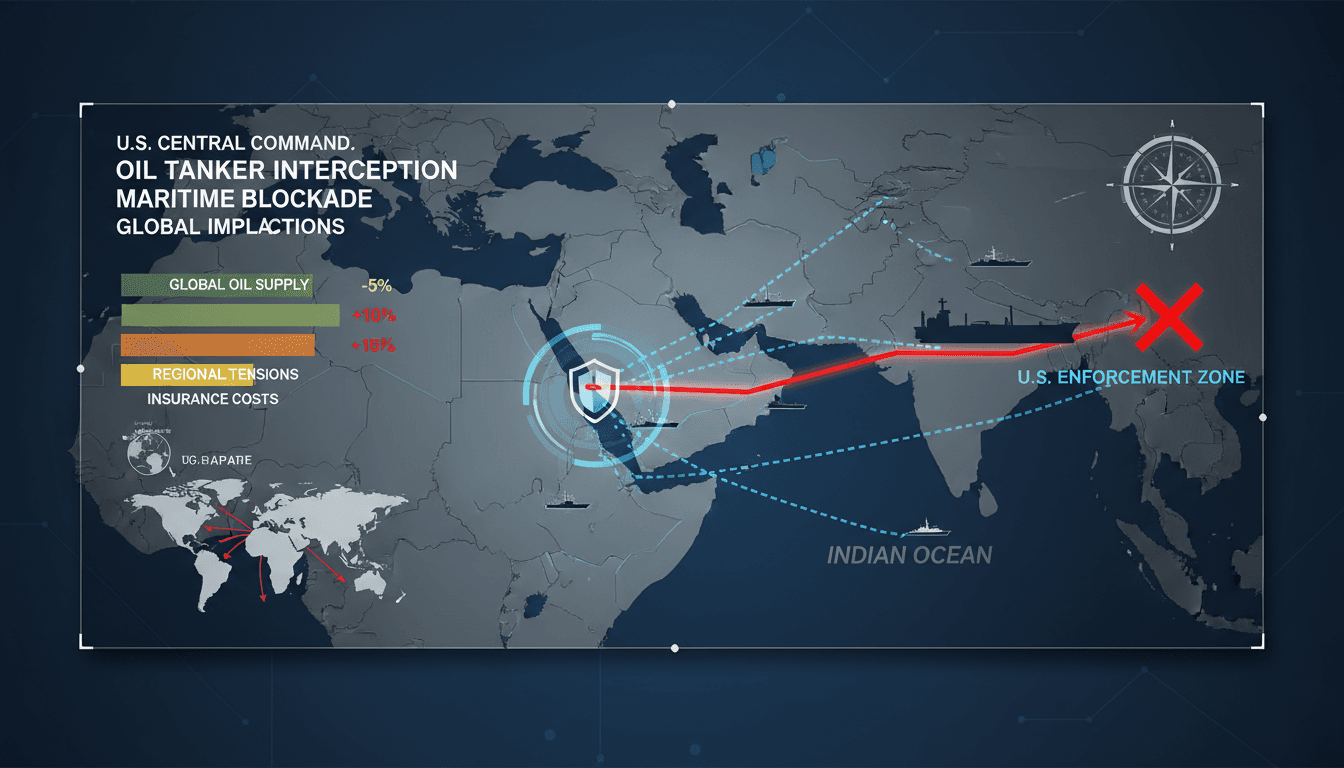
The recent disruption of an oil tanker by U.S. naval forces signals a significant shift in maritime operations aimed at curbing Iranian oil exports. This escalation may have far-reaching implications for international shipping and regional stability, particularly as tensions in the Gulf continue to rise. Stakeholders in the energy sector should closely monitor these developments, as they could impact oil prices and supply chains. The U.S. strategy to enforce a maritime blockade reflects a broader commitment to countering Iranian influence in the region. As the situation evolves, businesses and policymakers must remain vigilant to navigate potential disruptions in trade and energy markets.
What happened
U.S. Central Command (CENTCOM) has reported the successful disruption of an oil tanker that was en route to Iran. This operation marks a notable escalation in the U.S. maritime strategy aimed at restricting Iranian oil shipments. The tanker was reportedly headed to the Iranian island of Kharg, a key location for oil exports.
This action is part of ongoing efforts by U.S. forces to enforce a blockade in the region, which has seen the blockade of 128 commercial vessels to date. The operation was publicly announced by CENTCOM on June 2, 2026, highlighting the U.S. commitment to its maritime operations in the Gulf.
The Context
The disruption of the oil tanker is situated within a broader strategy by the U.S. to limit Iran's oil exports, which have been a focal point of U.S. foreign policy. The increased naval presence in the Gulf comes amid rising tensions with Iran, suggesting a proactive approach to counter perceived threats.
CENTCOM's blockade of commercial vessels underscores the scale of these maritime operations and the U.S. determination to enforce sanctions against Iran. As the geopolitical landscape shifts, the implications of these actions could reverberate throughout the region and beyond.
Takeaway
As the U.S. continues its aggressive stance against Iranian oil shipments, the situation in the Gulf is expected to remain tense. Stakeholders should monitor U.S. naval operations closely for potential escalations that could affect international shipping routes.
Iran's response to these maritime disruptions will also be critical in shaping future dynamics in the region. The ongoing enforcement of the blockade may lead to further tensions, impacting both regional stability and global energy markets.
Jordanian news and regional updates.
"Roya News is a Jordanian outlet focused on breaking news and local affairs."
— A47 Editor
القيادة المركزية الأمريكية: عطلنا ناقلة نفط متجهة لإيران وحاصرنا 128 سفينة تجارية -فيديو
The U.S. Central Command reported that it disrupted an oil tanker heading to Iran and surrounded 128 commercial vessels. This action highlights ongoing tensions in maritime operations related to Iran, indicating heightened vigilance by U.S. forces in...
Egyptian politics, economy, and society coverage.
"Al Masry Al Youm is a major Egyptian newspaper with broad national coverage."
— A47 Editor
بيان أمريكي عاجل يكشف سبب مهاجمة ناقلة نفط متجهة إلى إيران (فيديو)
The U.S. Central Command (CENTCOM) announced that its naval forces have disrupted an oil tanker en route to an Iranian port in the Gulf, marking a continuation of maritime restrictions imposed on movement in the region. This action reflects ongoing t...
Arabic-language coverage of international news and geopolitics.
"RT Arabic is a Russian state-funded outlet often criticized for promoting Kremlin-aligned narratives."
— A47 Editor
بيان أمريكي عاجل عن أسباب مهاجمة ناقلة نفط كانت متجهة إلى جزيرة خرج الإيرانية (فيديو)
The U.S. Central Command (CENTCOM) announced on Tuesday that naval forces disrupted an oil tanker attempting to sail towards an Iranian port in the Gulf, marking the latest incident in ongoing maritime blockade operations.