
Brazilian President criticizes US proposed tax on shipments through Strait of Hormuz
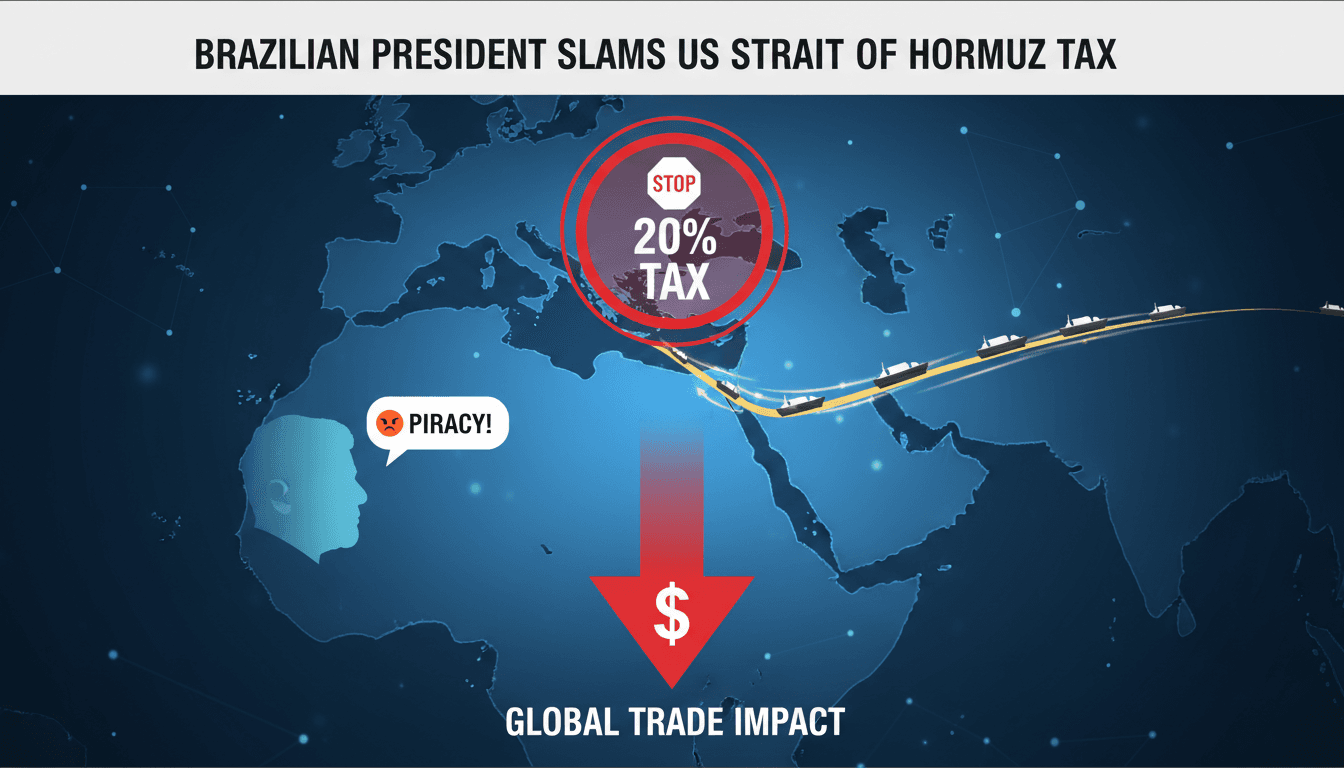
Here's what it means for you.
The proposed 20% tax on shipments through the Strait of Hormuz could have significant implications for global trade, particularly for nations reliant on this vital maritime route. Brazilian President Luiz Inácio Lula da Silva's strong condemnation of the tax as a form of piracy underscores rising tensions in international maritime policy. As countries react to this announcement, the potential for economic repercussions in oil markets and shipping logistics becomes increasingly relevant. The U.S. tax proposal, originally announced by former President Donald Trump, aims to cover maritime security costs but raises questions about the fairness and legality of such measures. This situation may lead to a reevaluation of trade agreements and maritime policies among affected nations.
What happened
The United States has proposed a 20% tax on shipments passing through the Strait of Hormuz, a critical passage for global oil supply. This announcement, made by former President Donald Trump, has sparked immediate backlash from Brazilian President Luiz Inácio Lula da Silva. Lula criticized the tax, suggesting it would label the U.S. as a "pirate" in the realm of international trade.
The tax is intended to cover maritime security costs, but its implications extend far beyond financial considerations. Lula's comments reflect a growing concern among international leaders regarding U.S. maritime policies and their potential impact on global trade dynamics.
The Context
The Strait of Hormuz is a vital maritime route, facilitating approximately 20% of the world's oil shipments. The proposed tax has emerged amid ongoing discussions about maritime security and the responsibilities of nations in ensuring safe passage for commercial vessels. Lula's criticism highlights the broader geopolitical tensions that can arise from unilateral actions taken by powerful nations.
As the situation unfolds, it is essential to consider the perspectives of other countries that rely on this route for trade. The timing of Lula's comments, just a day after the tax announcement, indicates a swift response to what many perceive as an aggressive move by the U.S. government.
Takeaway
The proposed tax on shipments through the Strait of Hormuz could escalate tensions between the U.S. and other nations that depend on this critical trade route. Observers should monitor international reactions, particularly from countries that may feel threatened by the U.S. stance on maritime security.
The potential economic ramifications of this tax on global oil prices and shipping routes warrant close attention in the coming weeks. As countries respond to the U.S. proposal, the landscape of international trade may shift, prompting new discussions on maritime policy and cooperation.
Pan-Arab news coverage spanning politics, business, sports, and regional affairs.
"Asharq Al-Awsat reflects a broad Arab editorial perspective with strong attention to regional geopolitics."
— A47 Editor
لولا: أميركا ستتحول «قرصاناً» إذا فرضت ضريبة على السفن التي تعبر «هرمز»
Brazilian President Lula stated that the United States would become a 'pirate' if it imposed a tax on ships passing through the Strait of Hormuz, echoing earlier comments made by Donald Trump. This remark highlights the tensions surrounding maritime ...
Pan-Arab political news and analysis.
"Al-Quds Al-Arabi is a London-based Arabic newspaper known for political coverage."
— A47 Editor
لولا: الولايات المتحدة ستتحول “قرصانا” إذا فرضت ضريبة على السفن العابرة مضيق هرمز
Brazilian President Luiz Inácio Lula da Silva stated that the United States would become a 'pirate' if it imposed taxes on ships passing through the Strait of Hormuz. This comment reflects Lula's concerns over potential U.S. economic policies that co...
Arabic-language coverage of Saudi, regional, and international affairs.
"Al Bilad offers mainstream Saudi newspaper coverage across domestic and broader Arab topics."
— A47 Editor
ترامب يفرض رسومًا 20% على شحنات مضيق هرمز
On Monday, U.S. President Donald Trump announced a 20% tariff on all shipments passing through the Strait of Hormuz, aimed at covering the costs associated with ensuring the safety and security of navigation in this vital maritime corridor. The execu...