
IEA Forecasts Oil Market Recovery Following U.S.-Iran Agreement to Reopen Strait of Hormuz
Here's what it means for you.
The reopening of the Strait of Hormuz is poised to reshape the global oil market significantly. With the International Energy Agency (IEA) predicting a gradual recovery, stakeholders can anticipate a stabilization in oil prices and a potential surplus in supply by 2027. This development is crucial for energy policies and market strategies worldwide, as it may influence how countries manage their strategic reserves. As production resumes and demand increases at a slower pace, the implications for global energy dynamics are profound. The agreement between the U.S. and Iran could mark a turning point in the region's oil supply stability, impacting both producers and consumers alike.
What happened
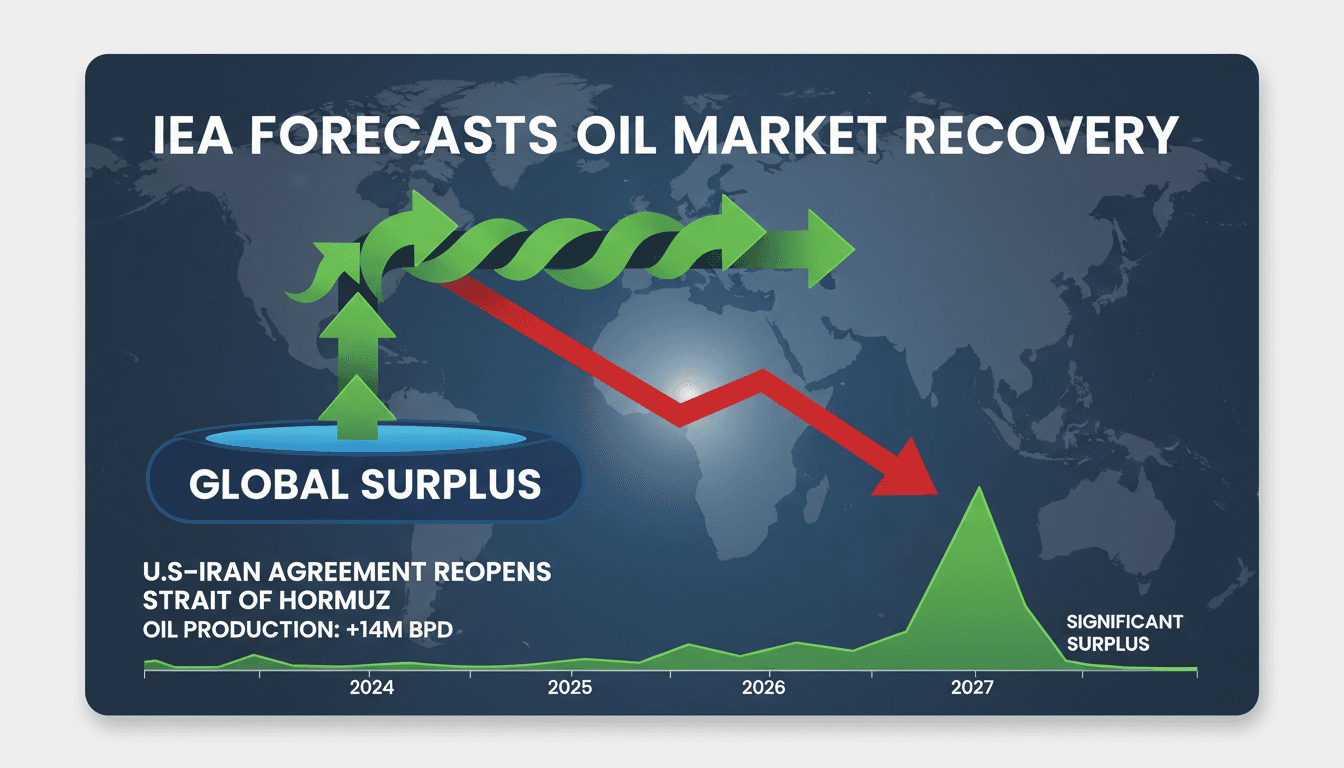
The International Energy Agency has announced a forecast for a gradual recovery in the global oil market following the reopening of the Strait of Hormuz due to a U.S.-Iran agreement. This agreement aims to end the ongoing conflict that had previously halted over 14 million barrels per day of oil production in the Middle East. The IEA's report indicates that the oil market will begin to recover from the impacts of this closure.
As production resumes, the IEA predicts an increase in global oil supply by 8 million barrels per day in the coming year. If the agreement holds, it could lead to a significant surplus in oil supply by 2027, which would have far-reaching effects on global pricing strategies.
The Context
The Strait of Hormuz is a critical chokepoint for global oil transportation, making the U.S.-Iran agreement a pivotal moment for the energy sector. The closure of this strait had severe implications, halting a substantial portion of oil production and creating volatility in the market. The IEA's projections highlight the importance of this agreement in restoring stability to oil supply chains.
Iran's oil exports are expected to resume fully once U.S. sanctions are lifted, further contributing to the anticipated surplus. This situation underscores the interconnectedness of geopolitical developments and energy policies, as countries adjust their strategies in response to changing market conditions.
Takeaway
As the oil market begins to recover, stakeholders should closely monitor the implementation of the U.S.-Iran agreement and its impact on oil prices. The IEA's forecast suggests that the dynamics of supply and demand will evolve, particularly as countries reassess their energy strategies in light of this new development.
The potential for a significant surplus in oil supply by 2027 could lead to strategic reserves being replenished, influencing global pricing strategies. Observing these trends will be crucial for understanding the future landscape of the oil market.
Sports reporting with a focus on Saudi and regional competitions.
"Okaz sports coverage is broad and audience-friendly, with strong attention to Saudi teams and leagues."
— A47 Editor
وكالة الطاقة: سوق النفط ستتعافى تدريجيّاً من آثار إغلاق مضيق هرمز
The International Energy Agency has projected that the oil market will gradually recover from the impacts of the closure of the Strait of Hormuz, caused by ongoing conflicts in the Middle East. The agency's report indicates that an agreement between ...
Pan-Arab news coverage spanning politics, business, sports, and regional affairs.
"Asharq Al-Awsat reflects a broad Arab editorial perspective with strong attention to regional geopolitics."
— A47 Editor
وكالة الطاقة الدولية تتوقع تعافياً تدريجياً لسوق النفط بعد انتهاء الحرب
The International Energy Agency announced on Wednesday that the global oil market is expected to gradually recover from the impacts of the closure of the Strait of Hormuz, with a significant surplus anticipated by 2027.
Arabic-language coverage of international news and geopolitics.
"RT Arabic is a Russian state-funded outlet often criticized for promoting Kremlin-aligned narratives."
— A47 Editor
كيف ومتى ستعود عجلة النفط والغاز العربية لمستوياتها قبل حرب إيران لتتجاوز "آثار ما بعد الصدمة"؟
The agreement between the United States and Iran to end their conflict and reopen the Strait of Hormuz has led to a significant drop in oil prices, with traders anticipating a return of oil flows to the market.