
U.S. Treasury Sanctions Advisory Targets Iranian Strait of Hormuz Toll Payments
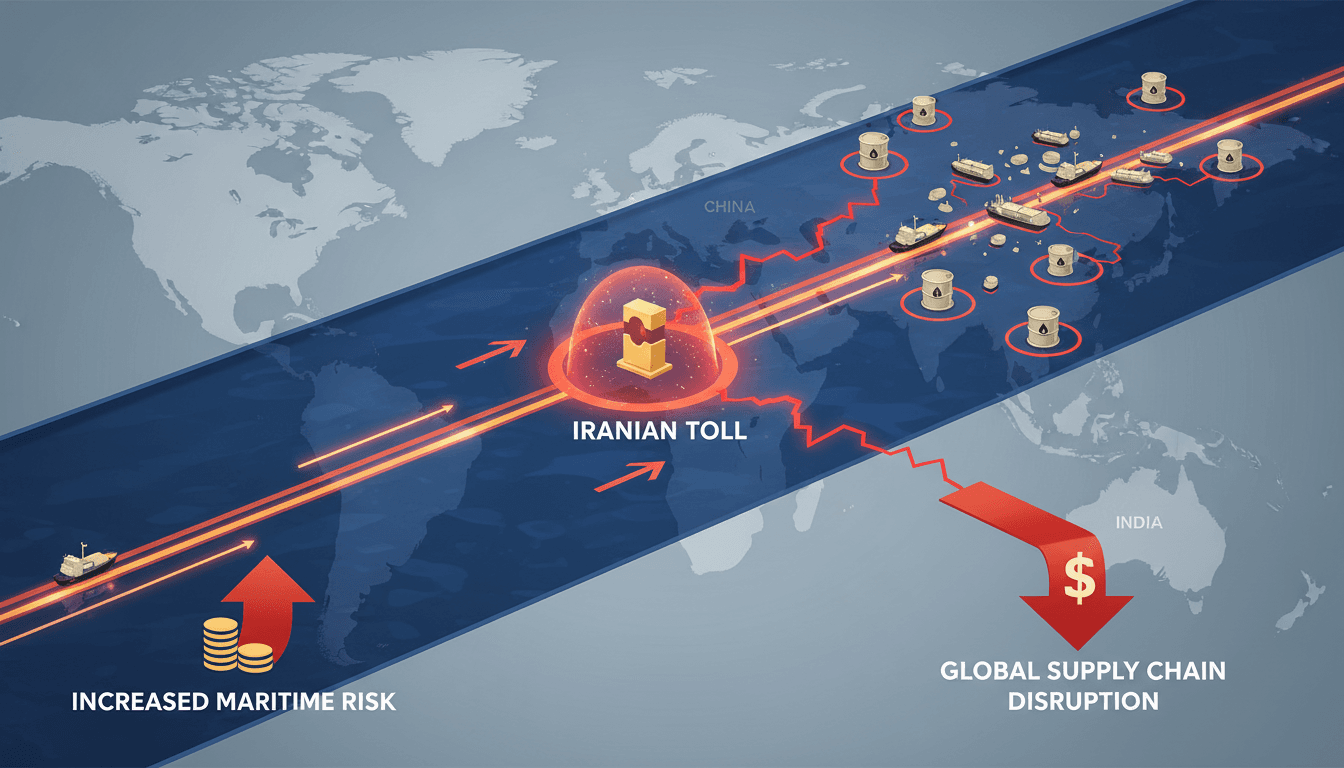
Here's what it means for you.
If you rely on global oil markets, the U.S. sanctions advisory could impact fuel prices and supply chains.
Why it matters
The advisory reinforces existing sanctions, potentially destabilizing oil supply and increasing costs globally.
What happened (in 30 seconds)
- On May 1, 2026, the U.S. Treasury issued an advisory against paying Iranian tolls for Strait of Hormuz transit.
- Iran has imposed tolls of approximately $1 per barrel of oil, payable in cryptocurrency, amid ongoing conflict.
- U.S. gas prices surged to $4.39 per gallon as the advisory was released, reflecting market reactions.
The context you actually need
- The U.S.-Iran conflict escalated on February 28, 2026, following U.S.-Israeli airstrikes, leading to Iran's toll demands for safe passage through the Strait of Hormuz.
- The Strait of Hormuz is a critical chokepoint for 20% of global oil trade, making any disruptions significant for international markets.
- Iran's toll system has been met with U.S. sanctions aimed at preventing compliance, which could trigger secondary sanctions on non-U.S. entities.
What's really happening
The U.S. Treasury's advisory against paying tolls to Iran for transit through the Strait of Hormuz is a strategic move in the ongoing U.S.-Iran conflict. Following the escalation of hostilities on February 28, 2026, the Iranian government began demanding tolls for vessels passing through this vital maritime route. The tolls, set at approximately $1 per barrel of oil, are payable in cryptocurrency or other forms, reflecting Iran's attempt to assert control over a critical chokepoint for global oil trade.
This advisory is not merely a warning; it is a calculated effort to deter U.S. entities from engaging with Iran financially. The U.S. Treasury's Office of Foreign Assets Control (OFAC) has emphasized that any transactions with the Iranian government or the Islamic Revolutionary Guard Corps (IRGC) are prohibited under existing sanctions. The advisory aims to protect U.S. interests and prevent the normalization of Iran's toll system, which could undermine the effectiveness of sanctions and embolden Iran's aggressive posture in the region.
The advisory comes at a time when the U.S. is grappling with rising gas prices, which have reached $4.39 per gallon nationally. This increase is a direct consequence of the conflict and the toll demands, which have led to heightened uncertainty in oil markets. The U.S. government has condemned the tolls as illegitimate, with President Trump proposing alternative solutions while maintaining a naval blockade on Iranian vessels. Secretary of State Marco Rubio has labeled the toll system as "illegal and dangerous," further solidifying the U.S. stance against Iran's actions.
As Iran continues to enforce its toll system, it has prioritized compliance from vessels, detaining those that refuse to pay. This has created a precarious situation for international shipping, where non-U.S. shippers face the risk of being caught in the crossfire of U.S. sanctions and Iranian enforcement. The situation is further complicated by the fact that some vessels have complied with the tolls, raising questions about the effectiveness of the U.S. advisory.
In summary, the U.S. sanctions advisory is a critical component of the broader strategy to counter Iran's influence in the Strait of Hormuz. It reflects the U.S. commitment to maintaining pressure on Iran while navigating the complexities of global oil markets and the potential repercussions for international shipping.
Who feels it first (and how)
- Shipping companies: Increased operational costs and risks associated with toll payments and sanctions compliance.
- Oil traders: Fluctuating prices and uncertainty in supply chains affecting profitability.
- Consumers: Rising fuel prices impacting household budgets and transportation costs.
- Businesses in Dubai: Elevated fuel and grocery prices due to disruptions in Gulf energy exports.
What to watch next
- Compliance shifts: Monitor whether non-U.S. shippers begin to comply with Iranian tolls, which could trigger further sanctions.
- Oil price fluctuations: Watch for changes in global oil prices as the situation evolves, impacting consumer costs.
- Geopolitical developments: Keep an eye on diplomatic efforts or escalations in the U.S.-Iran conflict that could affect maritime security.
The U.S. Treasury's advisory is active, and Iran continues to demand tolls for Hormuz transit.
Oil prices will remain volatile as the conflict persists and sanctions are enforced.
The long-term impact on global shipping routes and compliance among international vessels.
Frequently Asked Questions
- Why it matters?
- The advisory reinforces existing sanctions, potentially destabilizing oil supply and increasing costs globally.
- What happened (in 30 seconds)?
- On May 1, 2026, the U.S. Treasury issued an advisory against paying Iranian tolls for Strait of Hormuz transit. Iran has imposed tolls of approximately $1 per barrel of oil, payable in cryptocurrency, amid ongoing conflict. U.S. gas prices surged to $4.39 per gallon as the advisory was released, reflecting market reactions.
- What's really happening?
- The U.S. Treasury's advisory against paying tolls to Iran for transit through the Strait of Hormuz is a strategic move in the ongoing U.S.-Iran conflict. Following the escalation of hostilities on February 28, 2026, the Iranian government began demanding tolls for vessels passing through this vital maritime route. The tolls, set at approximately $1 per barrel of oil, are payable in cryptocurrency or other forms, reflecting Iran's attempt to assert control over a critical chokepoint for global oi
- Who feels it first (and how)?
- Shipping companies: Increased operational costs and risks associated with toll payments and sanctions compliance. Oil traders: Fluctuating prices and uncertainty in supply chains affecting profitability. Consumers: Rising fuel prices impacting household budgets and transportation costs. Businesses in Dubai: Elevated fuel and grocery prices due to disruptions in Gulf energy exports.
- What to watch next?
- Compliance shifts: Monitor whether non-U.S. shippers begin to comply with Iranian tolls, which could trigger further sanctions. Oil price fluctuations: Watch for changes in global oil prices as the situation evolves, impacting consumer costs. Geopolitical developments: Keep an eye on diplomatic efforts or escalations in the U.S.-Iran conflict that could affect maritime security.
Capitol Hill news, legislation, and policy insight.
"The Hill specializes in U.S. politics and policy, with a focus on Capitol Hill developments and a reputation for insider reporting."
— A47 Editor
Treasury Department tells US ships not to pay Hormuz tolls to Iran
The U.S. Treasury Department has issued a warning to American shipping companies against paying tolls to Iran for passage through the Strait of Hormuz, citing potential sanctions for non-compliance. This advisory from the Office of Foreign Assets Con...
Global news coverage with extensive reporting on Middle Eastern conflicts and geopolitics.
"Al Jazeera is a Qatar-based broadcaster known for wide regional coverage and alternative perspectives."
— A47 Editor
US warns shippers against paying Strait of Hormuz tolls, ‘donations’
The United States has issued a warning to shippers against paying tolls or making donations related to the Strait of Hormuz, coinciding with reports from Iranian state media that Tehran has proposed a new peace initiative to the U.S. This warning und...
Comprehensive coverage of Middle Eastern and global issues.
"Al Jazeera is a prominent voice from the Global South, especially the Middle East, with an emphasis on underreported stories."
— A47 Editor
US warns shippers against paying Strait of Hormuz tolls, ‘donations’
The United States has issued a warning to shippers against paying tolls or making donations related to the Strait of Hormuz, coinciding with reports from Iranian state media that Tehran has proposed a new peace initiative to the U.S. This warning und...
Regional coverage and analysis focused on politics, diplomacy, and business across the Middle East.
"Al-Monitor is known for analytical reporting on Middle East politics and policy developments."
— A47 Editor
US Treasury warns shippers not to pay Hormuz tolls, even in form of charity
The U.S. Treasury has issued a warning to shippers against paying tolls imposed by Iran for passage through the Strait of Hormuz, including charitable donations to organizations like the Iranian Red Crescent Society, citing potential punitive sanctio...
Regional and international reporting focused on Middle Eastern politics, diplomacy, and economics.
"Asharq Al-Awsat is a Saudi-owned international newspaper reflecting mainstream Gulf political perspectives."
— A47 Editor
US Warns Shipping Firms They Could Face Sanctions Over Paying Iranian Tolls in Strait of Hormuz
The United States has issued a warning to shipping firms that they could face sanctions for paying Iranian tolls in the Strait of Hormuz, a vital maritime route for global oil shipments. This warning comes amid heightened tensions between the U.S. an...
Oil, metals, and agriculture: supply/demand headlines, OPEC chatter, inventories, and price action.
"Solid tape for energy and metals traders tracking macro and micro catalysts."
— A47 Editor
US Treasury warns shippers not to pay Hormuz tolls, even in form of charity
The US Treasury has issued a warning to shippers against paying tolls for passage through the Strait of Hormuz, even if such payments are framed as charitable contributions. This advisory comes amid escalating tensions in the region, particularly fol...
Macro commentary, policy analysis, growth/inflation themes, and global outlooks.
"Contextual macro coverage that complements day-to-day market headlines."
— A47 Editor
US warns shippers against paying Iran tolls for Hormuz Strait passage
The United States has issued a warning to shipping companies against paying tolls to Iran for passage through the strategically vital Strait of Hormuz, amid escalating tensions in the region. This warning comes as geopolitical conflicts continue to d...