
China launches artificial human embryos into space for microgravity research
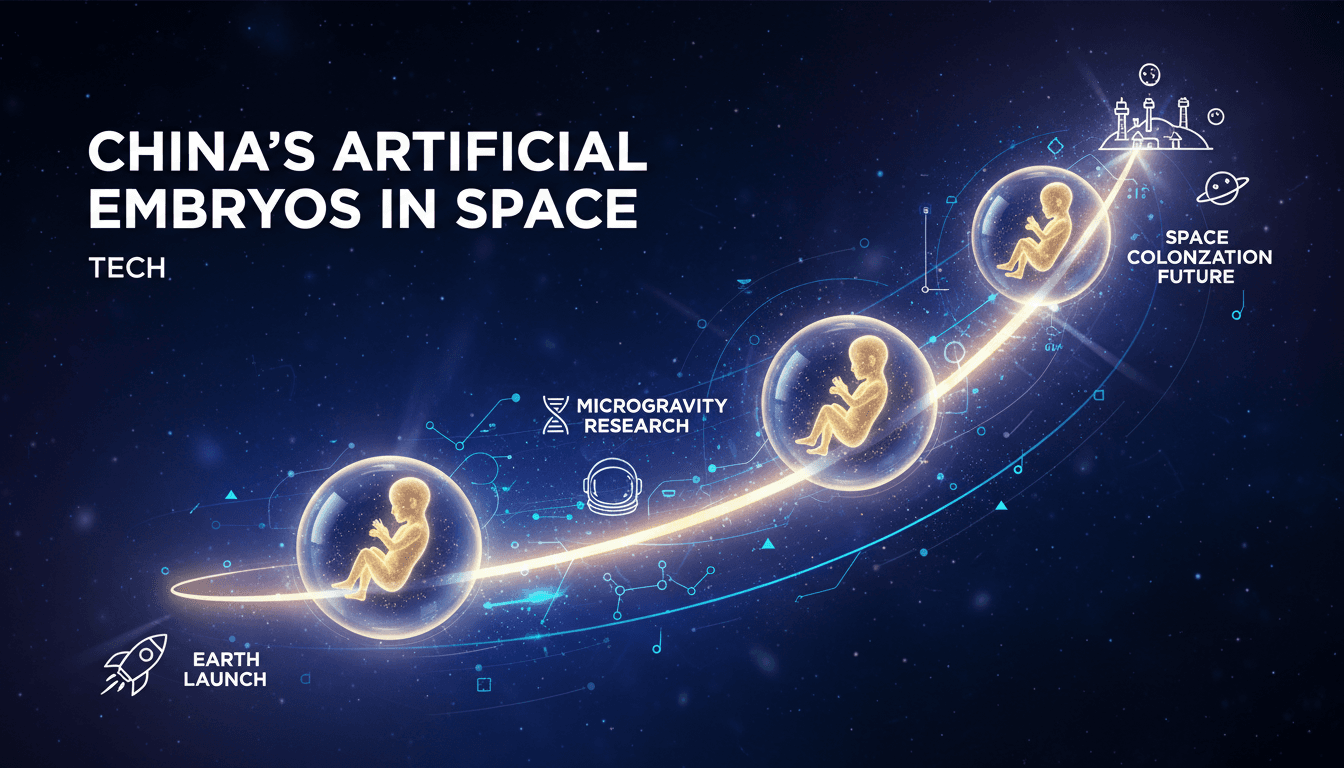
Here's what it means for you.
China's recent launch of artificial human embryos into space marks a significant advancement in understanding human reproduction in microgravity. This experiment could reshape future space colonization efforts and enhance our knowledge of reproductive health in extraterrestrial environments. As nations increasingly focus on space exploration, the implications of this research may influence international collaborations and policies surrounding human reproduction in space.
What happened
China has successfully launched artificial human embryos into space as part of a pioneering research mission. This groundbreaking experiment aims to investigate how embryo development occurs under microgravity conditions. The initiative represents the first of its kind, focusing specifically on human pregnancy development in an extraterrestrial environment.
The artificial embryos were launched on May 26, 2026, and the significance of this experiment has been widely reported since May 27, 2026. By studying the effects of microgravity on embryo development, researchers hope to gain insights that could inform future human reproduction in space.
The Context
This experiment aligns with China's broader ambitions in space exploration and colonization. As the first of its kind, it highlights the increasing focus on advanced space research and the potential for human life beyond Earth. Understanding how embryos develop in microgravity is crucial for long-term missions and the potential colonization of other planets.
The successful execution of this mission could pave the way for further research initiatives and collaborations with international space agencies. As space exploration continues to evolve, the implications of this research extend beyond scientific inquiry, touching on policy and ethical considerations regarding human reproduction in space.
Takeaway
The success of this experiment could lead to new insights into human reproduction in space, significantly influencing future missions and colonization efforts. As researchers analyze the data gathered from this launch, attention will likely turn to further developments in China's space research initiatives. Potential collaborations with other nations may emerge, focusing on reproductive health in extraterrestrial environments.
As the field of space exploration advances, understanding the complexities of human reproduction in microgravity will be essential for ensuring the viability of long-term human presence in space.
Pan-Arab news coverage spanning politics, business, sports, and regional affairs.
"Asharq Al-Awsat reflects a broad Arab editorial perspective with strong attention to regional geopolitics."
— A47 Editor
الصين: أبحاث جريئة حول إنجاب الأطفال في الفضاء
China is conducting bold research on childbirth in space by sending samples of embryos to study the effects of microgravity on their development. This initiative marks a significant step in understanding how human reproduction could be affected in ex...
Arabic-language coverage of international news and geopolitics.
"RT Arabic is a Russian state-funded outlet often criticized for promoting Kremlin-aligned narratives."
— A47 Editor
تجربة صينية تختبر إمكانية تكاثر البشر في الفضاء!
China has launched a groundbreaking experiment to test the potential for human embryos to develop in space, marking a significant step in understanding the risks associated with reproduction beyond Earth. This initiative aims to explore the implicati...
Science and technology stories including AI.
"Longstanding science magazine with thoughtful AI coverage."
— A47 Editor
China just launched a bunch of fake human embryos into space on a new research mission
China has launched artificial human embryos into space as part of a new research mission aimed at understanding how human pregnancies might develop in microgravity conditions. This experiment represents a significant step in space biology and reprodu...
Scientific research, technology, environment, and society.
"Scientific American is one of the oldest and most authoritative science magazines, known for deep dives into science, technology, and society."
— A47 Editor
China just launched a bunch of fake human embryos into space on a new research mission
China has launched artificial human embryos into space as part of a new research mission aimed at understanding how human pregnancies might develop in microgravity conditions. This experiment represents a significant step in space biology and reprodu...