
IEA warns of unprecedented decline in global oil demand due to Iran conflict
Here's what it means for you.
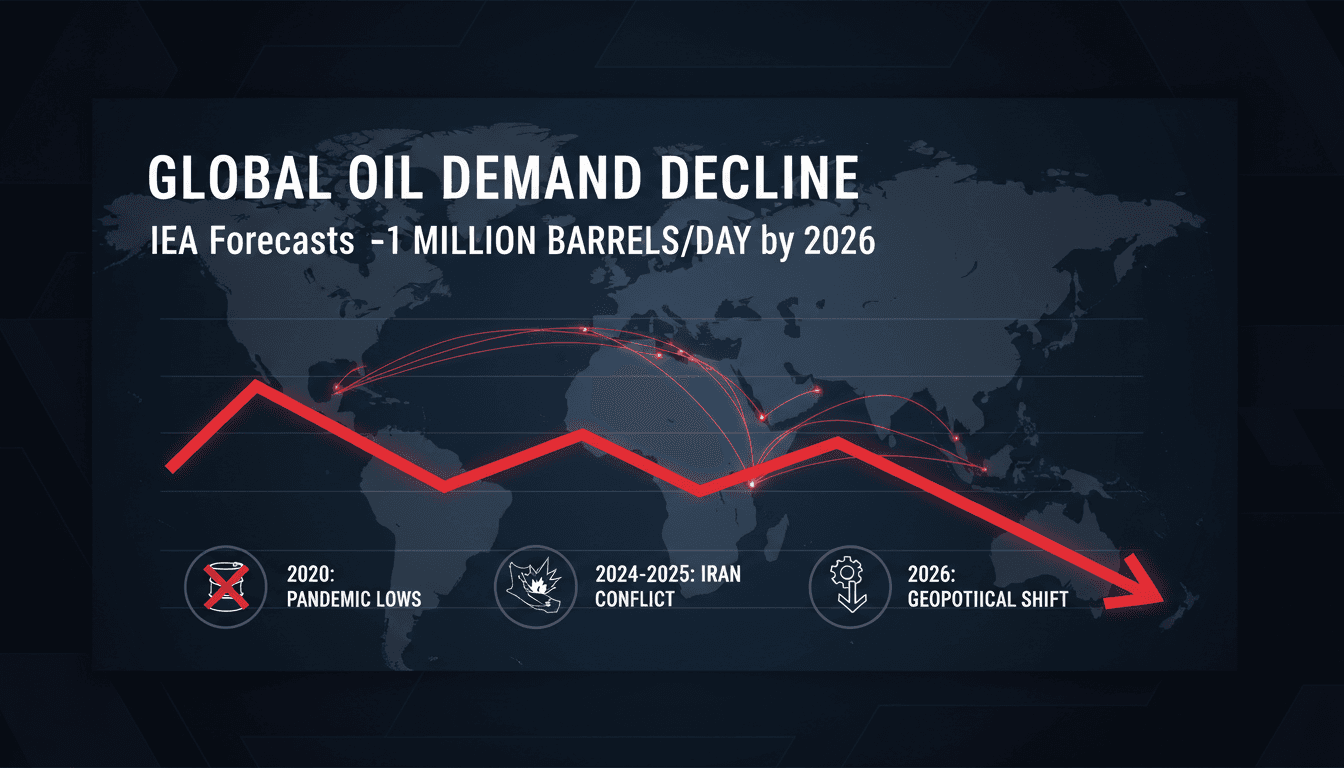
The International Energy Agency's (IEA) forecast signals a pivotal shift in global oil dynamics, with a projected decline of 1 million barrels per day by 2026. This decline, the first since 2020, underscores the fragility of oil markets amid geopolitical tensions. Stakeholders across the energy sector must now reassess their strategies in light of these developments, as the implications could ripple through economic forecasts and energy policies worldwide. As the conflict in Iran continues to disrupt oil exports, the ramifications for global supply chains and pricing structures are becoming increasingly pronounced. Companies and governments alike will need to navigate this evolving landscape carefully to mitigate risks associated with potential supply shortages.
What happened
The IEA has issued a warning regarding a significant decline in global oil demand, projecting a drop of 1 million barrels per day by 2026. This forecast marks the first decline in oil demand since 2020, driven primarily by ongoing disruptions in Middle Eastern oil exports due to the war in Iran. The conflict has severely impacted traffic through the critical Strait of Hormuz, a vital chokepoint for global oil shipments.
As the situation unfolds, the IEA's report highlights the vulnerability of oil markets to geopolitical events. The anticipated drop in demand could lead to substantial adjustments in energy strategies and economic forecasts as stakeholders respond to these challenges.
The Context
The ongoing war in Iran has created significant disruptions in oil exports from the region, affecting global supply chains. The Strait of Hormuz, through which a substantial portion of the world's oil passes, has seen a marked decrease in traffic, further exacerbating the situation. This context is crucial as it illustrates the interconnectedness of geopolitical stability and energy markets.
The IEA's warning comes at a time when the global economy is still recovering from the impacts of the COVID-19 pandemic. As energy demand fluctuates, stakeholders must consider how these geopolitical tensions will shape future energy policies and market strategies. The implications of this decline extend beyond immediate market reactions, potentially influencing long-term energy planning and investment decisions.
Takeaway
Looking ahead, it is essential to monitor developments in the Iran conflict and their impact on oil exports. The IEA's forecast suggests that ongoing geopolitical tensions may continue to influence global oil markets and demand forecasts. Stakeholders should prepare for potential adjustments in supply strategies as they navigate this uncertain landscape.
As the situation evolves, the global oil market may face further volatility, prompting a reassessment of strategies among producers and consumers alike. Keeping a close eye on these developments will be crucial for understanding the future trajectory of oil demand and pricing.
Economic trends, financial markets, corporate news, and policy from a Russian perspective.
"RT is widely criticized for promoting pro-Kremlin narratives and is considered by many to be a state propaganda outlet."
— A47 Editor
IEA issues oil demand warning
The International Energy Agency (IEA) has issued a warning regarding a projected decline in global oil demand, forecasting a drop of 1 million barrels per day by 2026, largely attributed to ongoing disruptions in Middle Eastern exports due to the Ira...
Global business headlines with AI angles.
"General business outlet that frequently covers AI."
— A47 Editor
Global Oil Demand To Drop For The First Time In More Than Five Years, IEA Says
The International Energy Agency (IEA) has announced that global oil demand is projected to decline for the first time since 2020, primarily due to a significant drop in traffic through the Strait of Hormuz amid ongoing conflict in Iran.
Regional and international reporting focused on Middle Eastern politics, diplomacy, and economics.
"Asharq Al-Awsat is a Saudi-owned international newspaper reflecting mainstream Gulf political perspectives."
— A47 Editor
IEA Says Global Oil Demand Picks Up Despite War Fears
The International Energy Agency (IEA) has reported a rise in global oil demand despite ongoing fears of war, indicating resilience in the market amid geopolitical tensions. This uptick comes as the agency anticipates a gradual recovery in oil supply ...