
US Launches Military Strikes Against Iran Following Helicopter Incident
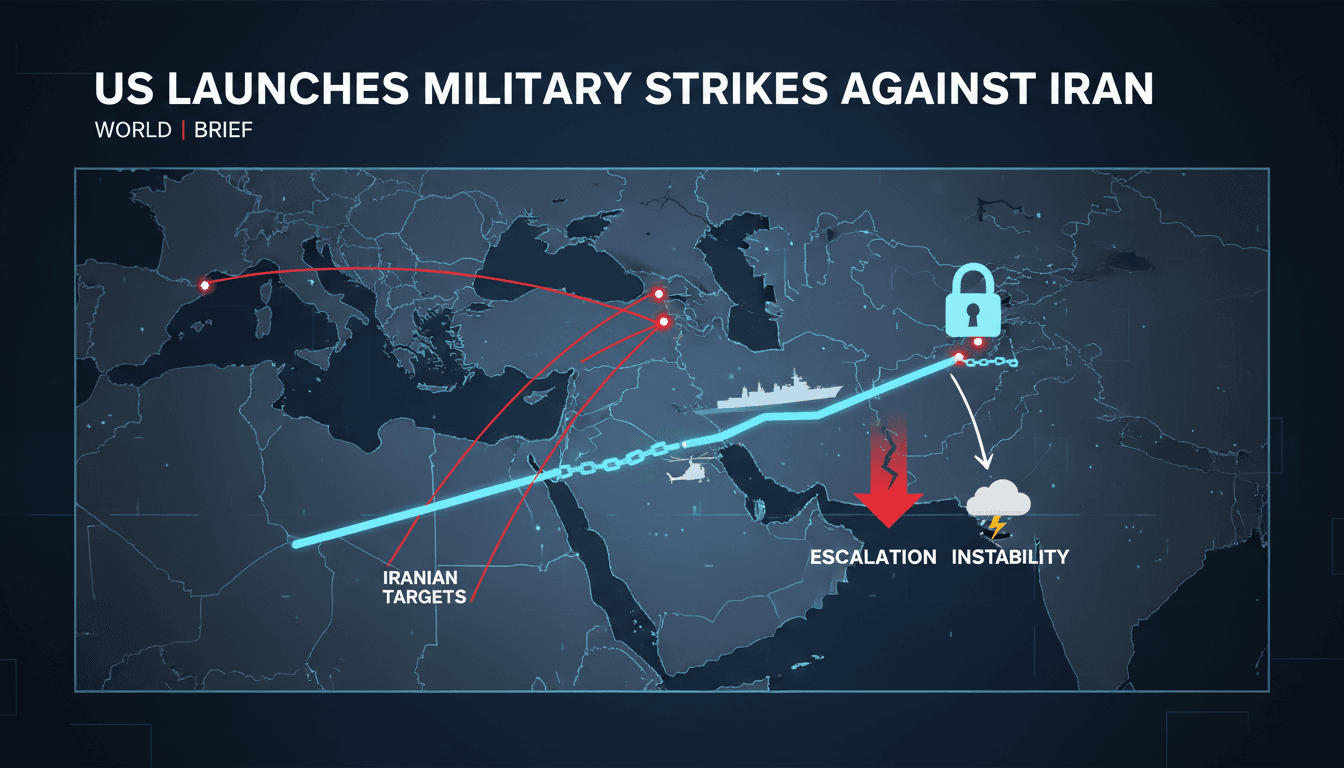
Here's what it means for you.
The recent military strikes by the United States against Iran signal a significant escalation in hostilities, which could have far-reaching implications for regional stability and international relations. As tensions rise, stakeholders in the Gulf region must prepare for potential disruptions in maritime navigation and security. The ongoing conflict may also influence U.S. military strategy and diplomatic efforts moving forward.
What happened
The United States has launched a series of military strikes against Iranian targets in response to the downing of an Apache helicopter. This marks the third wave of U.S. military engagement in the region, indicating a notable escalation in hostilities. The strikes targeted key locations in southern Iran, including Bandar Abbas and Qeshm Island, where intense clashes occurred between Iran's defense systems and U.S. aircraft.
Explosions were reported across multiple locations in Iran, raising alarms about the implications for international shipping routes, particularly through the Strait of Hormuz. President Trump characterized these operations as "self-defense," emphasizing the U.S. commitment to protecting its interests in the region.
The Context
This escalation follows a fragile ceasefire that began in April, highlighting the precarious nature of U.S.-Iran relations. The ongoing military actions have reignited security tensions in vital maritime routes, which are crucial for global trade. As both nations assess their military strategies, the potential for further confrontations looms large.
The conflict has drawn attention from various stakeholders, including regional allies and international observers, who are closely monitoring developments. The situation is further complicated by the historical context of U.S.-Iran relations, which have been fraught with tension and conflict for decades.
Takeaway
The ongoing military actions suggest a potential for further escalation in U.S.-Iran relations, with significant implications for regional stability. Observers should monitor developments in U.S. military strategy and Iran's response to the latest airstrikes. Diplomatic efforts may also emerge as both nations navigate this volatile landscape.
As the situation evolves, the international community will be watching closely for any signs of de-escalation or further military engagement. The implications for maritime security and global trade routes through the Gulf remain critical areas of concern.
Pan-Arab news coverage spanning politics, business, sports, and regional affairs.
"Asharq Al-Awsat reflects a broad Arab editorial perspective with strong attention to regional geopolitics."
— A47 Editor
ترمب يهدد إيران بـ«قصف عنيف»
The United States and Iran engaged in one of the most extensive exchanges of strikes since the fragile ceasefire took effect in April, following threats from President Trump of 'heavy bombing' against Iran. This escalation marks a significant increas...
Arabic-language coverage of Saudi, regional, and international affairs.
"Al Bilad offers mainstream Saudi newspaper coverage across domestic and broader Arab topics."
— A47 Editor
الجيش الأمريكي يشن ضربات ضد إيران
The U.S. military launched new strikes against multiple locations in Iran today, in retaliation for the downing of an Apache helicopter. Reports indicate explosions were heard in Qeshm Island, eastern Hormozgan, Bandar Abbas, and Sirik, as well as al...
Arabic-language coverage of political affairs and current events.
"Okaz political coverage typically follows mainstream Saudi framing on national and regional affairs."
— A47 Editor
مضيق هرمز يشتعل.. واشنطن تشن هجوماً واسعاً على أكبر الموانئ الإيرانية
The United States has launched a third wave of military strikes targeting Iranian positions in southern Iran, resulting in significant explosions in the coastal city of Bandar Abbas and the strategic island of Qeshm near the Strait of Hormuz. These a...