
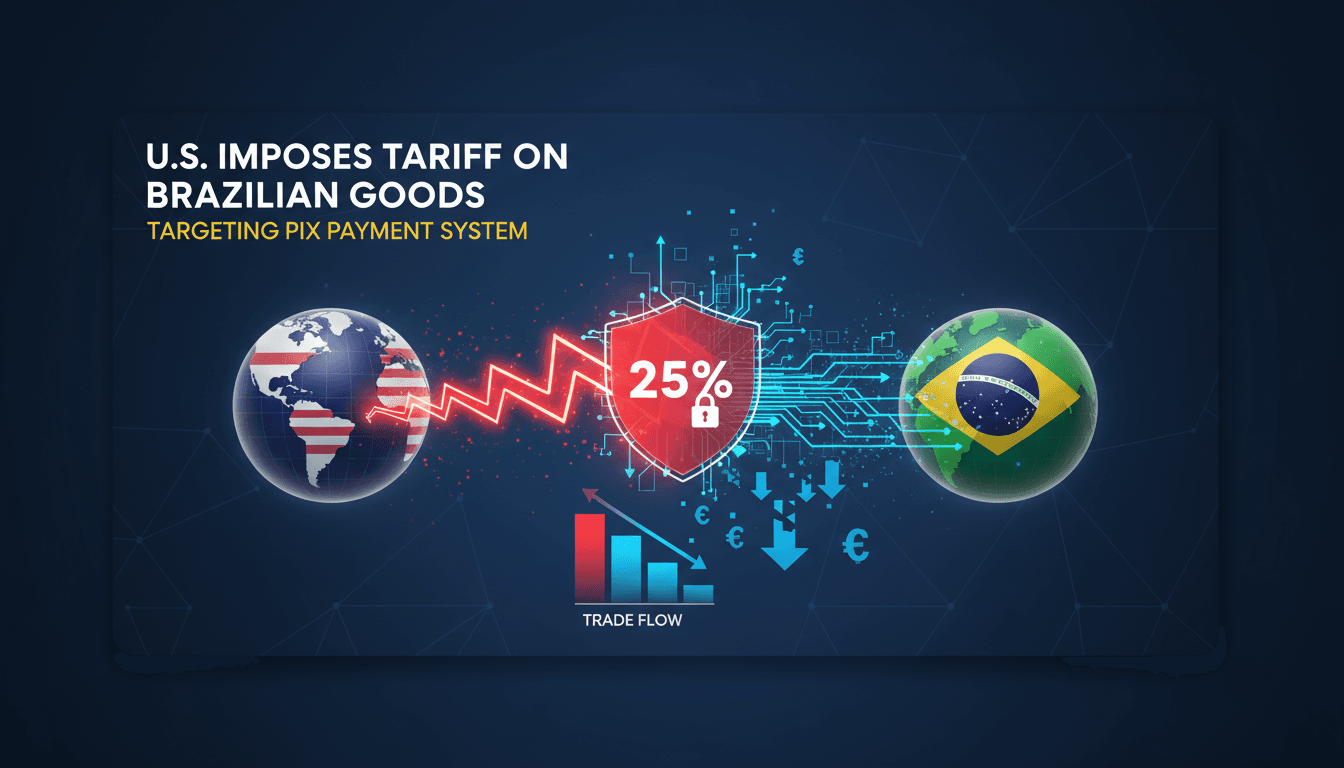
U.S. imposes 25% tariff on Brazilian goods targeting PIX payment system
Here's what it means for you.
The recent imposition of a 25% tariff on Brazilian goods by the U.S. signals a significant shift in trade dynamics, particularly concerning payment systems. This move is likely to impact businesses engaged in cross-border transactions, as the U.S. aims to protect its dollar-based commerce from emerging non-dollar payment channels. Stakeholders in both nations should prepare for potential retaliatory measures and adjustments in trade practices. As Brazil's PIX payment system gains traction, the implications for cryptocurrency adoption and stablecoin usage will be critical. Companies operating in the financial technology space may need to reassess their strategies in light of these evolving trade tensions.
What happened
The U.S. has enacted a 25% tariff on Brazilian goods, specifically targeting Brazil's PIX payment system. This decision follows a year-long investigation that revealed Brazil's payment practices as burdensome to American commerce. The tariffs were imposed under Section 301 of the Trade Act of 1974, highlighting the U.S. government's serious concerns regarding Brazil's promotion of non-dollar payment channels.
The U.S. Trade Representative cited "unreasonable" circumstances surrounding Brazil's payment systems, which are seen as a threat to dollar-based trade. The tariffs are expected to have a significant impact on the flow of goods between the two nations, particularly as dollar-linked stablecoins account for about 90% of Brazil's cryptocurrency transactions.
The Context
This tariff imposition comes at a time when global trade dynamics are shifting, particularly with the rise of digital currencies and alternative payment systems. The U.S. is increasingly wary of how these innovations could affect its economic interests, especially as Brazil's PIX system promotes non-dollar transactions. The competitive landscape of international finance is evolving, and both countries are navigating these changes amid growing tensions.
The timing of this decision reflects broader concerns about the implications of Brazil's payment innovations on American commerce. As Brazil continues to develop its payment systems, the U.S. is taking a proactive stance to safeguard its economic interests and maintain the dominance of the dollar in global trade.
Takeaway
As the U.S. and Brazil navigate these trade tensions, the evolution of payment systems and cryptocurrency adoption will be critical in shaping future economic relations. Stakeholders should closely monitor Brazil's response to the tariffs and any potential retaliatory measures that may arise. Additionally, developments in the adoption of stablecoins in Brazil could significantly impact trade practices and economic policies in both countries.
The ongoing adjustments in trade relations may lead to further economic ramifications as both nations adapt to the changing landscape of digital payments. Observers should remain vigilant as these developments unfold, particularly regarding their implications for international commerce.
Real-time updates, analysis, and reports on the blockchain and cryptocurrency sectors.
"Crypto News delivers real-time updates, analysis, and reports on the blockchain and cryptocurrency sectors."
— A47 Editor
Trump targets Brazil’s Pix as dollar stablecoins gain ground
Former President Donald Trump has announced a 25% tariff on Brazil, specifically targeting the country's Pix payment system, as dollar stablecoins continue to gain traction in Brazil's cryptocurrency landscape. This move reflects growing concerns in ...
Covers Bitcoin plus altcoin news, market updates, and educational resources.
"Bitcoin.com provides news, market data, and guides focused on Bitcoin and the wider crypto industry."
— A47 Editor
The Target Is Pix: Why the US Is Imposing Unprecedented Tariffs Over Brazil’s Free Payment System
The U.S. Trade Representative (USTR) has imposed unprecedented tariffs on Brazil, specifically targeting the country's Pix payment system, under Section 301 of the Trade Act of 1974. This decision follows a year-long investigation that concluded Pix ...
Covers blockchain, cryptocurrency news, project analysis, and market insights.
"CoinDesk is a well-established cryptocurrency and blockchain news provider, offering comprehensive insights, market data, and industry research."
— A47 Editor
Trump targets Brazil's payments system while dollar stablecoins are quietly overtaking country's payments
Washington is increasingly concerned about Brazil's promotion of non-dollar payment systems, particularly the Pix payment platform and the rise of stablecoins, which are seen as a potential threat to the dominance of the US dollar in international tr...
Global political, business, and cultural coverage from WSJ international desks.
"The Wall Street Journal offers extensive international reporting with a reputation for financial insight and a center-right editorial stance."
— A47 Editor
Why Trump Is Going After Brazil’s Beloved Payment System
The Trump administration has announced a 25% tariff on certain Brazilian imports, effective July 22, citing unfair trade practices linked to Brazil's PIX payment system. This decision follows a yearlong investigation that has raised significant trade...