
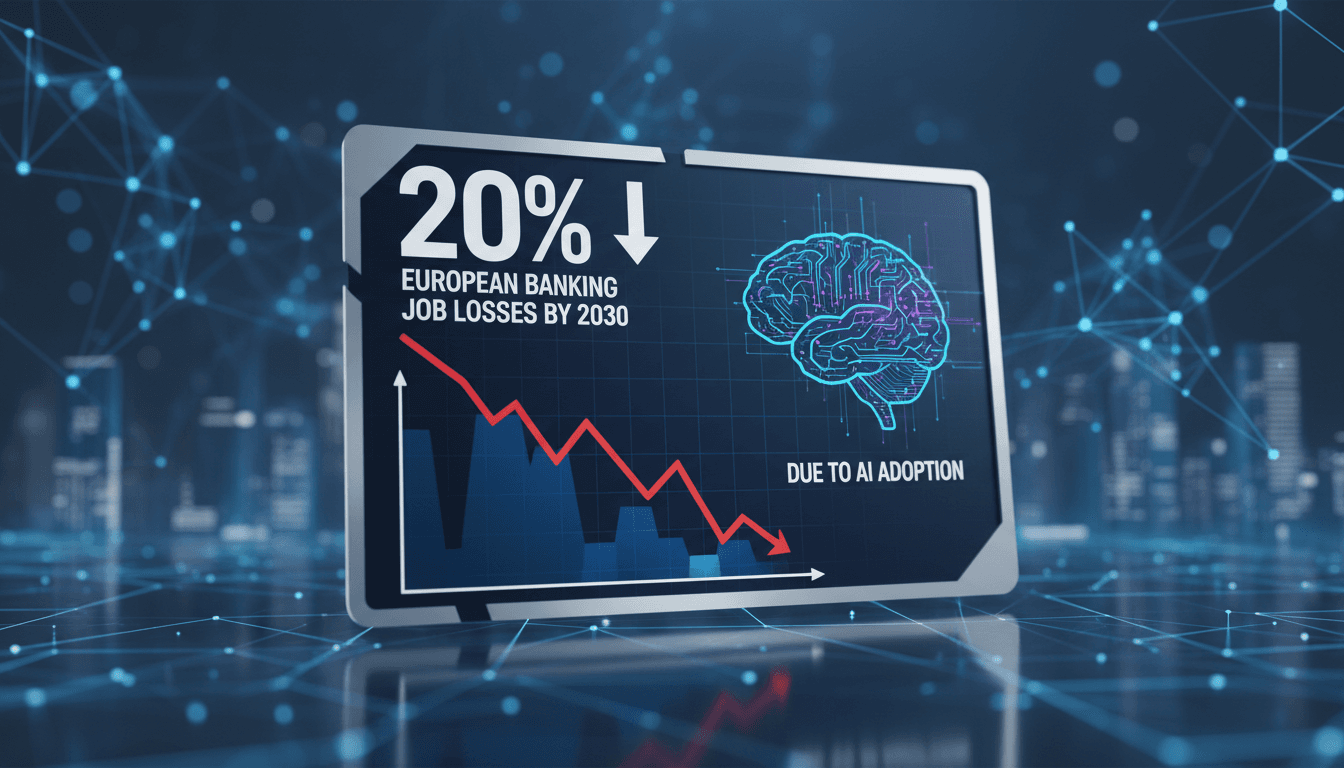
Morgan Stanley Projects 20% Job Losses in European Banking Due to AI Adoption
Here's what it means for you.
The banking sector is on the brink of a significant transformation as artificial intelligence technologies gain traction. With Morgan Stanley predicting a potential 20% reduction in jobs by 2030, financial institutions must reassess their workforce strategies. This shift not only impacts employment but also raises questions about the future roles of banking professionals in an increasingly automated environment. As major banks begin to implement job cuts, the implications for the market and regulatory landscape are profound. Stakeholders must prepare for a new era where AI plays a central role in operational efficiency and productivity.
What happened
Morgan Stanley has forecasted that up to 20% of jobs in the European banking sector could be at risk by 2030 due to the increasing adoption of artificial intelligence. This estimate has doubled from earlier predictions made in January, indicating a significant shift in workforce dynamics. Major banks such as UBS, ABN Amro, and HSBC are already beginning to implement job cuts as they enhance productivity through AI technologies.
The projected job losses could affect approximately 400,000 bankers across Europe, highlighting the scale of this transformation. As banks integrate AI into their operations, the landscape of employment within the sector is poised for dramatic change.
The Context
The rapid integration of artificial intelligence in the banking sector reflects a broader trend towards automation and efficiency. Morgan Stanley's revised estimate underscores the urgency for banks to adapt to new technologies, as the initial forecast from January was significantly lower. This shift is not merely a response to technological advancements but also a strategic move by banks to maintain competitiveness in a rapidly evolving market.
As major players in the industry begin to make workforce reductions, the implications extend beyond individual institutions. The potential for widespread job losses raises important questions about the future of employment in finance and the need for regulatory responses to address these changes.
Takeaway
The outlook for the banking sector suggests a continued push towards automation, which may lead to further job cuts and a reevaluation of workforce strategies. Stakeholders should monitor announcements from major banks regarding workforce changes and the potential regulatory responses to the impact of AI on employment. As the industry adapts to these technological advancements, the roles and responsibilities of banking professionals will likely evolve.
In this transformative period, it is crucial for banks to leverage AI not only for operational efficiency but also to redefine job roles and enhance employee capabilities. The future of banking will depend on how well institutions navigate these changes while maintaining a skilled workforce.
Consumer tech news, reviews, and buying guides for gadgets and electronics.
"TechRadar is known for comprehensive buying advice, hardware reviews, and consumer tech news targeted at mainstream audiences."
— A47 Editor
20% of European Bank jobs at risk due to AI replacement, Morgan Stanley says
Morgan Stanley has projected that up to 20% of jobs in European banks could be at risk due to the rapid adoption of artificial intelligence technologies, potentially affecting around 400,000 bankers by the start of the next decade.
Opinionated AI coverage for general audiences.
"TNW’s AI vertical covering tools, ethics, and trends."
— A47 Editor
Morgan Stanley doubles its forecast: European banks could shed 20% of jobs on AI
Morgan Stanley has revised its forecast for job losses in the European banking sector, now estimating that up to 20% of banking jobs could be eliminated by 2030 due to the increasing adoption of artificial intelligence (AI). This figure is double the...
Technology business and AI-related headlines.
"Data-driven tech newsroom with global scope."
— A47 Editor
European Banks Could Cut 20% of Jobs on AI, Morgan Stanley Says
Morgan Stanley analysts have projected that European banks could reduce their workforce by up to 20% in the near term due to the rapid adoption of artificial intelligence technologies. This significant job cut reflects the growing influence of AI in ...
Technology business news, market impacts, and innovation trends.
"Bloomberg is a premier financial and tech news provider, respected for its in-depth reporting and analytical rigor."
— A47 Editor
European Banks Could Cut 20% of Jobs on AI, Morgan Stanley Says
Morgan Stanley analysts have projected that European banks could reduce their workforce by up to 20% in the near term due to the rapid adoption of artificial intelligence technologies. This significant job cut reflects the growing influence of AI in ...