
Japanese yen reaches 40-year low against US dollar
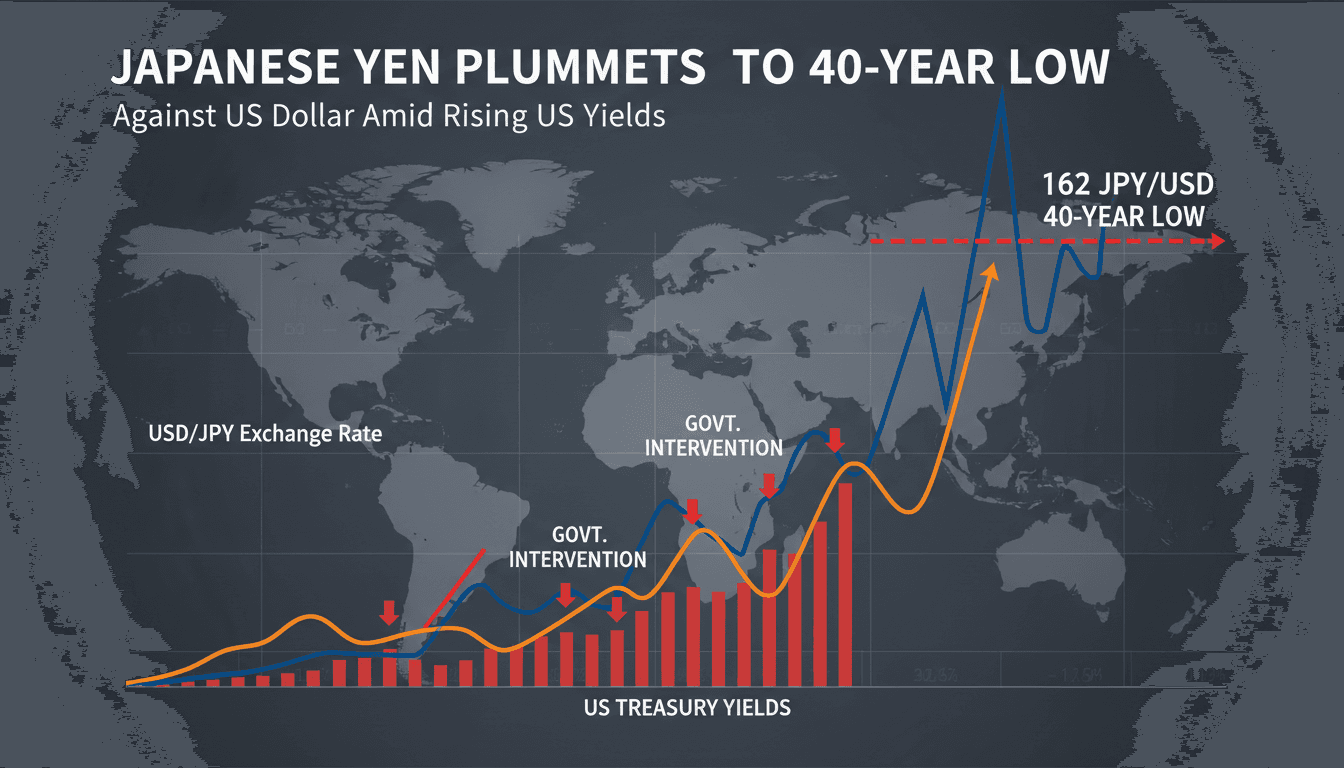
Here's what it means for you.
The Japanese yen has fallen to its lowest value against the U.S. dollar in four decades, raising concerns among traders and policymakers. This significant depreciation could lead to increased volatility in currency markets, as market participants anticipate potential intervention by the Japanese government. The situation underscores the delicate balance between currency stability and economic policy in Japan. As the yen weakens, the implications extend beyond currency traders, potentially affecting import costs and inflation in Japan. The government's response will be closely watched, as any intervention could signal a shift in monetary policy.
What happened
The Japanese yen has dropped to a 40-year low against the U.S. dollar, falling below 162 yen per dollar for the first time since 1986. This decline has raised alarms among traders and has prompted speculation regarding possible intervention by Japanese authorities to stabilize the currency. The depreciation of the yen is largely attributed to rising U.S. Treasury yields, which have bolstered the dollar's strength.
As the yen continues to weaken, the market is on high alert for any signs of action from Tokyo. The current exchange rate of 162 yen per dollar marks a significant historical low, reflecting the ongoing pressures faced by the Japanese economy.
The Context
The yen's decline is occurring in a broader context of rising U.S. Treasury yields, which have strengthened the dollar and increased pressure on the yen. Japanese officials have indicated their readiness to intervene if necessary, but market analysts suggest that the threshold for intervention may be higher than in previous years. This situation is particularly critical as it affects not only currency traders but also the overall economic landscape in Japan.
The timing of this decline is crucial, as it comes amid ongoing discussions about monetary policy and economic recovery in Japan. The potential for government intervention adds another layer of complexity to the situation, as stakeholders weigh the implications of such actions on both domestic and international markets.
Takeaway
Looking ahead, the situation may lead to increased volatility in currency markets as traders anticipate government action. The Japanese government faces a critical decision on whether to intervene in the currency market, which could have far-reaching implications for the yen's future. Additionally, fluctuations in U.S. Treasury yields will continue to impact the dollar, further influencing the dynamics of the yen's value.
Market participants should remain vigilant for any announcements from Japanese authorities regarding intervention measures. The evolving economic landscape will play a significant role in shaping the future trajectory of the yen.
Pan-Arab news coverage spanning politics, business, sports, and regional affairs.
"Asharq Al-Awsat reflects a broad Arab editorial perspective with strong attention to regional geopolitics."
— A47 Editor
الدولار يقفز والين يهبط إلى أدنى مستوى في 40 عاماً
The Japanese yen has fallen to its lowest level since 1986, as of Wednesday, following a significant rise in U.S. Treasury yields that bolstered the dollar. This decline reflects ongoing economic pressures and shifts in currency valuation.
Currency market headlines, FX rates, central-bank chatter, and macro drivers moving major pairs.
"Investing.com’s forex stream is useful for fast updates across USD, EUR, JPY, GBP and emerging-market FX."
— A47 Editor
Dollar ticks up after U.S. job openings hit two-year high; yen at 40-year lows
The U.S. dollar has seen a slight increase following the announcement of job openings in the U.S. reaching a two-year high, while the Japanese yen has fallen to a 40-year low against the dollar. This situation reflects ongoing economic pressures and ...
Sports reporting with a focus on Saudi and regional competitions.
"Okaz sports coverage is broad and audience-friendly, with strong attention to Saudi teams and leagues."
— A47 Editor
الين الياباني لأدنى مستوى في 40 عاماً
The Japanese yen has fallen to its weakest level against the dollar in nearly four decades, surpassing 162 yen per dollar for the first time since 1986, prompting traders to speculate on potential intervention by Japanese authorities. Strategists sug...
Global political, business, and cultural coverage from WSJ international desks.
"The Wall Street Journal offers extensive international reporting with a reputation for financial insight and a center-right editorial stance."
— A47 Editor
Japanese Yen Falls to 40-Year Low, Pleasing Tourists but Worrying Tokyo
The Japanese Yen has fallen to a 40-year low, raising concerns among foreign-exchange traders and prompting speculation about potential intervention by Japanese authorities to stabilize the currency. This depreciation has made Japan a more attractive...
Global markets, investing, and macroeconomics from a premier financial newsroom.
"Bloomberg is respected for in-depth financial reporting and data-driven analysis."
— A47 Editor
Traders on High Alert as the Yen Hits a Four-Decade Low
The Japanese yen has fallen to a four-decade low, prompting traders to remain vigilant as the currency's decline raises concerns about economic stability. The Japanese government previously intervened in the foreign exchange market to halt the yen's ...
Global markets, investing, and macroeconomics from a premier financial newsroom.
"Bloomberg is respected for in-depth financial reporting and data-driven analysis."
— A47 Editor
Yen’s Slide Puts Market on Lookout for Japan’s Next Red Line
The Japanese yen has fallen to its weakest level against the US dollar in four decades, prompting traders to closely monitor the currency for potential government intervention. This decline reflects ongoing economic pressures and market volatility, w...