
UK inflation drops to 2.8%, lowest in over a year
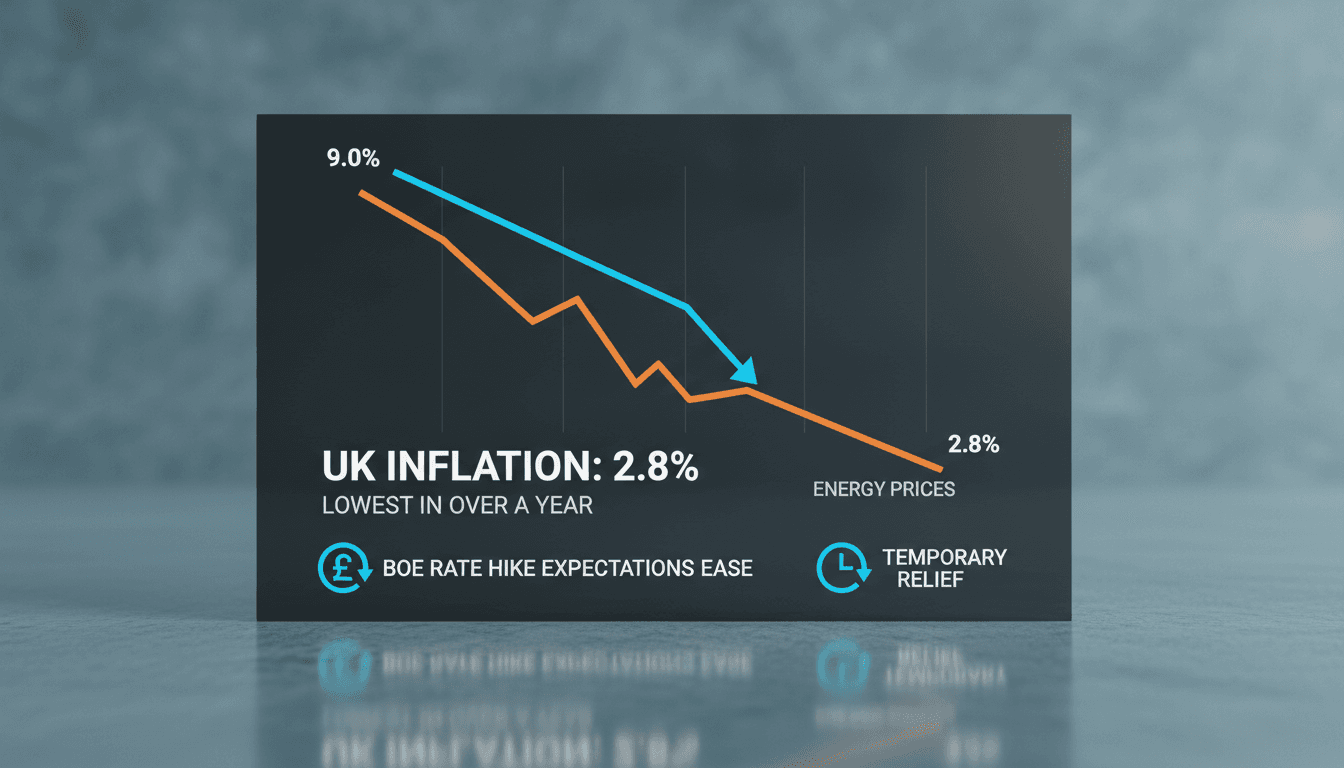
Here's what it means for you.
The recent decline in UK inflation to 2.8% offers a glimmer of hope for consumers, as it suggests a potential easing of financial pressures. This drop is primarily attributed to lower electricity and gas bills, which may influence spending patterns and consumer confidence. However, while the immediate outlook appears positive, economists caution that underlying price pressures could resurface, complicating the economic landscape. As traders recalibrate their expectations regarding interest rate hikes by the Bank of England, the financial markets are poised for a period of adjustment. The implications of this shift could affect borrowing costs and investment strategies across various sectors.
What happened
UK inflation fell to 2.8% in April 2026, marking the lowest rate in over a year. This significant decrease is largely driven by reductions in electricity and gas bills, which have alleviated some of the financial burdens on consumers. The drop in inflation has prompted traders to revise their expectations for future interest rate hikes by the Bank of England.
Food inflation has also slowed, currently sitting at 3%, particularly impacting prices for meat and chocolate. This combination of factors has led to a more optimistic outlook for consumers, although caution remains as the economic environment evolves.
The Context
The decline in inflation is a critical development for the UK economy, as it may influence monetary policy decisions by the Bank of England. Stakeholders, including consumers and businesses, are closely monitoring these changes, as they could affect spending and investment behaviors. The timing of this decline is particularly relevant, given the ongoing discussions about economic stability and growth.
A thinktank has proposed replacing stamp duty with a property wealth tax to address London's housing crisis, highlighting the interconnectedness of inflation and broader economic policies. As inflation rates fluctuate, the implications for housing affordability and consumer spending will be significant.
Takeaway
The easing inflation may provide temporary relief for consumers, but potential future price pressures could complicate economic stability. It is essential to monitor upcoming economic reports for signs of inflation resurgence, as well as the Bank of England's policy announcements regarding interest rates. These developments will be crucial in shaping the economic landscape in the coming months.
As the situation unfolds, stakeholders should remain vigilant, as the balance between inflation control and economic growth will be a key focus for policymakers and market participants alike.
UK and international business news, economics, and corporate coverage.
"The Guardian’s business section covers finance and markets with a progressive editorial tone."
— A47 Editor
UK inflation eases more than expected to 2.8%, led by lower electricity and gas bills – business live
UK inflation has eased more than expected to 2.8%, primarily driven by lower electricity and gas bills, alongside a slowdown in food inflation to 3%. This marks the lowest inflation rate in over a year, leading to speculation about fewer interest rat...
Global markets, investing, and macroeconomics from a premier financial newsroom.
"Bloomberg is respected for in-depth financial reporting and data-driven analysis."
— A47 Editor
UK Inflation Falls to Lowest Rate in Over a Year
UK inflation has fallen to its lowest rate in over a year, leading traders to anticipate fewer interest rate hikes from the Bank of England, despite economists warning of potential future price pressures. This decline in inflation reflects a signific...
Key macro releases (CPI, jobs, PMIs), surprise indexes, and market implications.
"Great for data-print awareness and instant read-through to rates and risk assets."
— A47 Editor
UK CPI inflation grows less than expected in April, PPI surges on energy bump
UK Consumer Price Index (CPI) inflation grew less than anticipated in April, registering at 2.8%, primarily due to lower energy costs and a slowdown in food inflation. Meanwhile, the Producer Price Index (PPI) surged, reflecting increased energy pric...
Macro commentary, policy analysis, growth/inflation themes, and global outlooks.
"Contextual macro coverage that complements day-to-day market headlines."
— A47 Editor
UK inflation slows to 2.8% in April
UK inflation has slowed to 2.8% in April, marking a significant decrease primarily driven by lower electricity and gas bills, as well as a slowdown in food inflation to 3%. This decline represents the lowest inflation rate in over a year, reflecting ...