
James Webb Space Telescope reveals dynamic weather patterns on distant exoplanet
Here's what it means for you.
NASA's James Webb Space Telescope (JWST) has made significant strides in understanding exoplanet atmospheres, which could have profound implications for planetary science. The ability to observe dynamic weather patterns on a distant gas giant enhances our knowledge of atmospheric conditions beyond our solar system. This breakthrough may influence future research methodologies and the interpretation of exoplanet data. As scientists continue to analyze these findings, they may uncover new insights into the formation and evolution of planets, potentially reshaping our understanding of the universe.
What happened
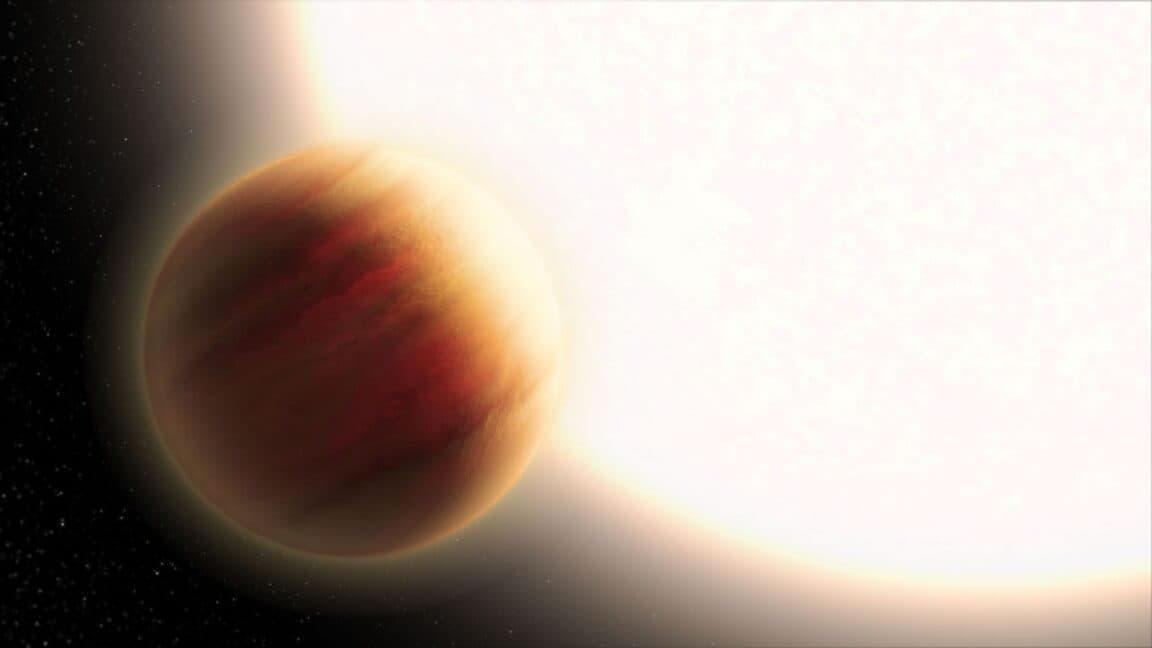
NASA's James Webb Space Telescope has successfully mapped the atmospheric conditions of a hot gas giant exoplanet located 700 light-years away. The observations reveal dynamic weather patterns, including a transition from cloudy mornings to clear evenings. This unique weather phenomenon features sandy skies and a clear sunset, showcasing the complexity of the exoplanet's atmosphere.
These findings represent a significant advancement in the study of exoplanet atmospheres, allowing researchers to observe and interpret atmospheric changes in real-time. The ability to analyze such distant worlds marks a new era in planetary science.
The Context
The exoplanet studied is classified as a hot Jupiter, a type of gas giant known for its extreme temperatures and atmospheric conditions. JWST's advanced observational capabilities enable scientists to explore exoplanets far beyond our solar system, fundamentally altering how they study and interpret these distant worlds. The implications of this research extend to our understanding of planetary formation and evolution.
As JWST continues its mission, the insights gained from this study will likely influence future explorations of other exoplanets. The timing of these findings is crucial, as they come at a moment when interest in exoplanet research is rapidly growing.
Takeaway
The observations made by JWST pave the way for more detailed studies of exoplanet atmospheres and their weather systems. Future analyses will likely focus on the atmospheric compositions of other exoplanets, further expanding our understanding of these distant worlds. Upcoming JWST missions are expected to target additional celestial bodies, promising even more groundbreaking discoveries.
As researchers delve deeper into the atmospheric dynamics of exoplanets, the potential for new insights into planetary science remains vast. The findings from this hot gas giant could serve as a foundation for future explorations and studies.
In-depth reporting on tech, policy, and science including AI.
"Respected analysis for technically savvy readers, including AI topics."
— A47 Editor
JWST maps the weather on a hot gas giant 700 light-years away
The James Webb Space Telescope (JWST) has successfully mapped the weather patterns on a hot gas giant located 700 light-years away from Earth, revealing significant atmospheric differences that could impact the study of planetary atmospheres.
In-depth coverage of hardware, software, science, and policy.
"Ars Technica provides expert technology news, hardware reviews, and analysis for a technically savvy audience."
— A47 Editor
JWST maps the weather on a hot gas giant 700 light-years away
The James Webb Space Telescope (JWST) has successfully mapped the weather patterns on a hot gas giant located 700 light-years away from Earth, revealing significant atmospheric differences that could impact the study of planetary atmospheres.
Science and technology stories including AI.
"Longstanding science magazine with thoughtful AI coverage."
— A47 Editor
JWST sees partly cloudy skies on a distant, giant exoplanet
NASA's James Webb Space Telescope (JWST) has provided a detailed observation of a distant giant exoplanet, revealing partly cloudy skies and offering insights into the atmospheric conditions of this celestial body located hundreds of light-years from...
Scientific research, technology, environment, and society.
"Scientific American is one of the oldest and most authoritative science magazines, known for deep dives into science, technology, and society."
— A47 Editor
JWST sees partly cloudy skies on a distant, giant exoplanet
NASA's James Webb Space Telescope (JWST) has provided a detailed observation of a distant giant exoplanet, revealing partly cloudy skies and offering insights into the atmospheric conditions of this celestial body located hundreds of light-years from...
Space science news, astronomy updates, and spaceflight developments.
"Space.com delivers space science news, astronomy updates, and spaceflight developments with engaging coverage."
— A47 Editor
This exoplanet weather forecast by the James Webb Space Telescope calls for sandy skies and a clear (alien) sunset
Astronomers utilizing the James Webb Space Telescope (JWST) have observed a distant hot Jupiter, revealing a weather forecast that transitions from a cloudy morning to a clear sky by dusk, indicating the dynamic atmospheric conditions of this exoplan...