
Trump threatens fees for Strait of Hormuz passage amid U.S.-Iran negotiations
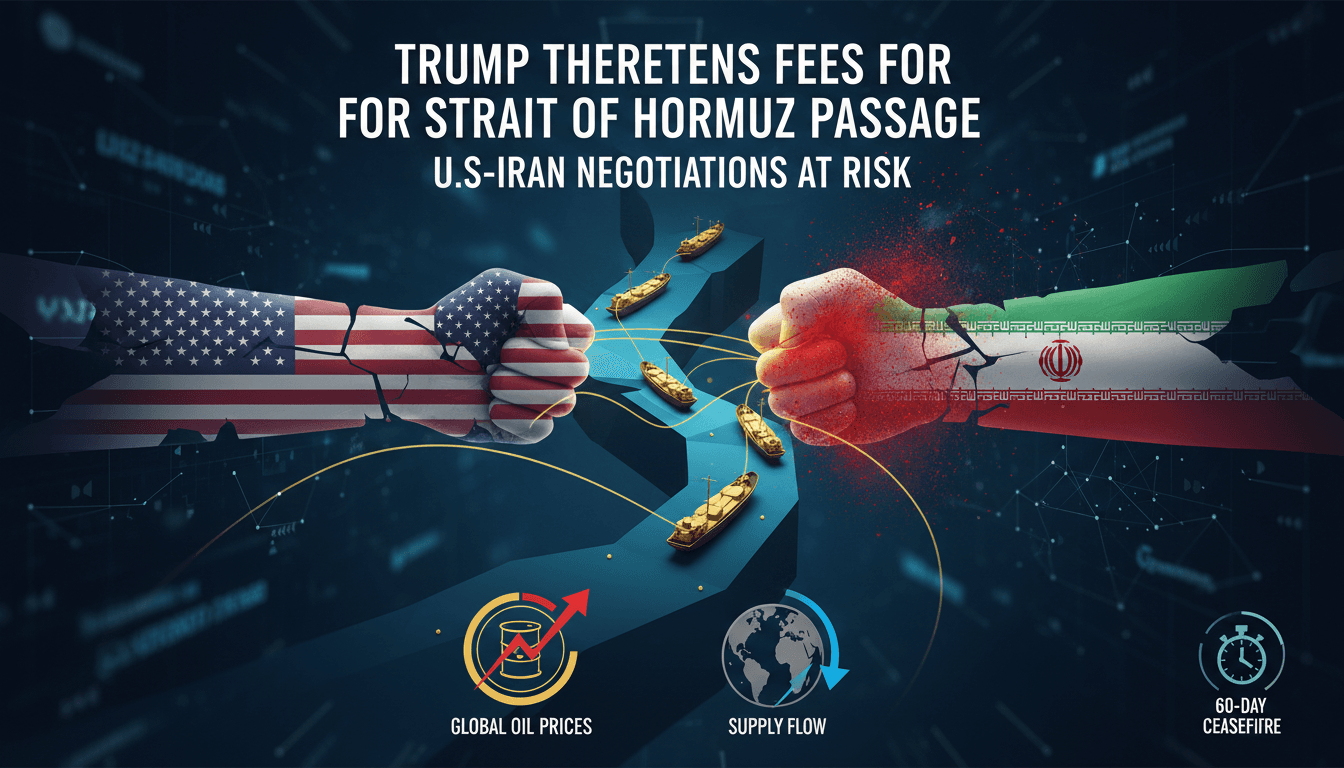
Here's what it means for you.
President Trump's warning about potential fees for passage through the Strait of Hormuz underscores the fragility of U.S.-Iran relations. The outcome of the ongoing negotiations could have significant implications for global oil markets, as the Strait is a critical shipping route. Stakeholders in the energy sector should closely monitor these developments, as they may influence oil prices and supply chains. The 60-day ceasefire period presents a crucial window for diplomatic efforts, and any failure could escalate tensions further. As negotiations unfold in Switzerland, the international community will be watching closely for signs of progress or setbacks.
What happened
President Donald Trump has announced that he may impose fees on passage through the Strait of Hormuz if negotiations with Iran do not succeed following a 60-day ceasefire. This announcement coincides with high-level diplomatic talks taking place in Switzerland, which involve multiple countries, including Pakistan. The ceasefire period is critical for discussions surrounding Iran's nuclear program and regional stability.
Trump's statement indicates a willingness to leverage economic measures should diplomatic efforts falter. The U.S. has positioned itself as a key player in maintaining security in the Middle East, particularly concerning oil trade routes.
The Context
The Strait of Hormuz is a vital shipping route for oil, making it a focal point of U.S. strategic interests. The ongoing 60-day ceasefire is a pivotal moment for negotiations aimed at addressing tensions between the U.S. and Iran. High-level talks in Switzerland are expected to involve various stakeholders, including Pakistani Prime Minister Shehbaz Sharif, who is participating in the discussions.
The geopolitical stakes are high, as the outcome of these negotiations could reshape U.S.-Iran relations and influence broader regional dynamics. The potential for fees on passage through the Strait adds another layer of complexity to an already tense situation.
Takeaway
The upcoming negotiations in Switzerland will be crucial in determining the future of U.S.-Iran relations and could have far-reaching implications for global oil markets. Observers should watch for the results of these talks, as they will likely influence not only U.S. policy but also reactions from Iran and other Middle Eastern countries.
The situation remains fluid, and the potential for economic measures, such as fees for passage, could escalate tensions if diplomatic efforts do not yield positive outcomes.
Pan-Arab political news and analysis.
"Al-Quds Al-Arabi is a London-based Arabic newspaper known for political coverage."
— A47 Editor
ترامب يهدد بفرض رسوم أمريكية في مضيق هرمز إن أخفقت المفاوضات مع إيران
On Saturday, U.S. President Donald Trump announced that the United States may impose tariffs in the Strait of Hormuz if negotiations with Iran fail. This statement highlights the ongoing tensions between the U.S. and Iran, particularly regarding trad...
Arabic-language coverage of political affairs and current events.
"Okaz political coverage typically follows mainstream Saudi framing on national and regional affairs."
— A47 Editor
رئيس وزراء باكستان إلى سويسرا.. ترمب يهدد بفرض رسوم في «هرمز»
U.S. President Donald Trump threatened to impose tolls on the Strait of Hormuz if peace talks fail, stating that no tolls would be charged during a 60-day ceasefire period. He emphasized that tolls would be implemented afterward only if the U.S. deem...
Jordanian news and regional updates.
"Roya News is a Jordanian outlet focused on breaking news and local affairs."
— A47 Editor
ترمب: لا رسوم عبور في مضيق هرمز إلا لصالح واشنطن.. نحن حارس الشرق الأوسط
Former President Donald Trump stated that there will be no transit fees in the Strait of Hormuz unless they benefit Washington, asserting that the U.S. acts as the 'guardian of the Middle East.' This statement highlights the strategic importance of t...