
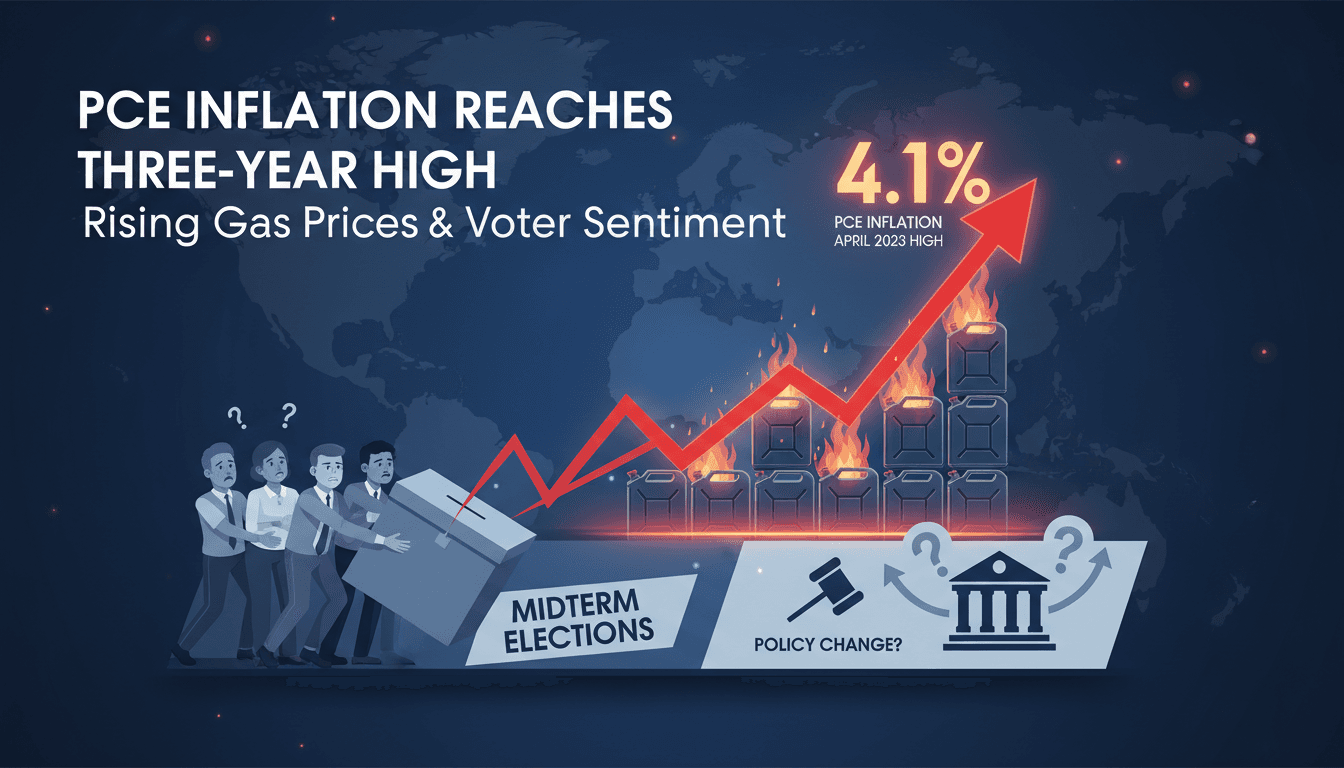
PCE inflation index reaches three-year high of 4.1%
Here's what it means for you.
The recent rise in the PCE index to 4.1% signals significant economic pressure, particularly for consumers facing higher prices at the pump. This inflation rate, exceeding the Federal Reserve's target, may prompt shifts in monetary policy that could affect interest rates and borrowing costs. As the midterm elections approach, rising inflation could also influence voter sentiment and political dynamics.
What happened
The PCE index, the Federal Reserve's preferred inflation gauge, has surged to a three-year high of 4.1% year-over-year as of May 2026. This marks the first time the index has surpassed 4% since April 2023, indicating a notable increase in consumer prices. The monthly inflation rate remained steady at 0.4%, consistent with the previous month’s increase, reflecting ongoing economic challenges.
This spike in inflation is primarily driven by rising gas prices, which have contributed significantly to the overall cost of living. As inflation continues to climb, it raises concerns about the economic landscape and the potential need for policy adjustments by the Federal Reserve.
The Context
The rise in the PCE index highlights ongoing economic challenges, particularly as energy prices continue to escalate. With inflation now more than double the Federal Reserve's preferred target, the implications for economic policy are profound. Stakeholders, including consumers and policymakers, are closely monitoring these trends as they prepare for the upcoming midterm elections.
The timing of this inflation surge is critical, as it could shape voter sentiment and influence political strategies. The Federal Reserve's response to these inflationary pressures will be pivotal in determining the economic outlook and the political landscape in the months ahead.
Takeaway
As inflation rates rise, it is essential to monitor the Federal Reserve's response and any adjustments to monetary policy. These changes could have significant implications for consumer spending and overall economic health. Additionally, the political ramifications of rising inflation may become more pronounced as the midterm elections draw near.
Voter sentiment could shift in response to economic conditions, making it crucial for political parties to address these issues effectively. Observing how these dynamics unfold will provide insight into both economic and political trends in the coming months.
UK and international business news, economics, and corporate coverage.
"The Guardian’s business section covers finance and markets with a progressive editorial tone."
— A47 Editor
Key Fed inflation gauge rises to three-year high in May after gas prices peaked
The Federal Reserve's preferred inflation gauge rose to a three-year high of 4.1% in May, driven primarily by surging gas prices, according to the US Commerce Department. This marks the largest annual increase since April 2023, with a monthly inflati...
News from the United States including domestic politics, society, and culture.
"The Guardian is known for its progressive editorial stance and in-depth analysis, often advocating for social justice, environmental issues, and liberal values."
— A47 Editor
Key Fed inflation gauge rises to three-year high in May after gas prices peaked
The Federal Reserve's preferred inflation gauge rose to a three-year high of 4.1% in May, driven primarily by surging gas prices, according to the US Commerce Department. This marks the largest annual increase since April 2023, with a monthly inflati...
Global business headlines with AI angles.
"General business outlet that frequently covers AI."
— A47 Editor
Core Inflation rises To 3.4 %, Highest Level In Three Years But In Line With Expectations
Core inflation has risen to 3.4%, marking the highest level in three years, according to new data from the Federal Reserve's preferred price gauge. This increase aligns with expectations, reflecting ongoing economic pressures.
Social/economic commentary and analysis relevant to business and markets.
"WSJ blends data-driven economic insight with commentary on policy and society."
— A47 Editor
Fed’s Preferred Inflation Gauge Climbs Above Target Range
The Personal Consumption Expenditures (PCE) index, the Federal Reserve's preferred measure of inflation, has risen by 4.1%, marking its highest level since April 2023 and exceeding the central bank's target range.
Pan-Arab news coverage spanning politics, business, sports, and regional affairs.
"Asharq Al-Awsat reflects a broad Arab editorial perspective with strong attention to regional geopolitics."
— A47 Editor
التضخم المفضل لـ«الفيدرالي» يكسر حاجز الـ4 في المائة لأول مرة منذ 3 سنوات
In May, the preferred inflation index of the U.S. Federal Reserve surpassed the 4% mark for the first time in three years, driven by rising energy prices. This increase highlights ongoing inflationary pressures affecting the economy.