
U.S. crude oil inventories rise by 3 million barrels for the first time in 11 weeks
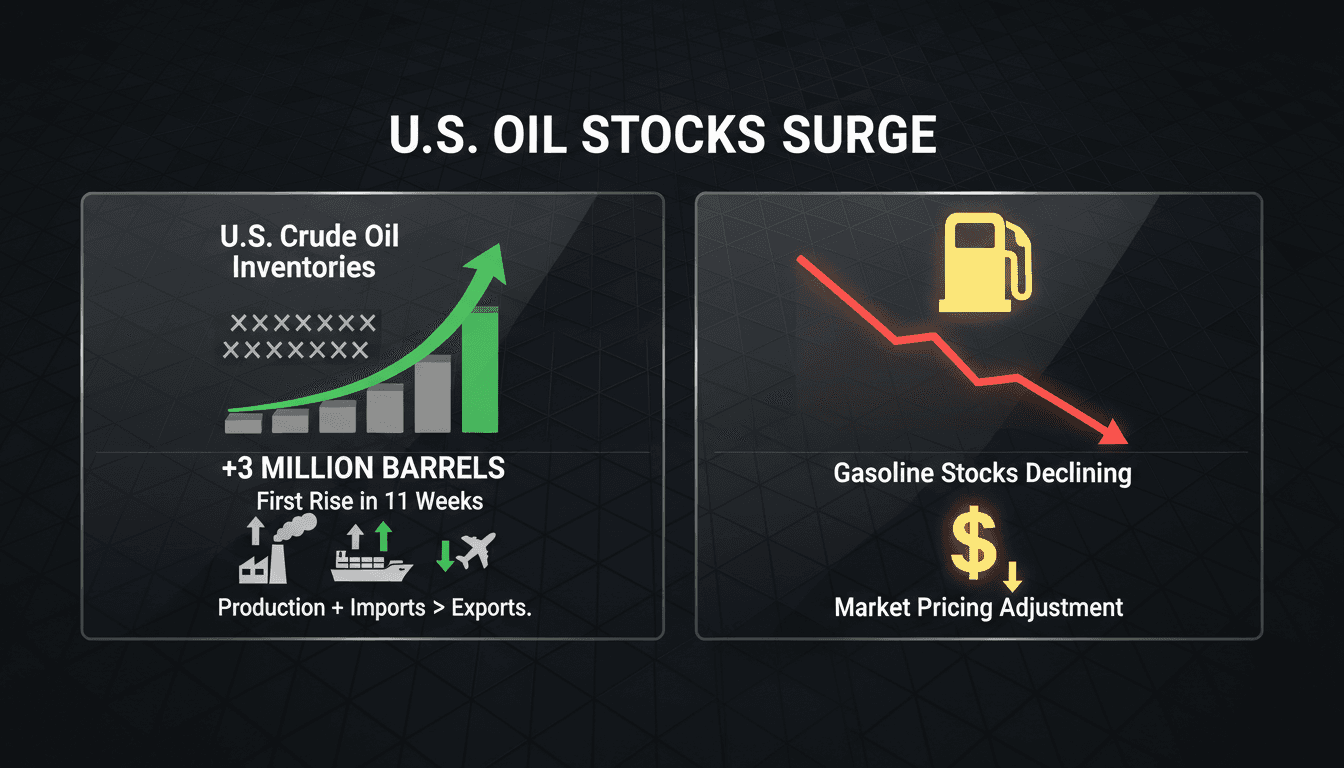
Here's what it means for you.
The recent increase in U.S. crude oil inventories signals a potential shift in market dynamics that could influence pricing strategies. As production and imports rise, stakeholders may need to reassess their trading approaches, particularly in light of declining gasoline stocks. This development could lead to adjustments in supply strategies as the market reacts to the changing landscape.
What happened
U.S. crude oil inventories have risen by 3 million barrels, marking the first increase in 11 weeks. This unexpected rise is attributed to higher production and imports, while exports have seen a decline. The increase in stockpiles comes at a time when gasoline stocks are also reported to be decreasing, adding another layer of complexity to the market.
This shift in inventory levels contrasts with previous forecasts that anticipated a continued decline. The implications of this rise could be significant for market participants as they navigate the evolving supply dynamics.
The Context
The increase in crude oil inventories is noteworthy given the recent trends in the oil market. Stakeholders, including producers and traders, have been closely monitoring inventory levels, which have been on a downward trajectory for weeks. The timing of this increase is critical, as it coincides with a reported decline in gasoline stocks, suggesting potential shifts in consumer demand and market behavior.
Understanding the interplay between production, imports, and exports is essential for stakeholders as they assess the implications of this inventory rise. The current market conditions may prompt a reevaluation of pricing strategies and trading tactics moving forward.
Takeaway
Looking ahead, market participants should closely monitor future inventory reports for trends in production and consumption. The decline in gasoline stocks could have further implications for pricing, making it crucial to stay informed about shifts in supply and demand dynamics. As the market adjusts to this unexpected increase in crude oil inventories, stakeholders will need to remain vigilant regarding export trends and their potential impact on market conditions.
Markets desk coverage, trading insights, and investor updates.
"WSJ’s markets reporting provides in-depth analysis and context for investors."
— A47 Editor
U.S. Crude Oil Stockpiles Post Unexpected Build
U.S. crude oil inventories have unexpectedly increased by 3 million barrels, marking the first rise in 11 weeks, driven by higher production and imports alongside a decline in exports. This shift indicates a significant change in the supply dynamics ...
Oil, metals, and agriculture: supply/demand headlines, OPEC chatter, inventories, and price action.
"Solid tape for energy and metals traders tracking macro and micro catalysts."
— A47 Editor
US crude oil inventories rise as gasoline stocks decline
Recent data indicates that U.S. crude oil inventories have increased, while gasoline stocks have seen a decline. This shift reflects ongoing fluctuations in the oil market, highlighting the complexities of supply and demand dynamics.
Key macro releases (CPI, jobs, PMIs), surprise indexes, and market implications.
"Great for data-print awareness and instant read-through to rates and risk assets."
— A47 Editor
Crude Oil Inventories Surge, Defying Forecasts and Previous Levels
U.S. crude oil inventories have surged, surpassing forecasts and previous levels, indicating a significant increase in stockpiles that reflects changing dynamics in the oil market. This rise suggests that supply is currently outpacing demand, which c...