
U.S. and Iran Agreement Leads to Decline in Eurozone Bond Yields
Here's what it means for you.
The recent agreement between the U.S. and Iran to end hostilities has significant implications for the Eurozone financial landscape. Investors are recalibrating their expectations regarding interest rate hikes by the European Central Bank (ECB), leading to a notable decline in government bond yields. This shift in sentiment reflects a broader reassessment of geopolitical risks and their potential impact on monetary policy. As stability in U.S.-Iran relations continues, market dynamics may evolve further, influencing economic conditions across the Eurozone. Stakeholders should remain vigilant as these developments unfold.
What happened
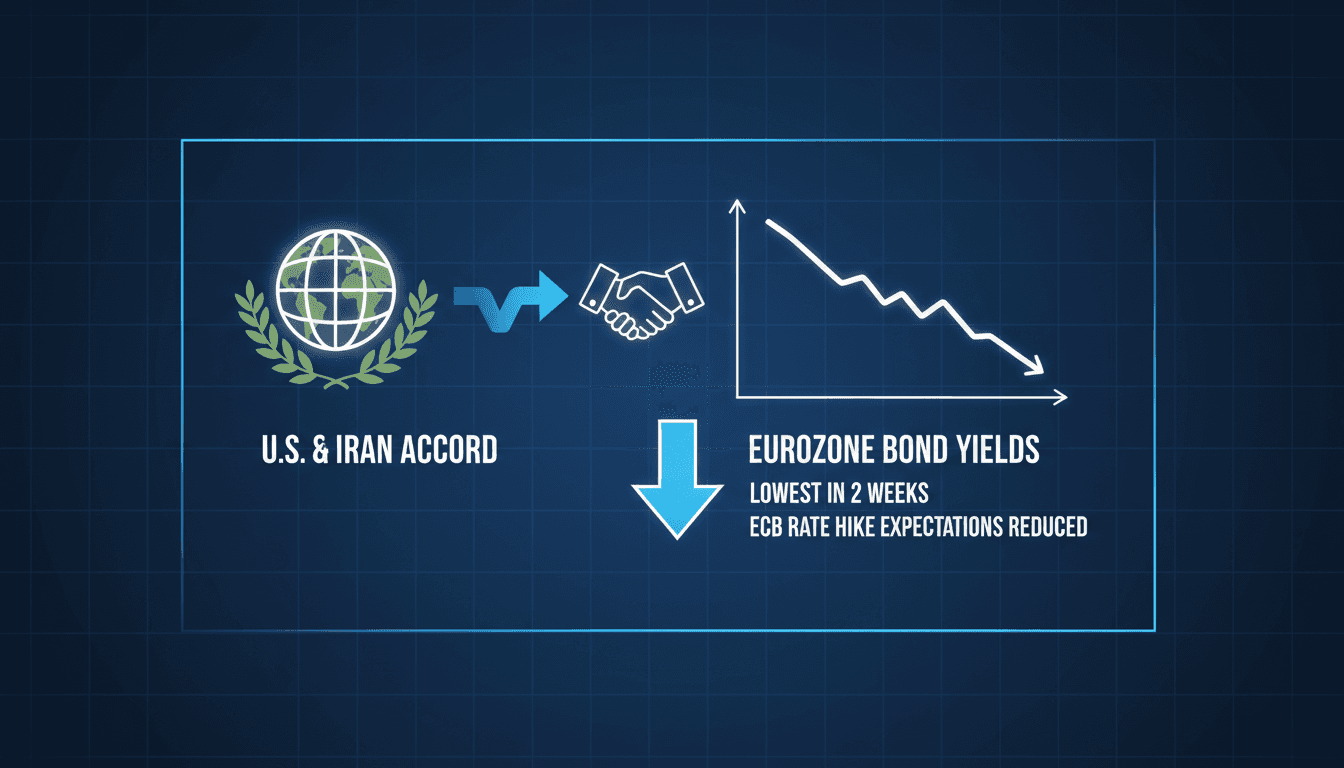
Yields on eurozone government bonds have fallen to their lowest levels in two weeks following a preliminary agreement between the U.S. and Iran to end hostilities. This geopolitical development has prompted investors to adjust their expectations regarding potential interest rate hikes by the European Central Bank. The decline in bond yields indicates a significant shift in market sentiment, reflecting reduced concerns over future monetary tightening.
The agreement reached on June 15, 2026, has had immediate repercussions on the financial markets, particularly in the Eurozone. Investors are responding to the easing of tensions, which is expected to positively impact oil prices and overall economic stability.
The Context
The recent U.S.-Iran agreement marks a pivotal moment in international relations, with potential ramifications for global markets. The stakeholders involved include not only the U.S. and Iran but also the European Central Bank, which must navigate the changing landscape of interest rates amid shifting geopolitical dynamics. The timing of this agreement is crucial, as it coincides with ongoing discussions about monetary policy in the Eurozone.
Lower bond yields suggest that investors are less inclined to anticipate aggressive rate increases from the ECB, which could have long-term implications for economic growth in the region. The interplay between geopolitical stability and monetary policy will be closely monitored by market participants.
Takeaway
As the situation evolves, market participants should keep a close eye on the implications of the U.S.-Iran agreement and the ECB's policy decisions. Future statements from the ECB will be critical in shaping expectations for interest rates and bond yields. Additionally, ongoing developments in U.S.-Iran relations will likely continue to influence market dynamics.
The easing of tensions may lead to further shifts in investor sentiment, impacting economic forecasts in the Eurozone. Stakeholders should remain alert to these developments as they unfold.
Macro commentary, policy analysis, growth/inflation themes, and global outlooks.
"Contextual macro coverage that complements day-to-day market headlines."
— A47 Editor
Euro zone bond yields drop as US-Iran deal eases oil prices
Euro zone bond yields have dropped following the announcement of a peace deal between the United States and Iran, which has contributed to a decrease in oil prices. This agreement is expected to ease geopolitical tensions and potentially reopen the s...
Pan-Arab news coverage spanning politics, business, sports, and regional affairs.
"Asharq Al-Awsat reflects a broad Arab editorial perspective with strong attention to regional geopolitics."
— A47 Editor
الاتفاق المبدئي بين واشنطن وطهران يخفض عوائد سندات اليورو
On Monday, yields on Eurozone bonds fell to their lowest levels in two weeks following a preliminary agreement between the United States and Iran aimed at ending the ongoing conflict. This development signals a potential easing of tensions in the reg...
Markets desk coverage, trading insights, and investor updates.
"WSJ’s markets reporting provides in-depth analysis and context for investors."
— A47 Editor
Eurozone Government Bond Yields Fall After U.S.-Iran Deal
Yields on eurozone government bonds fell following an agreement between the U.S. and Iran to end ongoing conflict, leading to a shift in investor expectations regarding the European Central Bank's (ECB) interest rate policies.