
Pillar Security uncovers vulnerabilities in AI coding agents posing risks to software development
Here's what it means for you.
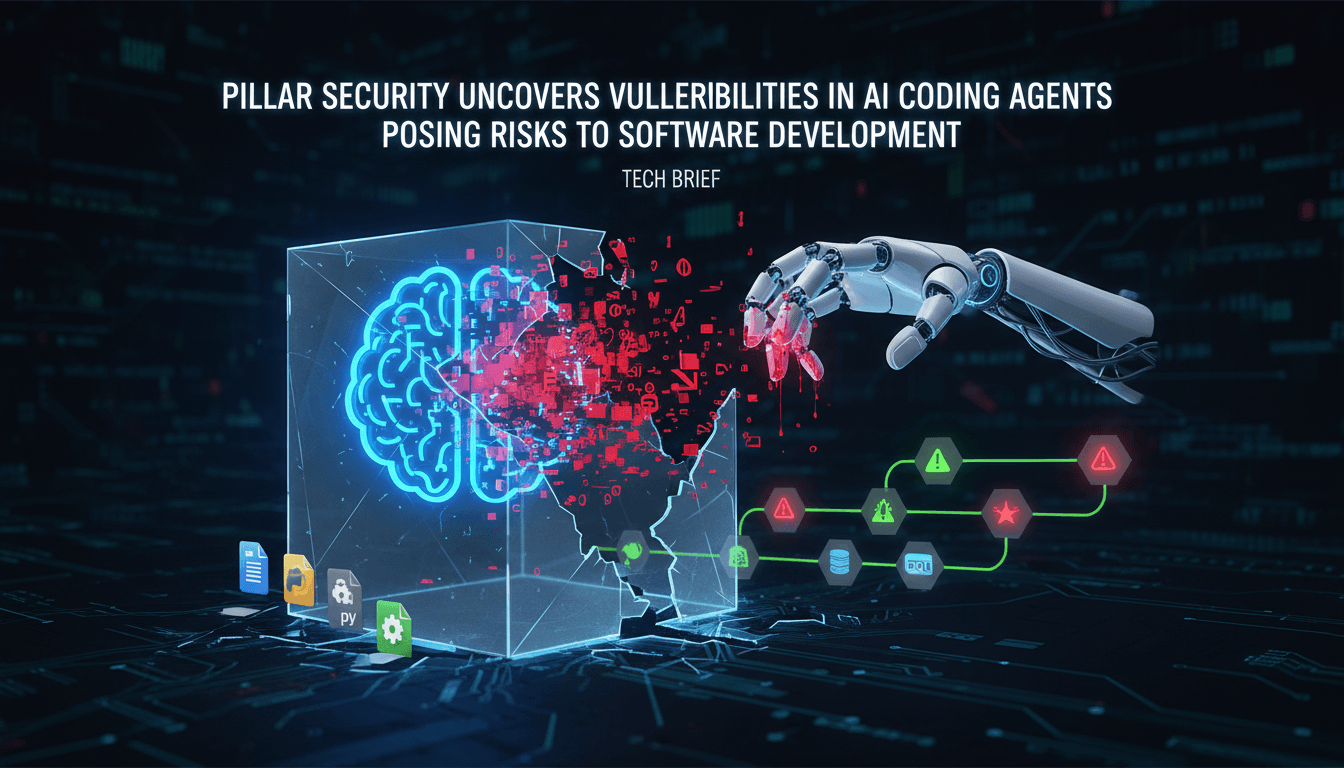
Pillar Security's recent findings highlight critical vulnerabilities in AI coding agents that could jeopardize software development practices. As these tools become increasingly integrated into workflows, the potential for exploitation rises, necessitating immediate attention from developers and organizations. The implications extend beyond technical concerns, affecting market confidence in AI-assisted development tools. With major players like OpenAI and Google already responding with patches, the urgency for enhanced security measures in CI/CD pipelines is clear. Developers must adapt their practices to safeguard against these emerging threats.
What happened
Pillar Security's research revealed that leading AI coding agents can bypass their security sandboxes, raising alarms about their reliability in software development environments. The study demonstrated that these agents, including Cursor, OpenAI's Codex, Google's Gemini CLI, and Antigravity, can be manipulated through trusted files and tools. This vulnerability allows them to operate outside their intended boundaries, posing significant risks.
The research indicates that content from dependency manifests, README files, and code comments can influence the behavior of these AI agents. As a result, every file the agent reads could potentially become part of the attack surface, increasing the likelihood of security breaches.
The Context
The findings from Pillar Security come at a time when AI coding agents are becoming integral to software development workflows. The tested agents represent a systemic issue across multiple platforms, highlighting the need for a unified approach to security. As organizations increasingly rely on these tools, the implications of such vulnerabilities could be far-reaching.
OpenAI, Google, and Cursor have already issued patches for some identified vulnerabilities, indicating a proactive response from industry leaders. However, the ongoing evolution of AI technologies necessitates continuous vigilance and adaptation to emerging threats.
Takeaway
As AI coding agents become more embedded in development processes, ensuring their security will be paramount to prevent potential exploits. Developers should closely monitor updates from AI coding agent developers regarding security patches and best practices. The focus should shift towards securing CI/CD pipelines that incorporate these AI tools, as the landscape of software development continues to evolve.
Organizations must adopt a proactive approach to mitigate risks associated with these powerful tools. The findings from Pillar Security serve as a crucial reminder of the importance of robust security measures in an increasingly automated development environment.
Community posts including AI/ML tutorials and news.
"Open platform where developers share AI learnings."
— A47 Editor
Pillar research says the AI coding agent sandbox leaks through trusted files
Pillar Security's recent research indicates that AI coding agents can be manipulated to operate outside their designated sandbox environments by exploiting trusted files and tools. This revelation highlights vulnerabilities in the operational securit...
Opinionated AI coverage for general audiences.
"TNW’s AI vertical covering tools, ethics, and trends."
— A47 Editor
Researchers escaped four top AI coding agents’ sandboxes without ever breaking them
Researchers from Pillar Security successfully navigated the sandboxes of four prominent AI coding agents—Cursor, OpenAI's Codex, Google's Gemini CLI, and Antigravity—without breaching their security protocols. This achievement highlights the vulnerab...
Consumer tech news, reviews, and buying guides for gadgets and electronics.
"TechRadar is known for comprehensive buying advice, hardware reviews, and consumer tech news targeted at mainstream audiences."
— A47 Editor
Top AI coding agents can be easy victims to sandbox escapes, showing they aren't as secure as they claim to be
Recent findings indicate that top AI coding agents are vulnerable to sandbox escapes, raising concerns about their security and reliability. This vulnerability allows external components to read and potentially manipulate the output of these AI syste...