
SpaceX rocket collides with the Moon creating new crater and raising space debris concerns
Here's what it means for you.
The unintentional collision of a SpaceX Falcon 9 rocket with the Moon underscores the growing challenges posed by space debris. As space agencies prepare for future lunar missions, this incident may prompt a reevaluation of debris management strategies. The implications for safety and mission success are significant, as the risk of debris continues to rise with increased space activity. This event highlights the need for enhanced monitoring and research into the effects of space debris on lunar exploration. Stakeholders must prioritize the development of effective policies to mitigate these risks.
What happened
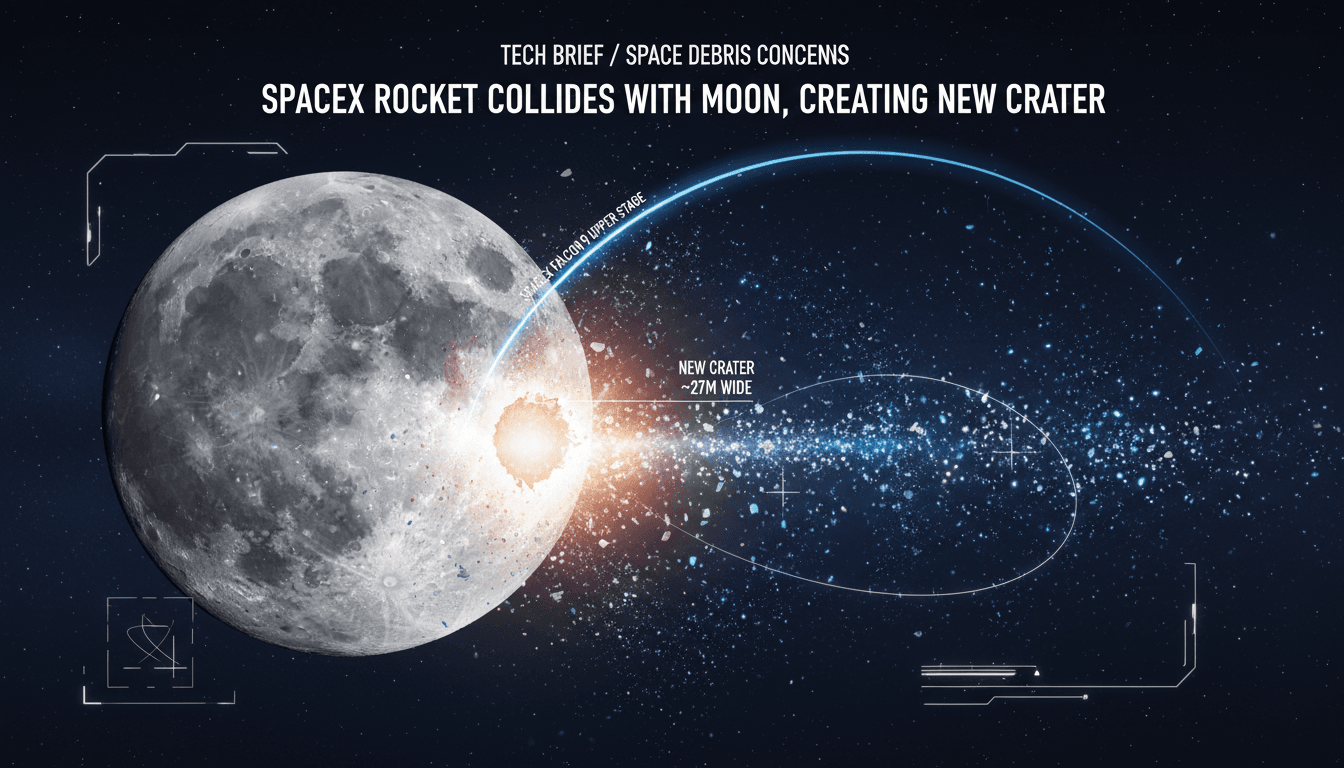
On August 5, 2026, at 06:35 GMT, a SpaceX Falcon 9 rocket's upper stage unintentionally impacted the Moon, resulting in a new crater approximately 27 meters wide. The piece of the rocket is estimated to be the size of a five-story building, and the impact force is equivalent to 3 tons of TNT. This significant energy release has raised concerns among scientists and space agencies regarding the implications of such collisions.
The collision created a dust cloud that lasted for several minutes, drawing immediate attention from the scientific community. Researchers are now eager to confirm the impact and study its effects on the lunar surface.
The Context
As space exploration expands, the issue of space debris has become increasingly critical. The collision of the SpaceX rocket has reignited discussions about the management of debris in orbit and on celestial bodies. With the Moon being a focal point for future missions, understanding the risks associated with debris is essential for ensuring the safety of upcoming explorations.
The event occurred against a backdrop of heightened interest in lunar missions, with various space agencies planning to return to the Moon. This incident serves as a reminder of the potential hazards posed by human-made objects in space, necessitating a collaborative approach to debris management.
Takeaway
Looking ahead, monitoring efforts by NASA and other space agencies will be crucial in documenting the new crater and assessing its implications. Researchers will focus on understanding how this incident affects future lunar missions and the broader challenges of space debris.
As the space industry continues to grow, addressing the risks associated with debris will be vital for the success of future explorations to the Moon and beyond. The ongoing dialogue about space debris management strategies will likely gain momentum in light of this recent event.
Pan-Arab news coverage spanning politics, business, sports, and regional affairs.
"Asharq Al-Awsat reflects a broad Arab editorial perspective with strong attention to regional geopolitics."
— A47 Editor
أحدث سحابة استمرت دقائق... صاروخ «سبايس إكس» يرتطم بسطح القمر
A SpaceX rocket unintentionally collided with the surface of the Moon, creating what is expected to be the latest crater on the lunar surface. Space agencies, including NASA, are keen to document this event, which lasted only a few minutes.
Arabic-language reporting on global and regional news.
"BBC Arabic is part of the BBC, generally regarded for editorial standards and broad international coverage."
— A47 Editor
جزء ضخم من صاروخ سبيس إكس يُعتقد أنه ارتطم بالقمر، فهل سيؤثر في الأرض؟
A large piece of a SpaceX rocket, comparable in size to a five-story building, is believed to have collided with the Moon, with scientists awaiting confirmation and monitoring for any resulting crater.
Arabic-language coverage of international news and geopolitics.
"RT Arabic is a Russian state-funded outlet often criticized for promoting Kremlin-aligned narratives."
— A47 Editor
صاروخ "سبيس إكس" يصطدم بالقمر محدثا فوهة جديدة
A SpaceX rocket lost control and collided with the surface of the Moon, creating a new crater and a cloud of dust. This incident has reignited discussions about space debris and its implications for lunar exploration.
Arabic-language coverage of international news and geopolitics.
"RT Arabic is a Russian state-funded outlet often criticized for promoting Kremlin-aligned narratives."
— A47 Editor
بقوة تعادل 3 أطنان من "تي إن تي"!.. حقائق مثيرة عن اصطدام صاروخ "سبيس إكس" بالقمر غدا
The upper stage of SpaceX's Falcon 9 rocket is set to collide with the Moon on August 5 at 06:35 GMT, creating a crater approximately 27 meters wide. This event marks a significant moment in space exploration as it involves a deliberate impact on the...