
Astronomers Release Largest 2D Map of the Universe Cataloging Nearly 4 Billion Cosmic Objects
What happened
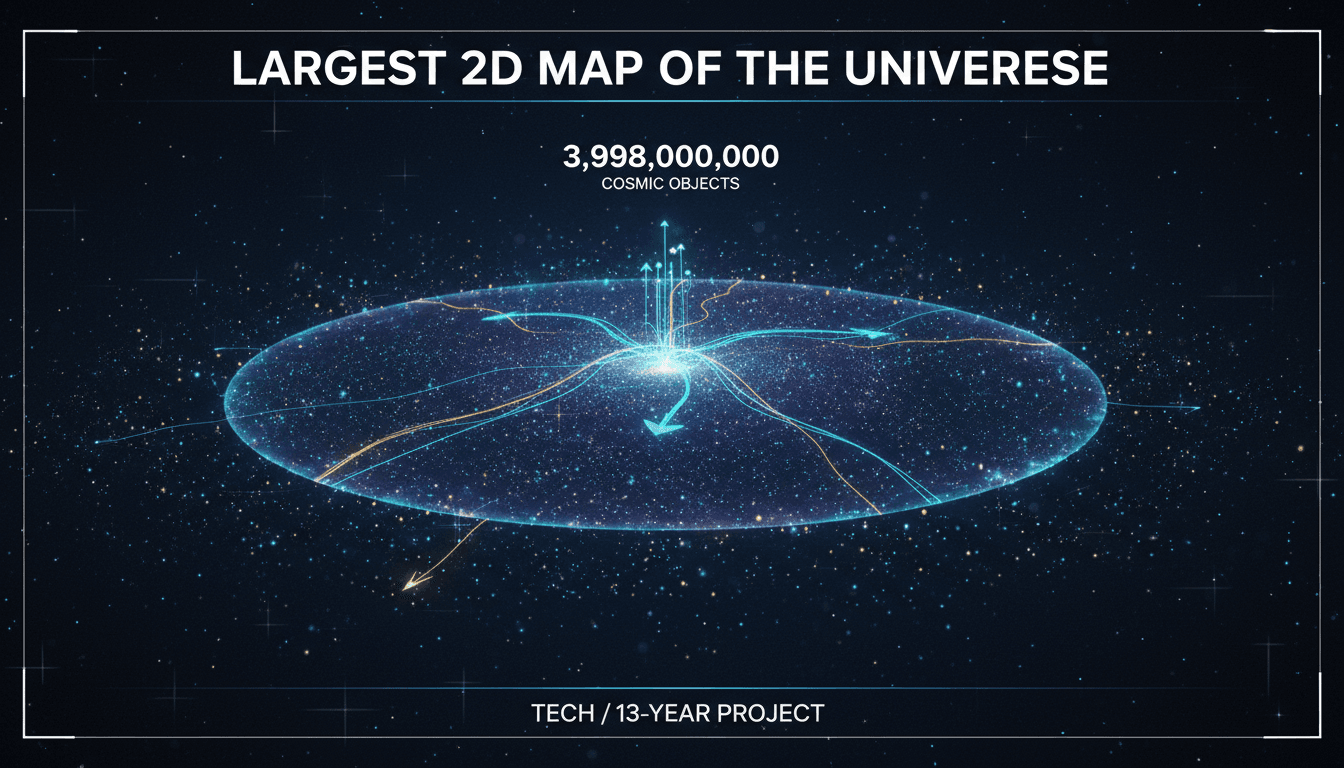
Astronomers have released a groundbreaking 2D map of the universe, cataloging nearly 4 billion cosmic objects and covering 75% of the sky. This monumental project, which took 13 years to complete, represents the largest celestial map ever created, consisting of an astonishing 5.6 trillion pixels. The map serves as a reference for other telescopes both on Earth and in space, enhancing the capabilities of astronomical observations.
The unveiling of this map marks a significant milestone in the field of astronomy, showcasing the advancements in research and technology that have made such an extensive mapping effort possible. As astronomers continue to analyze the data, the map is expected to yield new insights into the cosmos.
The Context
The release of this extensive map reflects a collaborative effort among astronomers and researchers who have dedicated years to its development. The project began 13 years ago, culminating in its unveiling on August 11, 2026. This timeline illustrates the commitment to advancing our understanding of the universe through meticulous research and technological innovation.
The map's significance lies not only in its size but also in its potential to guide future astronomical studies. By providing a comprehensive catalog of cosmic objects, it opens new avenues for exploration and discovery, allowing scientists to delve deeper into the mysteries of the universe.
Takeaway
As astronomers begin to analyze the newly released map, it is anticipated that it will lead to groundbreaking discoveries and insights into the universe's structure and evolution. The map will likely serve as a foundation for future collaborations in astronomical research, fostering a spirit of innovation and inquiry.
The implications of this project extend beyond immediate findings; it sets the stage for a new era of exploration in astronomy. Researchers will be able to leverage this extensive data to enhance our understanding of cosmic phenomena and the fundamental laws governing the universe.
Pan-Arab news coverage spanning politics, business, sports, and regional affairs.
"Asharq Al-Awsat reflects a broad Arab editorial perspective with strong attention to regional geopolitics."
— A47 Editor
أكبر خريطة للكون تضمّ 4 مليارات جرم سماوي
Astronomers have recently released the largest two-dimensional map of the universe, showcasing an impressive 4 billion celestial objects. The creation of this map took 13 years and covers 75% of the sky, providing a comprehensive view of the cosmos.
Scientific discoveries, health, technology, and natural phenomena.
"Live Science reports on scientific discoveries, health, technology, and natural phenomena with a popular science tone."
— A47 Editor
Astronomers drop one of the largest-ever maps of the universe, charting 4 billion objects
Astronomers have released one of the largest maps of the universe, cataloging approximately 4 billion cosmic objects. This extensive celestial map not only serves as a comprehensive catalog but also acts as a guide for other telescopes on Earth and i...
Space science news, astronomy updates, and spaceflight developments.
"Space.com delivers space science news, astronomy updates, and spaceflight developments with engaging coverage."
— A47 Editor
Scientists create largest 2D map of the universe with 5.6 trillion pixels and nearly 4 billion cosmic objects
Scientists have created the largest 2D map of the universe, comprising 5.6 trillion pixels and nearly 4 billion cosmic objects, marking a significant advancement in astronomical research. This monumental effort enhances our understanding of the unive...