
Microsoft launches MAI-Thinking-1 reasoning model at Build conference
Here's what it means for you.
Microsoft's introduction of the MAI-Thinking-1 reasoning model signifies a pivotal moment in AI technology, particularly for enterprise applications. This advancement not only enhances coding and image processing capabilities but also positions Microsoft as a formidable competitor in the AI landscape. As businesses increasingly rely on AI solutions, the implications for industry standards and user experience are profound. The launch reflects a broader trend of integrating advanced AI models into everyday tools, potentially reshaping workflows across various sectors. Stakeholders should closely monitor how these developments influence market dynamics and user adoption.
What happened
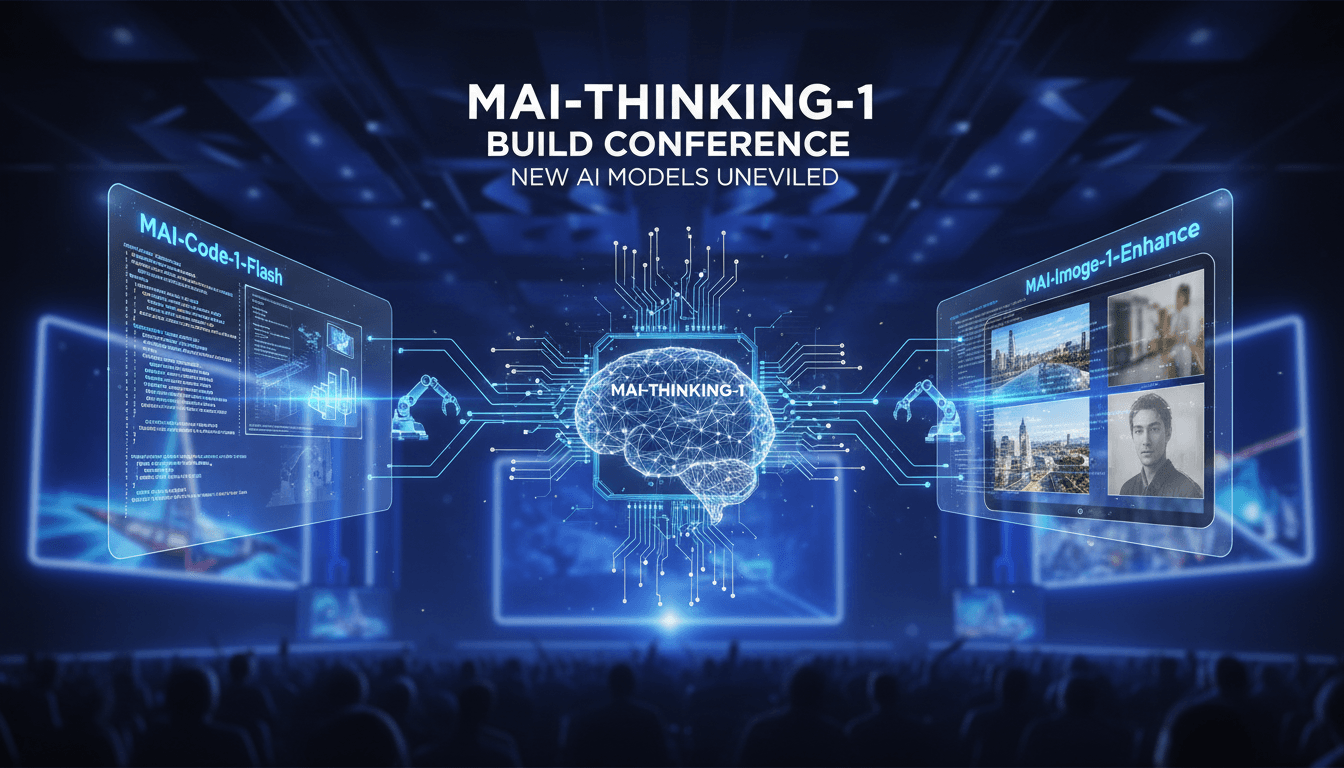
During the Build conference, Microsoft unveiled its first reasoning model, MAI-Thinking-1, alongside several other AI models. These new offerings are designed to enhance capabilities in coding, image processing, and voice recognition. The MAI-Thinking-1 model boasts an impressive 1 trillion parameters, showcasing its complexity and potential for reasoning tasks.
Additionally, Microsoft introduced MAI-Code-1-Flash, tailored for GitHub Copilot and Visual Studio Code, featuring 137 billion parameters. Both models were trained on a large dataset sourced from the web, ensuring high quality and relevance for users. Early access to MAI-Thinking-1 is being provided to select partners, indicating a strategic rollout.
The Context
The launch of MAI-Thinking-1 comes at a time when AI technology is rapidly evolving, with increasing demand for sophisticated tools in enterprise settings. Microsoft's commitment to advancing AI is evident in its investment in these models, which aim to improve user experience and operational efficiency. The timing aligns with a growing trend among tech companies to enhance their AI offerings, making this release particularly significant.
The MAI-Thinking-1 model, with its 1 trillion parameters, represents a leap in reasoning capabilities, setting a new benchmark for competitors. As organizations seek to leverage AI for better decision-making and productivity, Microsoft's advancements could influence industry standards and practices.
Takeaway
Looking ahead, the performance of MAI-Thinking-1 in real-world applications will be crucial for its acceptance and effectiveness. Stakeholders should monitor user feedback on MAI-Code-1-Flash as it becomes available to GitHub Copilot users, as this will provide insights into its impact on coding efficiency. The success of these models could determine Microsoft's position in the competitive AI landscape.
As Microsoft continues to innovate, the adoption of these new models will play a significant role in shaping the future of AI technology. Observing how these advancements are integrated into existing workflows will be essential for understanding their long-term implications.
Notes on data tools, LLMs, and open-source projects.
"Developer blog with deep dives on LLM tooling."
— A47 Editor
Microsoft's new MAI models
Microsoft has announced the launch of two new AI models, MAI-Thinking-1 and MAI-Code-1-Flash, during the Build 2026 conference. MAI-Thinking-1 is designed for advanced reasoning with 1 trillion parameters, while MAI-Code-1-Flash, with 137 billion par...
Big data technologies that power AI systems.
"Covers data platforms and analytics for AI workloads."
— A47 Editor
Microsoft's first reasoning model is one of 7 AIs just released at Build - what we know so far
Microsoft has unveiled MAI-Thinking-1, its first advanced reasoning AI model, during the Build 2026 conference, marking a significant step in the company's AI development strategy. This launch is part of a broader initiative that includes new coding,...
Business tech news, enterprise IT, and innovation analysis.
"ZDNet offers enterprise IT news, reviews, and strategy guidance."
— A47 Editor
Microsoft's first reasoning model is one of 7 AIs just released at Build - what we know so far
Microsoft has unveiled MAI-Thinking-1, its first advanced reasoning AI model, during the Build 2026 conference, marking a significant step in the company's AI development strategy. This launch is part of a broader initiative that includes new coding,...