
AI Companies Engage in Destructive Scanning of Antique Books for LLM Training Data
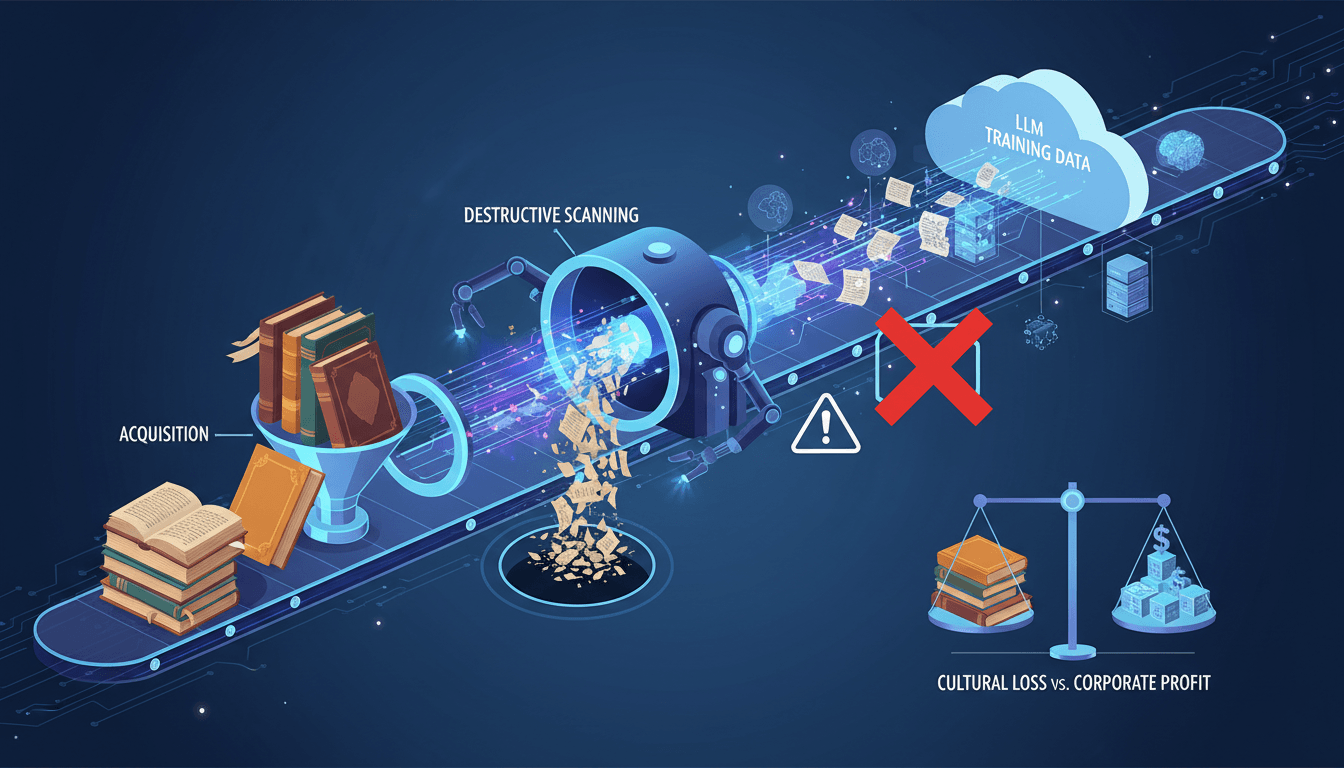
Here's what it means for you.
If you value cultural heritage and the preservation of knowledge, this trend could impact the availability of rare texts in the future.
Why it matters
This practice raises significant ethical questions about the preservation of cultural artifacts and the future of intellectual property.
What happened (in 30 seconds)
- AI companies began purchasing and destructively scanning antique books in early 2024, with major players like Anthropic and Amazon leading the charge.
- Court documents revealed plans for scanning up to 2 million books every six months, raising alarms about the destruction of rare texts.
- Public backlash has emerged from authors and historians, but no regulatory actions have been taken to halt these operations.
The context you actually need
- Legal loopholes: The first-sale doctrine allows companies to destroy physical books after scanning, creating a gray area in copyright law.
- Quality concerns: AI developers are seeking high-quality, pre-2022 texts to avoid the pitfalls of training on AI-generated content, which can degrade model performance.
- Market demand: There is a growing demand for pre-AI-era texts, leading to increased bulk purchases of rare and out-of-print books by AI firms.
What's really happening
In early 2024, Anthropic launched Project Panama, a systematic initiative aimed at acquiring and destructively scanning millions of antique and rare books. This project was driven by the need for high-quality training data for large language models (LLMs), particularly texts authored by humans before the rise of AI-generated content. The legal landscape surrounding digital archives has become increasingly fraught, with AI developers facing liabilities for using pirated materials. As a result, the acquisition of physical books has become a preferred method, as these texts fall under the first-sale doctrine, allowing companies to legally destroy them after scanning.
The revelations about this practice came to light through court documents in the Bartz v. Anthropic lawsuit, unsealed in January 2026. These documents outlined ambitious plans for scanning between 500,000 and 2 million books every six months, indicating a large-scale operation. Booksellers reported a surge in bulk orders for rare titles, as AI companies sought to build their libraries of pre-AI texts. Investigative reports, including one published by 404 Media on August 17, 2026, confirmed that shipments of these books were routed to an Amazon warehouse in Las Vegas, specifically designed for spine removal, scanning, and disposal.
The implications of this practice extend beyond the immediate destruction of books. It raises ethical concerns about the preservation of cultural heritage and the potential loss of unique historical texts. Authors, archivists, and historians have voiced their outrage, labeling the practice as destructive to cultural memory. Despite the backlash, there has been no documented regulatory response from governments, leaving the market dynamics largely unchallenged.
As AI companies continue to prioritize the acquisition of physical texts, the demand for pre-2022 books is likely to sustain. This trend could lead to a scarcity of rare books in the market, impacting collectors, researchers, and anyone interested in accessing historical knowledge. The long-term consequences of this practice may reshape how we view intellectual property and the preservation of cultural artifacts in the digital age.
Who feels it first (and how)
- Authors: Concerned about the loss of their works and the implications for copyright.
- Archivists and historians: Alarmed by the destruction of cultural heritage and unique texts.
- Booksellers: Experiencing increased demand for rare and out-of-print books, but facing ethical dilemmas.
- Researchers and students: Potentially losing access to important historical texts that are being destroyed.
What to watch next
- Regulatory developments: Monitor any potential government actions or regulations aimed at protecting cultural artifacts and intellectual property.
- Market shifts: Watch for changes in the availability and pricing of rare books as demand from AI companies continues to rise.
- Public sentiment: Keep an eye on the growing backlash from authors and cultural institutions, which could influence future practices in the industry.
AI companies are acquiring and destructively scanning antique books for training data.
The demand for pre-2022 texts will continue to grow, impacting the availability of rare books.
Whether regulatory bodies will intervene to protect cultural heritage and intellectual property rights.
Frequently Asked Questions
- Why it matters?
- This practice raises significant ethical questions about the preservation of cultural artifacts and the future of intellectual property.
- What happened (in 30 seconds)?
- AI companies began purchasing and destructively scanning antique books in early 2024, with major players like Anthropic and Amazon leading the charge. Court documents revealed plans for scanning up to 2 million books every six months, raising alarms about the destruction of rare texts. Public backlash has emerged from authors and historians, but no regulatory actions have been taken to halt these operations.
- What's really happening?
- In early 2024, Anthropic launched Project Panama, a systematic initiative aimed at acquiring and destructively scanning millions of antique and rare books. This project was driven by the need for high-quality training data for large language models (LLMs), particularly texts authored by humans before the rise of AI-generated content. The legal landscape surrounding digital archives has become increasingly fraught, with AI developers facing liabilities for using pirated materials. As a result, th
- Who feels it first (and how)?
- Authors: Concerned about the loss of their works and the implications for copyright. Archivists and historians: Alarmed by the destruction of cultural heritage and unique texts. Booksellers: Experiencing increased demand for rare and out-of-print books, but facing ethical dilemmas. Researchers and students: Potentially losing access to important historical texts that are being destroyed.
- What to watch next?
- Regulatory developments: Monitor any potential government actions or regulations aimed at protecting cultural artifacts and intellectual property. Market shifts: Watch for changes in the availability and pricing of rare books as demand from AI companies continues to rise. Public sentiment: Keep an eye on the growing backlash from authors and cultural institutions, which could influence future practices in the industry.
Business, investment, entrepreneurship, leadership, and innovation.
"Forbes is known for its coverage of business leaders, market trends, and entrepreneurial ventures with a pro-business editorial stance."
— A47 Editor
AI Companies Are Buying—And Destroying—Antique Books. Here’s Why.
AI companies are acquiring millions of antique books to scan them for training AI models, leading to the destruction of these physical texts once they are no longer needed. This practice raises concerns about the preservation of cultural heritage and...
Future-focused tech headlines including AI breakthroughs.
"Consumer-friendly future-tech site with frequent AI coverage."
— A47 Editor
Amazon Caught Destroying Rare Books to Train AI
Amazon has been accused of purchasing large quantities of rare books, scanning them for artificial intelligence training, and subsequently destroying these texts. An investigation revealed that a tracked shipment from Biblio ended at an Amazon facili...
Tech startup news, programming trends, and discussions shared by the developer community.
"Hacker News is a community-driven source highlighting influential tech discussions, startup launches, and programming insights."
— A47 Editor
Amazon, which started off selling books, is destroying rare texts to train AI
Amazon, originally a bookseller, is reportedly destroying rare texts to train its artificial intelligence systems, raising ethical concerns about the preservation of cultural heritage. This practice has sparked criticism from various stakeholders, in...
Startup news with frequent AI coverage.
"Covers launches, funding, and product updates in AI."
— A47 Editor
Amazon, which started off selling books, is destroying rare texts to train AI
Amazon, originally a bookseller, is reportedly destroying rare texts to train its artificial intelligence systems, raising ethical concerns about the preservation of cultural heritage. This practice has sparked criticism from various stakeholders, in...
Curated tech headlines including AI stories.
"Influential aggregator surfacing the day’s top tech/AI links."
— A47 Editor
Investigation: Amazon is buying huge quantities of rare books, scanning them for AI, and destroying them; a tracked Biblio order went to its Las Vegas facility (Emanuel Maiberg/404 Media)
An investigation by 404 Media revealed that Amazon is purchasing large quantities of rare books, scanning them for artificial intelligence training, and subsequently destroying them. A tracked shipment from Biblio ended at an Amazon facility in Las V...