
NASA Confirms Lunar Crater from SpaceX Falcon 9 Upper Stage Impact
Here's what it means for you.
As space exploration intensifies, understanding the implications of space debris becomes crucial for industries and governments alike.
Why it matters
The uncontrolled impact of a SpaceX rocket on the Moon raises critical questions about space debris management and the sustainability of lunar exploration.
What happened (in 30 seconds)
- On August 5, 2026, a defunct SpaceX Falcon 9 upper stage impacted the Moon at about 5,400 mph, creating a new crater.
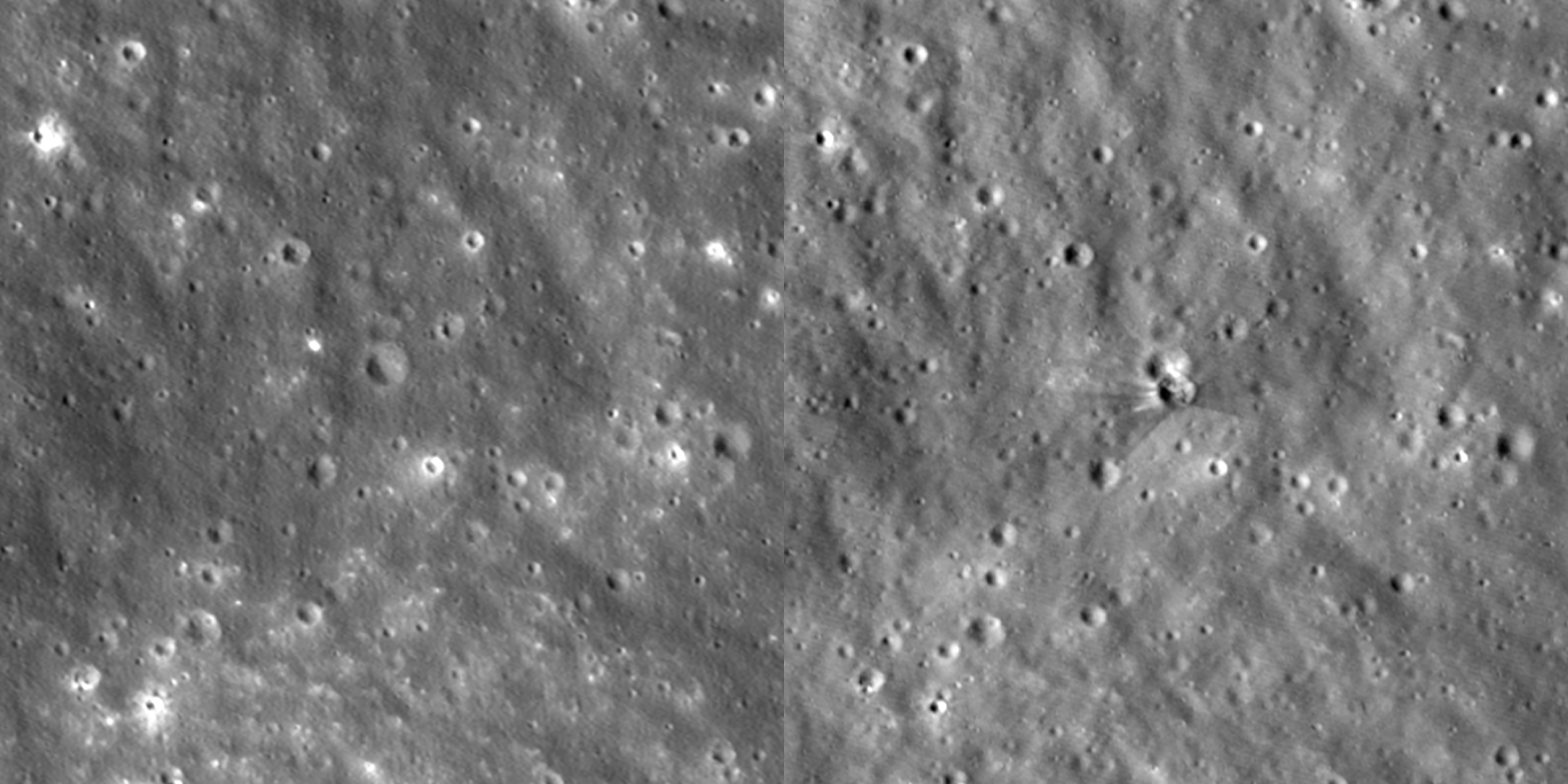
- NASA's Lunar Reconnaissance Orbiter captured images of the 60-foot-wide crater just days later, confirming its dimensions and location.
- This incident marks only the second known case of a human-made object striking the Moon, highlighting ongoing challenges in space debris management.
The context you actually need
- The Falcon 9 upper stage launched in January 2025 for a mission involving lunar landers and remained in orbit until its trajectory decayed.
- Increasing lunar activity from various nations and commercial entities underscores the need for effective space debris protocols.
- The event has prompted discussions about sustainability in space, particularly as more players enter the lunar exploration arena.
What's really happening
On August 5, 2026, the Falcon 9 upper stage, which had been in lunar orbit since its launch in January 2025, collided with the Moon, creating a crater approximately 60 feet wide. This incident was not just a random occurrence; it was the result of a series of gravitational and solar influences that caused the rocket's trajectory to decay over time. NASA's Center for Near Earth Object Studies and independent astronomers had predicted the impact trajectory, allowing for targeted observations by various lunar orbiters, including South Korea's Danuri.
The implications of this event extend beyond the immediate physical impact on the Moon. As nations and private companies ramp up their lunar missions, the risk of space debris increases. The Falcon 9 incident serves as a stark reminder of the challenges associated with managing human-made objects in space. With more missions planned, the potential for similar uncontrolled impacts grows, raising concerns about the sustainability of lunar exploration.
SpaceX has publicly acknowledged the incident, emphasizing its commitment to responsible hardware management and collaboration with NASA on disposal protocols. However, the lack of immediate regulatory responses or market shifts indicates that the broader implications of this event are still being assessed. The conversation around lunar sustainability is gaining traction, but concrete actions to mitigate space debris risks remain to be seen.
As the commercial space sector continues to expand, the need for comprehensive space debris management strategies becomes increasingly urgent. The Falcon 9 impact highlights the necessity for international cooperation and regulatory frameworks to ensure that lunar exploration does not compromise the integrity of the Moon's environment. This incident could serve as a catalyst for developing such frameworks, but it also underscores the complexities involved in balancing exploration with sustainability.
Who feels it first (and how)
- Space agencies: Increased scrutiny on mission planning and debris management.
- Private space companies: Potential regulatory changes affecting operational protocols.
- Researchers and scientists: New opportunities for studying lunar impacts and their effects.
- Governments: Heightened awareness of space sustainability issues and potential policy implications.
What to watch next
- Regulatory developments: Watch for any new international agreements or regulations regarding space debris management.
- Commercial lunar missions: Monitor upcoming missions from various entities to see how they address debris concerns.
- Technological advancements: Keep an eye on innovations aimed at debris mitigation and sustainable lunar exploration practices.
The Falcon 9 upper stage impacted the Moon, creating a 60-foot crater.
Increased discussions and potential regulatory actions regarding space debris management.
The long-term implications for lunar exploration and sustainability practices.
Frequently Asked Questions
- Why it matters?
- The uncontrolled impact of a SpaceX rocket on the Moon raises critical questions about space debris management and the sustainability of lunar exploration.
- What happened (in 30 seconds)?
- On August 5, 2026, a defunct SpaceX Falcon 9 upper stage impacted the Moon at about 5,400 mph, creating a new crater. NASA's Lunar Reconnaissance Orbiter captured images of the 60-foot-wide crater just days later, confirming its dimensions and location. This incident marks only the second known case of a human-made object striking the Moon, highlighting ongoing challenges in space debris management.
- What's really happening?
- On August 5, 2026, the Falcon 9 upper stage, which had been in lunar orbit since its launch in January 2025, collided with the Moon, creating a crater approximately 60 feet wide. This incident was not just a random occurrence; it was the result of a series of gravitational and solar influences that caused the rocket's trajectory to decay over time. NASA's Center for Near Earth Object Studies and independent astronomers had predicted the impact trajectory, allowing for targeted observations by va
- Who feels it first (and how)?
- Space agencies: Increased scrutiny on mission planning and debris management. Private space companies: Potential regulatory changes affecting operational protocols. Researchers and scientists: New opportunities for studying lunar impacts and their effects. Governments: Heightened awareness of space sustainability issues and potential policy implications.
- What to watch next?
- Regulatory developments: Watch for any new international agreements or regulations regarding space debris management. Commercial lunar missions: Monitor upcoming missions from various entities to see how they address debris concerns. Technological advancements: Keep an eye on innovations aimed at debris mitigation and sustainable lunar exploration practices.
News in science and technology, with a focus on consumer and innovation stories.
"Popular Science simplifies complex scientific topics for general audiences and celebrates innovation."
— A47 Editor
NASA shares first images of SpaceX moon crash site
On August 5, 2026, the upper stage of a SpaceX Falcon 9 rocket crashed into the Moon, creating a crater approximately 60 feet wide. NASA has released images confirming the impact site, marking a significant event in lunar exploration.
Space science news, astronomy updates, and spaceflight developments.
"Space.com delivers space science news, astronomy updates, and spaceflight developments with engaging coverage."
— A47 Editor
A SpaceX rocket slammed into the moon this month — and a NASA spacecraft has spotted its lunar grave (photos)
On August 5, 2026, a SpaceX Falcon 9 rocket's upper stage crashed into the moon, resulting in a crater approximately 60 feet wide, as confirmed by NASA's Lunar Reconnaissance Orbiter. This incident marks a significant event in space exploration, high...
Science and technology stories including AI.
"Longstanding science magazine with thoughtful AI coverage."
— A47 Editor
NASA images reveal 60-foot-wide crater on moon left by SpaceX rocket
On August 5, 2026, a fragment of a SpaceX Falcon 9 rocket collided with the moon, resulting in a crater approximately 60 feet wide, as confirmed by NASA's Lunar Reconnaissance Orbiter. The rocket had been in orbit for about 18 months before its unint...
Scientific research, technology, environment, and society.
"Scientific American is one of the oldest and most authoritative science magazines, known for deep dives into science, technology, and society."
— A47 Editor
NASA images reveal 60-foot-wide crater on moon left by SpaceX rocket
On August 5, 2026, a fragment of a SpaceX Falcon 9 rocket collided with the moon, resulting in a crater approximately 60 feet wide, as confirmed by NASA's Lunar Reconnaissance Orbiter. The rocket had been in orbit for about 18 months before its unint...
UAE-based English-language newspaper covering regional politics, economics, and global affairs.
"The National reflects Emirati policy perspectives while maintaining international editorial standards."
— A47 Editor
Nasa captures images of Moon crater caused by SpaceX debris
NASA has captured images of a new crater on the Moon, formed by the impact of a four-ton piece of SpaceX Falcon 9 rocket debris that crashed on August 5, 2026, at a speed of 5,400 miles per hour.
Scientific discoveries, health, technology, and natural phenomena.
"Live Science reports on scientific discoveries, health, technology, and natural phenomena with a popular science tone."
— A47 Editor
Out-of-control SpaceX rocket carved a 60-foot crater into the moon, NASA images reveal
NASA has confirmed that a SpaceX Falcon 9 upper stage crashed into the moon on August 5, 2026, creating a 60-foot crater. This incident marks a significant event in space exploration, as it was an unintentional collision resulting from the rocket's t...
Covers consumer technology, electronics, gadgets, and product reviews.
"Engadget is a trusted source for gadget reviews and consumer tech news, known for its hands-on analysis and industry coverage."
— A47 Editor
NASA images show crater on the moon caused by SpaceX Falcon 9 crash
NASA's Lunar Reconnaissance Orbiter has captured images of a new crater on the moon, formed by the crash of a SpaceX Falcon 9 rocket. The rocket, which had been drifting in space for over a year, collided with the lunar surface, resulting in a signif...
Consumer technology news with AI coverage.
"Gadget and tech site reporting on AI in products."
— A47 Editor
NASA images show crater on the moon caused by SpaceX Falcon 9 crash
NASA's Lunar Reconnaissance Orbiter has captured images of a new crater on the moon, formed by the crash of a SpaceX Falcon 9 rocket. The rocket, which had been drifting in space for over a year, collided with the lunar surface, resulting in a signif...
Pan-Arab news coverage spanning politics, business, sports, and regional affairs.
"Asharq Al-Awsat reflects a broad Arab editorial perspective with strong attention to regional geopolitics."
— A47 Editor
«ناسا» تنشر صورة فوهة أحدثها ارتطام صاروخ «سبايس إكس» بسطح القمر
NASA has released an image of a crater formed by the impact of a SpaceX rocket on the surface of the Moon earlier this month. This event highlights ongoing activities in lunar exploration and the role of private companies in space missions.
RT is a Russian state-funded network covering global events from a Russian perspective.
"RT is widely criticized for promoting pro-Kremlin narratives and is considered by many to be a state propaganda outlet."
— A47 Editor
NASA releases first IMAGES of SpaceX lunar crash crater
NASA has released before-and-after images of a new crater formed by the unplanned impact of a SpaceX Falcon 9 rocket on the Moon, which occurred at approximately 5,400 miles per hour on August 5, 2026. The collision, involving a four-ton piece of the...
Regional and international reporting focused on Middle Eastern politics, diplomacy, and economics.
"Asharq Al-Awsat is a Saudi-owned international newspaper reflecting mainstream Gulf political perspectives."
— A47 Editor
NASA Images Show Crater Carved by SpaceX Rocket that Slammed Into the Moon
NASA has released images showing a new crater on the Moon, which was formed by the impact of a four-ton piece of a SpaceX Falcon 9 rocket that crashed on August 5, 2026, at a speed of 5,400 miles per hour. This event marks a significant moment in lun...
A curated Gulf News feed featuring major stories across news, business, opinion, and lifestyle.
"Gulf News is a major UAE newspaper whose featured stories feed reflects a broad editorial mix shaped for a Gulf audience."
— A47 Editor
Before-and-after NASA images show crater carved by a SpaceX rocket that slammed into the moon
A piece of a SpaceX Falcon 9 rocket, weighing approximately four tons, is believed to have crashed into the Moon on August 5, 2026, at a speed of 5,400 miles per hour, creating a new lunar crater. NASA has released before-and-after images showing the...
UAE-based newspaper covering Gulf politics, society, and international developments.
"Gulf News is one of the UAE’s most prominent English-language publications."
— A47 Editor
Before-and-after NASA images show crater carved by a SpaceX rocket that slammed into the moon
A piece of a SpaceX Falcon 9 rocket, weighing approximately four tons, is believed to have crashed into the Moon on August 5, 2026, at a speed of 5,400 miles per hour, creating a new lunar crater. NASA has released before-and-after images showing the...
Tech industry news, innovation, gadgets, and startups from a UK broadcaster.
"Sky News is often seen as a center-right outlet in the UK, known for its rolling coverage and breaking stories."
— A47 Editor
Before and after pictures show moon crater after SpaceX crash
A SpaceX Falcon 9 rocket has crashed into the moon, resulting in the formation of a new crater, as confirmed by images captured by a NASA spacecraft. The incident occurred after the rocket, which had been drifting in space for over a year, collided w...
Business, investment, entrepreneurship, leadership, and innovation.
"Forbes is known for its coverage of business leaders, market trends, and entrepreneurial ventures with a pro-business editorial stance."
— A47 Editor
NASA Shares Before-And-After Photos Of Moon Crater Made By SpaceX Rocket
NASA has released before-and-after images of a new crater on the Moon, created by the impact of a SpaceX Falcon 9 rocket that ran out of fuel after a deep-space mission. The rocket collided with the lunar surface on August 5, 2026, contributing to th...
National headlines across the United States including breaking stories and societal issues.
"NBC News is a mainstream media outlet known for comprehensive national and international news coverage with a centrist to slightly left-leaning editorial tone."
— A47 Editor
NASA spots new crater on the moon created when a SpaceX rocket crashed
NASA has confirmed the creation of a new crater on the moon following the uncontrolled crash of a defunct Falcon 9 rocket from SpaceX, which occurred at an estimated speed of 5,400 mph. The incident highlights the ongoing issue of space debris, as th...