
Google Partners with U.K. to Launch AI Initiative for Aviation Contrail Reduction
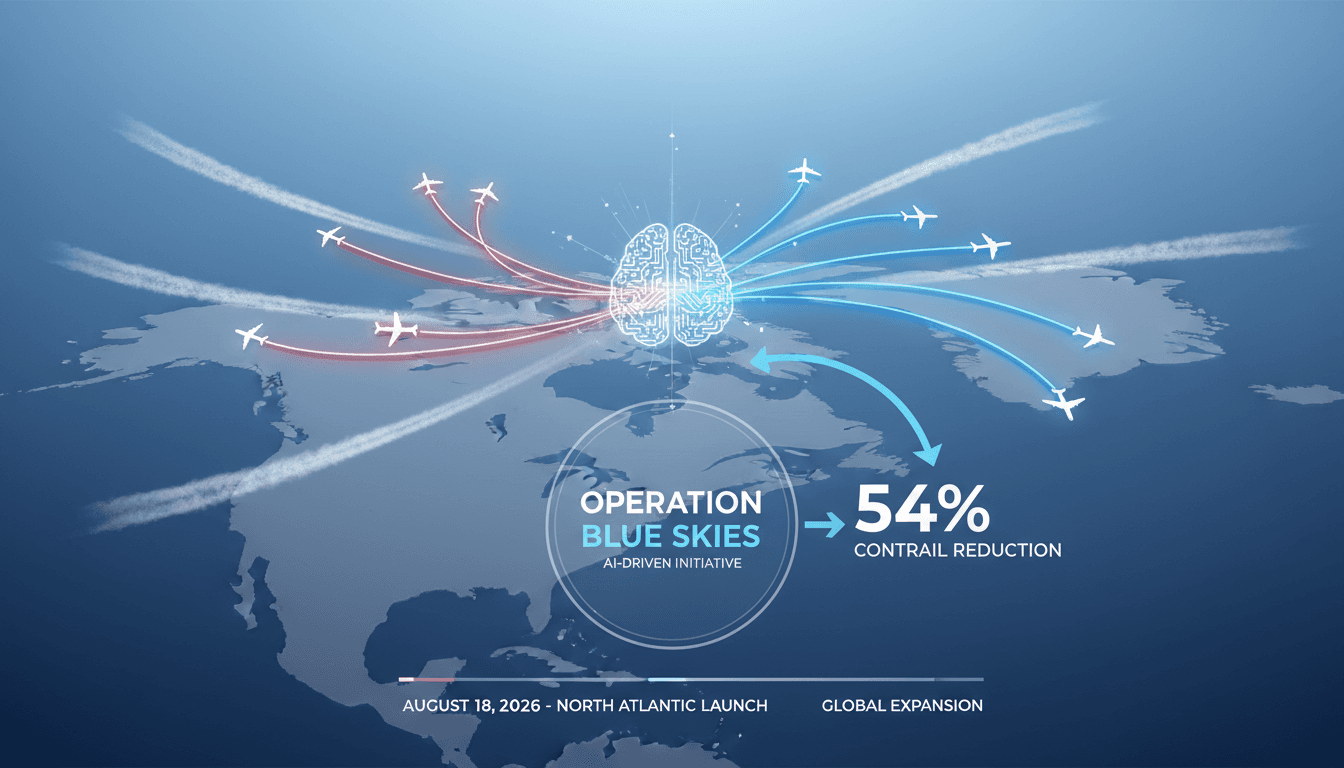
Here's what it means for you.
As aviation continues to grapple with its climate impact, this initiative could reshape air travel efficiency and environmental accountability.
Why it matters
This partnership aims to significantly reduce aviation's contribution to climate change, impacting global travel and regulatory frameworks.
What happened (in 30 seconds)
- Google announced Operation Blue Skies on August 18, 2026, in collaboration with the U.K. government and aviation stakeholders.
- The initiative utilizes AI to predict contrail formation, allowing for altitude adjustments in flight paths to mitigate climate-warming effects.
- The trial will span 30 months, involving approximately 10,000 flights, with a goal of validating scalable practices for contrail reduction.
The context you actually need
- Contrails contribute to about one-third of aviation's total climate impact, trapping heat in the atmosphere.
- Previous trials by Google and American Airlines demonstrated a 54% reduction in contrail formation, establishing the feasibility of AI interventions.
- The U.K. government is co-funding the £5 million project, indicating a strong commitment to innovative climate solutions in aviation.
What's really happening
Operation Blue Skies represents a significant step in the aviation industry's efforts to address its environmental footprint. The initiative leverages advanced AI technology to analyze satellite imagery, historical flight data, and real-time weather forecasts. By predicting areas where contrails are likely to form, air traffic controllers can recommend altitude adjustments for select flights, thereby reducing the formation of these heat-trapping clouds.
The trial is set to unfold over 30 months, with two operational windows involving around 10,000 flights. The targeted adjustment of 1-5% of these flights is based on AI predictions, which are supported by data from the Met Office and validated by academic institutions like Imperial College London and the University of Cambridge. This collaborative approach not only enhances the credibility of the findings but also sets a precedent for future AI-driven interventions in aviation.
The implications of this initiative extend beyond the immediate trial. If successful, it could lead to scalable operational practices that significantly lower aviation's climate impact. This is particularly relevant as the aviation sector faces increasing pressure from regulators and the public to reduce greenhouse gas emissions. The U.K. Department for Transport's financial backing underscores the government's recognition of the need for innovative solutions to combat climate change.
Moreover, the initiative builds on previous research that demonstrated the potential for AI to optimize flight paths and reduce contrail formation. The earlier trials with American Airlines achieved a verified 54% reduction in contrail formation, showcasing the technical feasibility of such interventions. This success lays the groundwork for broader applications across different airspaces, potentially influencing international aviation regulations and practices.
As the aviation industry continues to evolve, initiatives like Operation Blue Skies could redefine how airlines approach environmental sustainability. The integration of AI into operational practices not only enhances efficiency but also aligns with global efforts to combat climate change. This could lead to a shift in consumer expectations, where environmentally conscious travel becomes a priority, influencing airline marketing strategies and operational decisions.
Who feels it first (and how)
- Airlines: They may need to adapt flight operations and schedules based on AI recommendations.
- Air Traffic Controllers: Increased reliance on AI tools for real-time decision-making.
- Environmental Advocates: Potentially positive feedback as aviation's climate impact is addressed.
- Travelers: Possible changes in flight routes and schedules, affecting travel times.
- Regulators: Increased scrutiny and expectations for sustainable practices in aviation.
What to watch next
- Trial results: The effectiveness of contrail reduction strategies will be closely monitored, influencing future aviation policies.
- Regulatory changes: Watch for potential new regulations or incentives for airlines to adopt similar AI-driven practices.
- Public response: Consumer attitudes towards sustainable travel may shift, impacting airline marketing and operational strategies.
The trial will involve approximately 10,000 flights over 30 months.
Successful outcomes could lead to broader adoption of AI in aviation for environmental purposes.
The long-term impact on global aviation regulations and consumer behavior remains to be seen.
Frequently Asked Questions
- Why it matters?
- This partnership aims to significantly reduce aviation's contribution to climate change, impacting global travel and regulatory frameworks.
- What happened (in 30 seconds)?
- Google announced Operation Blue Skies on August 18, 2026, in collaboration with the U.K. government and aviation stakeholders. The initiative utilizes AI to predict contrail formation, allowing for altitude adjustments in flight paths to mitigate climate-warming effects. The trial will span 30 months, involving approximately 10,000 flights, with a goal of validating scalable practices for contrail reduction.
- What's really happening?
- Operation Blue Skies represents a significant step in the aviation industry's efforts to address its environmental footprint. The initiative leverages advanced AI technology to analyze satellite imagery, historical flight data, and real-time weather forecasts. By predicting areas where contrails are likely to form, air traffic controllers can recommend altitude adjustments for select flights, thereby reducing the formation of these heat-trapping clouds. The trial is set to unfold over 30 months
- Who feels it first (and how)?
- Airlines: They may need to adapt flight operations and schedules based on AI recommendations. Air Traffic Controllers: Increased reliance on AI tools for real-time decision-making. Environmental Advocates: Potentially positive feedback as aviation's climate impact is addressed. Travelers: Possible changes in flight routes and schedules, affecting travel times. Regulators: Increased scrutiny and expectations for sustainable practices in aviation.
- What to watch next?
- Trial results: The effectiveness of contrail reduction strategies will be closely monitored, influencing future aviation policies. Regulatory changes: Watch for potential new regulations or incentives for airlines to adopt similar AI-driven practices. Public response: Consumer attitudes towards sustainable travel may shift, impacting airline marketing and operational strategies.
AI news with an enterprise and cloud focus.
"Covers AI in the context of data infrastructure, cloud, and enterprise stacks."
— A47 Editor
Google partners with the aviation industry to prevent climate-warming contrails with AI
Google LLC has announced a partnership with the U.K. government and the aviation industry for Operation Blue Skies, an initiative aimed at utilizing artificial intelligence to mitigate the climate impact of contrails produced by aircraft in oceanic a...
International news coverage curated for readers in the UAE and Gulf region.
"Emirates 24|7 world coverage presents global developments through a UAE-facing and Gulf-relevant editorial lens."
— A47 Editor
The UK and Google are testing changes to flight paths to tackle aviation's climate impact
The UK government and Google have initiated a trial to alter flight paths over the northeastern Atlantic Ocean, aiming to reduce the climate impact of aviation by minimizing contrail formation. This 30-month research program, named Operation Blue Ski...
Curated tech headlines including AI stories.
"Influential aggregator surfacing the day’s top tech/AI links."
— A47 Editor
Google unveils Operation Blue Skies, a £5M trial to re-route North Atlantic aircraft to reduce contrail-induced warming using Google's AI atmospheric forecasts (Madeleine Cuff/New Scientist)
<A HREF="https://www.newscientist.com/article/2585091-planes-flying-over-the-atlantic-will-be-re-routed-to-avoid-contrails/"><IMG VSPACE="4" HSPACE="4" BORDER="0" ALIGN="RIGHT" SRC="http://www.techmeme.com/260818/i6.jpg"></A> <P><A HREF="https://www....
Corporate news, economic trends, and markets with UK and global scope.
"BBC News is widely regarded as reputable and impartial, with a public service mandate."
— A47 Editor
AI to help planes avoid climate-warming 'sky graffiti'
A new trial in the UK aims to utilize artificial intelligence to reduce condensation trails, commonly known as 'sky graffiti,' produced by aircraft. These trails contribute to heat retention in the Earth's atmosphere, which is a significant factor in...