
Trump Updates National Space Transportation Policy to Boost U.S. Launches to 1,000 Annually by 2030
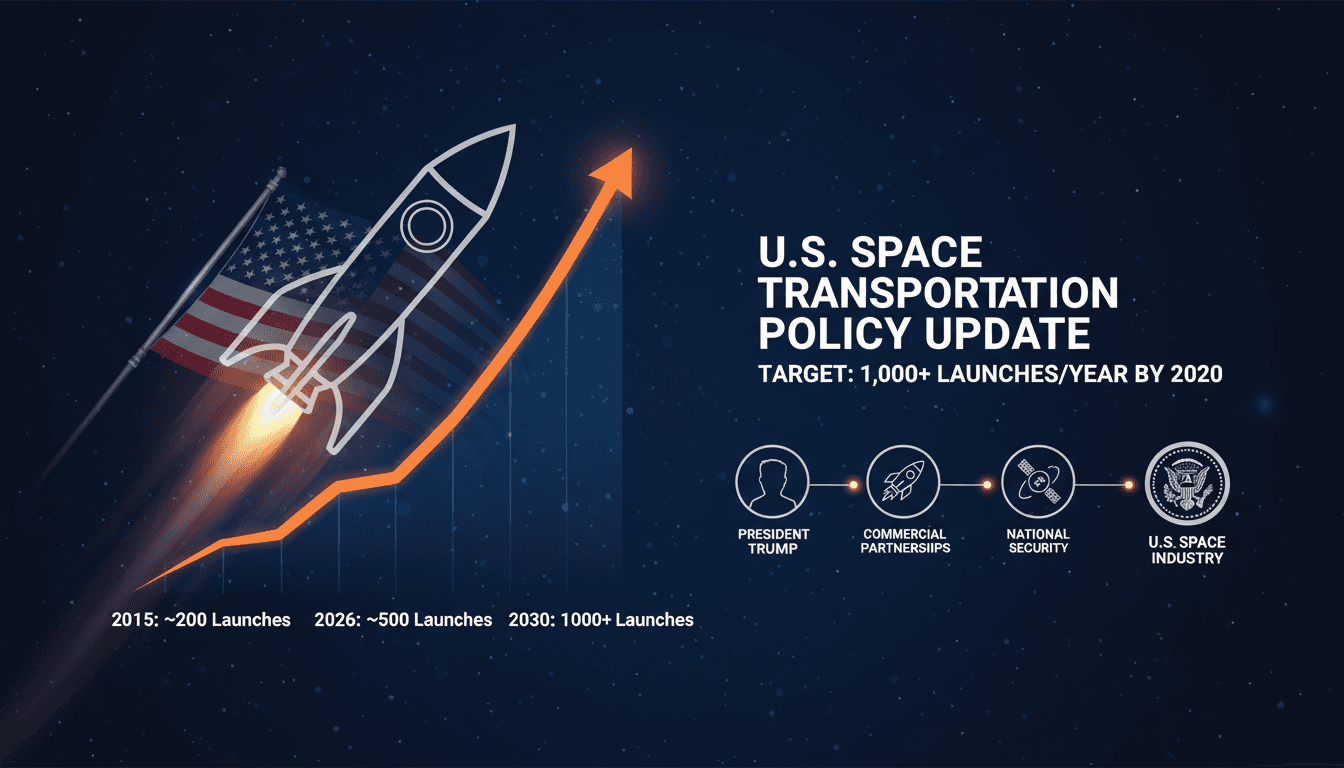
Here's what it means for you.
If you're in the aerospace sector or a related field, this policy could reshape your business landscape and investment opportunities.
Why it matters
This policy aims to significantly increase U.S. launch capabilities, impacting global space commerce and national security.
What happened (in 30 seconds)
- On August 20, 2026, President Trump signed an updated National Space Transportation Policy targeting over 1,000 annual U.S. launches and reentries by 2030.
- The policy emphasizes commercial partnerships and national security, replacing the previous 2013 framework.
- Federal agencies are directed to expedite infrastructure development and integrate space operations with air traffic control.
The context you actually need
- Commercial launch activity has surged over 800% since 2015, with 178–200 launches in 2025, driven by companies like SpaceX.
- The previous policy was established in 2013, and this update reflects the rapid growth and changing dynamics of the space industry.
- The new directives require agencies to identify additional launch sites and streamline permitting processes, aiming for a more robust space economy.
What's really happening
The updated National Space Transportation Policy marks a pivotal shift in U.S. space strategy, driven by the need to maintain leadership in an increasingly competitive global landscape. The target of over 1,000 launches and reentries annually by 2030 is ambitious, especially considering the U.S. conducted approximately 178–200 launches in 2025. This surge in activity is largely attributed to the rise of commercial space operators, particularly SpaceX, which has transformed the launch market with lower costs and increased frequency.
The policy's emphasis on commercial partnerships signals a recognition that the private sector will play a crucial role in achieving these ambitious goals. By directing federal agencies to co-develop infrastructure with private partners, the administration is fostering an environment where innovation can thrive. This includes expediting environmental reviews and designating launch corridors, which are essential for accommodating the anticipated increase in launch activity.
Moreover, the integration of space operations with air traffic control is a significant step toward ensuring safety and efficiency in both air and space travel. This move reflects a broader trend of convergence between aviation and space sectors, which is necessary as the boundaries between them continue to blur.
The policy also highlights national security priorities, indicating that the U.S. government views space as a critical domain for defense and strategic interests. By enhancing launch capabilities, the U.S. aims to ensure that it can respond swiftly to emerging threats and maintain a competitive edge in space exploration and technology.
In summary, this updated policy is not just about increasing launch numbers; it represents a comprehensive strategy to bolster U.S. leadership in space, enhance national security, and stimulate economic growth through commercial partnerships. The implications of this policy will resonate across various sectors, influencing everything from aerospace investments to international collaborations in space exploration.
Who feels it first (and how)
- Aerospace companies: Increased demand for launch services and infrastructure development.
- Investors: New opportunities in commercial space ventures and related technologies.
- Government agencies: Pressure to meet new deadlines and coordinate with private sector partners.
- Local economies: Potential job creation in regions designated for new launch sites.
What to watch next
- Infrastructure development timelines: Monitor how quickly federal agencies can identify new launch sites and reentry corridors, as this will impact the pace of growth in the sector.
- Commercial partnerships: Watch for announcements of collaborations between government and private companies, which will shape the future of U.S. space capabilities.
- International responses: Observe how other countries react to the U.S. policy, particularly in terms of their own space initiatives and commercial launch activities.
The U.S. aims for over 1,000 launches annually by 2030.
Increased collaboration between government and commercial space entities.
The full impact on international space competition and regulatory environments.
Frequently Asked Questions
- Why it matters?
- This policy aims to significantly increase U.S. launch capabilities, impacting global space commerce and national security.
- What happened (in 30 seconds)?
- On August 20, 2026, President Trump signed an updated National Space Transportation Policy targeting over 1,000 annual U.S. launches and reentries by 2030. The policy emphasizes commercial partnerships and national security, replacing the previous 2013 framework. Federal agencies are directed to expedite infrastructure development and integrate space operations with air traffic control.
- What's really happening?
- The updated National Space Transportation Policy marks a pivotal shift in U.S. space strategy, driven by the need to maintain leadership in an increasingly competitive global landscape. The target of over 1,000 launches and reentries annually by 2030 is ambitious, especially considering the U.S. conducted approximately 178–200 launches in 2025. This surge in activity is largely attributed to the rise of commercial space operators, particularly SpaceX, which has transformed the launch market with
- Who feels it first (and how)?
- Aerospace companies: Increased demand for launch services and infrastructure development. Investors: New opportunities in commercial space ventures and related technologies. Government agencies: Pressure to meet new deadlines and coordinate with private sector partners. Local economies: Potential job creation in regions designated for new launch sites.
- What to watch next?
- Infrastructure development timelines: Monitor how quickly federal agencies can identify new launch sites and reentry corridors, as this will impact the pace of growth in the sector. Commercial partnerships: Watch for announcements of collaborations between government and private companies, which will shape the future of U.S. space capabilities. International responses: Observe how other countries react to the U.S. policy, particularly in terms of their own space initiatives and commercial la
Space science news, astronomy updates, and spaceflight developments.
"Space.com delivers space science news, astronomy updates, and spaceflight developments with engaging coverage."
— A47 Editor
Trump signs new national space policy to enable 1,000 US rocket launches per year
President Trump has signed a new national space policy aimed at enabling the United States to conduct over 1,000 rocket launches annually by 2030, reflecting a significant shift in the country's approach to spaceflight management and reentries.
U.S. political news and right-leaning commentary.
"Fox News is a highly influential conservative news outlet known for right-leaning political commentary and coverage."
— A47 Editor
Trump to transform spaceflight from spectacle to status quo targeting 3 launches per day
President Trump has announced a transformative space policy aiming for over 1,000 annual U.S. space launches by 2030, with a target of achieving three launches per day. This initiative includes plans to reshape launch pads, airspace corridors, and ai...
Conservative-leaning political and national coverage.
"The Washington Times is a conservative-leaning newspaper known for its political coverage and advocacy of right-of-center viewpoints."
— A47 Editor
Trump orders 1,000 annual U.S. space launches by 2030, targets moon landing by 2028
President Trump has issued a directive to increase U.S. space launches to 1,000 annually by 2030, with a goal of landing Americans on the moon by 2028 and sending robotic missions to Mars. This initiative emphasizes the role of commercial ventures in...