
NASA's Nancy Grace Roman Space Telescope Set for Launch in 2026
Here's what it means for you.
The advancements in space technology could lead to breakthroughs in our understanding of the universe, impacting scientific research and education globally.
Why it matters
The Roman Space Telescope's capabilities will enhance our understanding of dark energy and exoplanets, influencing future research funding and technological development.
What happened (in 30 seconds)
- NASA is set to launch the Nancy Grace Roman Space Telescope on August 30, 2026, from Kennedy Space Center aboard a SpaceX Falcon Heavy.
- The telescope utilizes repurposed spy satellite technology, enabling wide-field infrared surveys of billions of galaxies and rogue planets.
- It features a 100 times larger field of view than the Hubble Space Telescope, allowing for efficient large-scale astronomical surveys.
The context you actually need
- The telescope's origins trace back to the National Reconnaissance Office, which provided surplus hardware after deeming it excess for intelligence purposes.
- NASA has spent over a decade modifying the optics and integrating advanced detectors, ensuring the telescope meets its scientific objectives.
- The mission aims to explore dark matter, dark energy, and exoplanets, potentially reshaping our understanding of the cosmos.
What's really happening
The Nancy Grace Roman Space Telescope represents a significant leap in astronomical research, merging advanced technology from the intelligence community with cutting-edge scientific inquiry. Originally developed under the National Reconnaissance Office's Future Imagery Architecture program, the telescope's 2.4-meter mirrors were deemed surplus and transferred to NASA in 2012. This transfer not only saved costs but also allowed NASA to enhance the Wide Field Infrared Survey Telescope (WFIRST) concept, which was prioritized in the 2010 decadal survey.
Over the past decade, NASA has meticulously modified the spy-derived optics for astronomical use. The integration of a 300-megapixel near-infrared focal plane with 18 detectors, along with the addition of a coronagraph instrument, positions the Roman Space Telescope to conduct extensive surveys of the universe. Its wide field of view—approximately 100 times larger than that of the Hubble Space Telescope—enables efficient observation of vast areas of the sky, making it a powerful tool for mapping dark matter and dark energy.
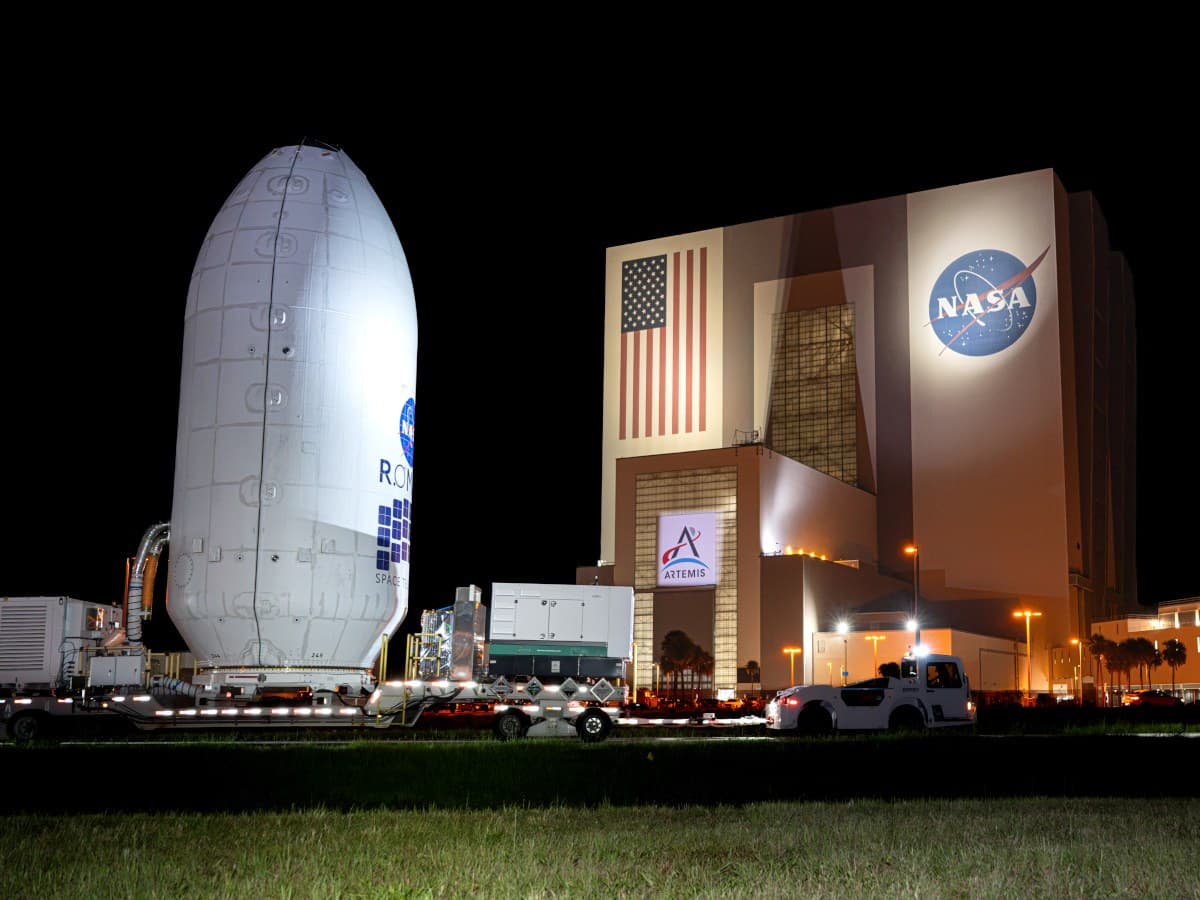
As of late August 2026, the telescope is encapsulated in its payload fairing at Kennedy Space Center, ready for launch to the Sun-Earth L2 Lagrange point for a nominal five-year mission. This strategic location allows for continuous observation without the interference of Earth's atmosphere, providing clearer and more detailed images of celestial phenomena.
The implications of the Roman Space Telescope extend beyond mere observation. The data it collects will likely influence funding for astrophysics research and drive advancements in detector technology. As the scientific community anticipates the release of new data, interest in space technology remains stable, with potential ripple effects across various sectors, including education and public engagement in science.
Who feels it first (and how)
- Astronomers and astrophysicists: They will gain access to unprecedented data on dark energy and exoplanets.
- Space technology companies: Increased interest in developing related technologies and instruments.
- Educational institutions: Opportunities to incorporate new findings into curricula and research programs.
- Global scientific community: Enhanced collaboration and data sharing across international borders.
What to watch next
- Launch readiness updates: Monitoring the final preparations for the August 30, 2026 launch will indicate the mission's timeline and potential delays.
- Initial data releases: The first scientific data from the telescope will provide insights into dark energy and exoplanet research, shaping future studies.
- Technological advancements: Innovations stemming from the telescope's development may influence other sectors, particularly in imaging and detection technologies.
The Roman Space Telescope will launch on August 30, 2026, and utilize advanced optics for astronomical surveys.
The mission will yield significant data on dark energy and exoplanets, influencing future research funding and technological development.
The long-term impacts of the telescope's findings on public interest in space exploration and education remain to be seen.
Frequently Asked Questions
- Why it matters?
- The Roman Space Telescope's capabilities will enhance our understanding of dark energy and exoplanets, influencing future research funding and technological development.
- What happened (in 30 seconds)?
- NASA is set to launch the Nancy Grace Roman Space Telescope on August 30, 2026, from Kennedy Space Center aboard a SpaceX Falcon Heavy. The telescope utilizes repurposed spy satellite technology, enabling wide-field infrared surveys of billions of galaxies and rogue planets. It features a 100 times larger field of view than the Hubble Space Telescope, allowing for efficient large-scale astronomical surveys.
- What's really happening?
- The Nancy Grace Roman Space Telescope represents a significant leap in astronomical research, merging advanced technology from the intelligence community with cutting-edge scientific inquiry. Originally developed under the National Reconnaissance Office's Future Imagery Architecture program, the telescope's 2.4-meter mirrors were deemed surplus and transferred to NASA in 2012. This transfer not only saved costs but also allowed NASA to enhance the Wide Field Infrared Survey Telescope (WFIRST) co
- Who feels it first (and how)?
- Astronomers and astrophysicists: They will gain access to unprecedented data on dark energy and exoplanets. Space technology companies: Increased interest in developing related technologies and instruments. Educational institutions: Opportunities to incorporate new findings into curricula and research programs. Global scientific community: Enhanced collaboration and data sharing across international borders.
- What to watch next?
- Launch readiness updates: Monitoring the final preparations for the August 30, 2026 launch will indicate the mission's timeline and potential delays. Initial data releases: The first scientific data from the telescope will provide insights into dark energy and exoplanet research, shaping future studies. Technological advancements: Innovations stemming from the telescope's development may influence other sectors, particularly in imaging and detection technologies.
Scientific discoveries, health, technology, and natural phenomena.
"Live Science reports on scientific discoveries, health, technology, and natural phenomena with a popular science tone."
— A47 Editor
NASA's Nancy Grace Roman Space Telescope is set to launch this weekend. When will we see its first photos?
NASA's Nancy Grace Roman Space Telescope is scheduled to launch from Kennedy Space Center in Florida on August 30, 2026. This advanced observatory aims to enhance astronomical observations by studying exoplanets, distant galaxies, dark matter, and ot...
Tech, science, and startup news including AI.
"Irish tech outlet covering innovation and AI."
— A47 Editor
Spy to space: The science behind NASA’s Roman Space Telescope
NASA is set to launch the Nancy Grace Roman Space Telescope on August 30, 2026, eight months ahead of schedule. This next-generation observatory, which has its origins in US spycraft, aims to explore dark energy and dark matter, featuring a field of ...
Science and technology stories including AI.
"Longstanding science magazine with thoughtful AI coverage."
— A47 Editor
NASA’s Roman Space Telescope will rewrite how we study the universe
NASA has announced the launch of the Nancy Grace Roman Space Telescope on August 30, 2026, which is eight months ahead of schedule. This next-generation observatory features a field of view 100 times larger than that of the Hubble Space Telescope, al...
Scientific research, technology, environment, and society.
"Scientific American is one of the oldest and most authoritative science magazines, known for deep dives into science, technology, and society."
— A47 Editor
NASA’s Roman Space Telescope will rewrite how we study the universe
NASA has announced the launch of the Nancy Grace Roman Space Telescope on August 30, 2026, which is eight months ahead of schedule. This next-generation observatory features a field of view 100 times larger than that of the Hubble Space Telescope, al...
Space science news, astronomy updates, and spaceflight developments.
"Space.com delivers space science news, astronomy updates, and spaceflight developments with engaging coverage."
— A47 Editor
Trump tried to scrap NASA's Roman Space Telescope last year. Now it's ready to launch
NASA's Nancy Grace Roman Space Telescope is set to launch on August 30, 2026, after nearly facing cancellation due to a leaked budget proposal from former President Trump last year. The telescope has now arrived at the Kennedy Space Center in Florida...
Space science news, astronomy updates, and spaceflight developments.
"Space.com delivers space science news, astronomy updates, and spaceflight developments with engaging coverage."
— A47 Editor
From spy satellite to space telescope: The unlikely origins of NASA's Roman Space Telescope
NASA's Nancy Grace Roman Space Telescope, which has origins in old spy satellites, is set to launch on August 30, 2026. This next-generation observatory aims to capture unprecedented images of the universe, significantly enhancing astronomical observ...
Science and technology stories including AI.
"Longstanding science magazine with thoughtful AI coverage."
— A47 Editor
NASA’s Roman Space Telescope could reveal dark energy’s deepest secrets
NASA's Nancy Grace Roman Space Telescope is set to launch on August 30, 2026, eight months ahead of schedule, aiming to unravel the mysteries of dark energy. This next-generation observatory boasts a field of view 100 times larger than that of the Hu...
Scientific research, technology, environment, and society.
"Scientific American is one of the oldest and most authoritative science magazines, known for deep dives into science, technology, and society."
— A47 Editor
NASA’s Roman Space Telescope could reveal dark energy’s deepest secrets
NASA's Nancy Grace Roman Space Telescope is set to launch on August 30, 2026, eight months ahead of schedule, aiming to unravel the mysteries of dark energy. This next-generation observatory boasts a field of view 100 times larger than that of the Hu...
Space science news, astronomy updates, and spaceflight developments.
"Space.com delivers space science news, astronomy updates, and spaceflight developments with engaging coverage."
— A47 Editor
Inside the Nancy Grace Roman Space Telescope, NASA's next great observatory
NASA's Nancy Grace Roman Space Telescope is scheduled to launch on August 30, 2026, promising to enhance astronomical observations significantly. This next-generation observatory aims to capture unprecedented images of the universe, surpassing the ca...
Space science news, astronomy updates, and spaceflight developments.
"Space.com delivers space science news, astronomy updates, and spaceflight developments with engaging coverage."
— A47 Editor
NASA's Roman Space Telescope will reveal the universe in a way the JWST and Hubble cannot
NASA's Nancy Grace Roman Space Telescope is set to launch on August 30, 2026, promising to capture images of the universe that are unprecedented in size and detail, surpassing the capabilities of both the James Webb Space Telescope (JWST) and Hubble....
Technology and innovation coverage, including consumer tech and digital transformation stories.
"Emirates 24|7 technology coverage often highlights practical tech developments with relevance to Gulf readers and businesses."
— A47 Editor
NASA's Roman Space Telescope set to probe dark energy, dark matter and distant worlds
NASA is set to launch the Nancy Grace Roman Space Telescope from Kennedy Space Center in Florida, aiming to explore dark energy, dark matter, and distant planets. The mission, with a budget of approximately $4 billion, is scheduled for launch aboard ...