
Stanford Researchers Successfully Integrate Human Brain Organoids into Genetically Modified Mice
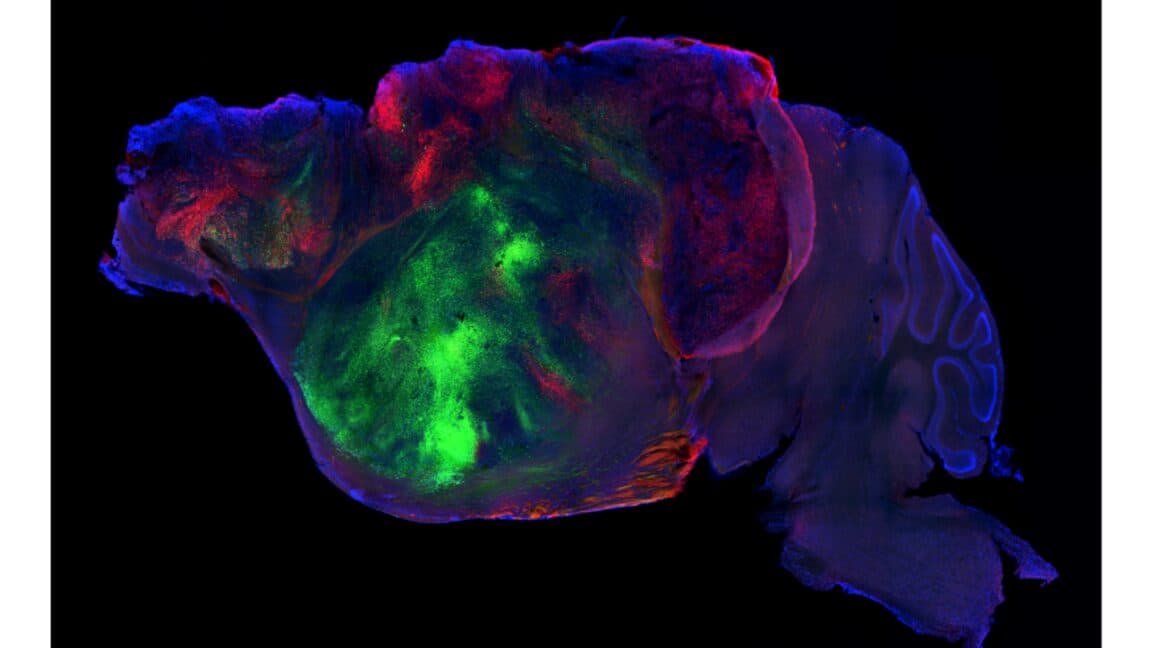
Why it matters
This research represents a significant advancement in modeling human brain disorders, potentially transforming therapeutic approaches in neuroscience.
What happened (in 30 seconds)
- On September 16, 2026, Stanford researchers successfully transplanted human brain organoids into genetically modified mice lacking most of their cerebral cortex.
- The human-derived tissue integrated into the mouse brain, comprising over 90% of cortical cells and forming functional neural connections.
- This study aims to improve the modeling of conditions like autism, epilepsy, and schizophrenia, addressing limitations of previous organoid research.
The context you actually need
- Prior research focused on brain organoids derived from stem cells, which lacked integration with the host's neural systems.
- Earlier attempts to implant human neural cells into intact rodent brains faced limitations due to host tissue competition.
- The Stanford team genetically modified mice to create space for human cortical organoids, overcoming previous constraints in brain research.
What's really happening
The Stanford University research team, led by Sergiu Pașca, has made a significant leap in neuroscience by creating a chimeric model that integrates human brain organoids into mice. This innovative approach addresses the limitations of traditional brain organoid studies, which often fail to replicate the complex interactions found in a living brain. By genetically modifying mice to eliminate most of their cortical precursor cells, the researchers created a unique environment where human-derived cortical tissue could thrive.
The genetically engineered mice had approximately half the normal brain volume but were capable of survival with supportive care. The human cortical organoids, derived from reprogrammed skin cells, were implanted into the cavity created by the genetic modification. Over a period of two to three months, the human tissue expanded significantly, occupying over 90% of the cortical space. This remarkable integration included the development of diverse neuron types, such as von Economo neurons, which are associated with higher cognitive functions.
The implications of this research are profound. By providing a living neural environment, the study enables researchers to explore human neurodevelopmental disorders in a way that was previously unattainable. The ability to observe how human neurons interact within a mouse brain allows for a more nuanced understanding of conditions like autism, epilepsy, and schizophrenia. Behavioral assays conducted during the study indicated that the mice exhibited partial functional recovery compared to controls, suggesting that the human tissue was not only surviving but also contributing to neural function.
However, this research also raises ethical questions regarding the creation of human-animal chimeras. As the scientific community grapples with the implications of such studies, it is crucial to establish guidelines that ensure responsible research practices. While the current models remain mice with mouse subcortical structures and sensory systems, the potential for future applications in human health is vast.
Who feels it first (and how)
- Neuroscientists: Gain new tools for studying human brain disorders.
- Pharmaceutical companies: May develop targeted therapies based on insights from this research.
- Patients with neurodevelopmental disorders: Could benefit from improved treatment options in the future.
- Ethicists and policymakers: Need to address the ethical implications of human-animal chimeras.
What to watch next
- Regulatory developments: Monitor discussions on ethical guidelines for human-animal neural chimeras, which could shape future research.
- Clinical applications: Watch for advancements in therapies targeting autism, epilepsy, and schizophrenia stemming from this research.
- Public perception: Observe how societal views on genetic engineering and chimeric models evolve as this research progresses.
The study successfully integrated human cortical organoids into mouse brains.
This research will lead to improved models for studying human neurodevelopmental disorders.
The long-term implications of creating human-animal chimeras on ethical and regulatory fronts.
Frequently Asked Questions
- Why it matters?
- This research represents a significant advancement in modeling human brain disorders, potentially transforming therapeutic approaches in neuroscience.
- What happened (in 30 seconds)?
- On September 16, 2026, Stanford researchers successfully transplanted human brain organoids into genetically modified mice lacking most of their cerebral cortex. The human-derived tissue integrated into the mouse brain, comprising over 90% of cortical cells and forming functional neural connections. This study aims to improve the modeling of conditions like autism, epilepsy, and schizophrenia, addressing limitations of previous organoid research.
- What's really happening?
- The Stanford University research team, led by Sergiu Pașca, has made a significant leap in neuroscience by creating a chimeric model that integrates human brain organoids into mice. This innovative approach addresses the limitations of traditional brain organoid studies, which often fail to replicate the complex interactions found in a living brain. By genetically modifying mice to eliminate most of their cortical precursor cells, the researchers created a unique environment where human-derived
- Who feels it first (and how)?
- Neuroscientists: Gain new tools for studying human brain disorders. Pharmaceutical companies: May develop targeted therapies based on insights from this research. Patients with neurodevelopmental disorders: Could benefit from improved treatment options in the future. Ethicists and policymakers: Need to address the ethical implications of human-animal chimeras.
- What to watch next?
- Regulatory developments: Monitor discussions on ethical guidelines for human-animal neural chimeras, which could shape future research. Clinical applications: Watch for advancements in therapies targeting autism, epilepsy, and schizophrenia stemming from this research. Public perception: Observe how societal views on genetic engineering and chimeric models evolve as this research progresses.
In-depth reporting on tech, policy, and science including AI.
"Respected analysis for technically savvy readers, including AI topics."
— A47 Editor
Researchers swap in human brain cells for a mouse's cortex
Researchers have conducted an experiment where human brain cells were integrated into a mouse's cortex, yielding only marginal improvements compared to the absence of the entire brain structure. This study highlights the challenges faced in bridging ...
In-depth coverage of hardware, software, science, and policy.
"Ars Technica provides expert technology news, hardware reviews, and analysis for a technically savvy audience."
— A47 Editor
Researchers swap in human brain cells for a mouse's cortex
Researchers have conducted an experiment where human brain cells were integrated into a mouse's cortex, yielding only marginal improvements compared to the absence of the entire brain structure. This study highlights the challenges faced in bridging ...
Reports on climate change, environmental science, sustainability, and nature.
"BBC News is widely regarded as a reputable international news organization, known for its impartial tone and public service mandate."
— A47 Editor
Part-human part-mouse brain developed in science breakthrough
Researchers at Stanford University have achieved a significant breakthrough by genetically altering mice to incorporate human brain cells, resulting in the development of mice with partially human brains. This innovative approach could pave the way f...
Reporting on emerging tech including AI.
"Magazine covering AI’s business and social impacts."
— A47 Editor
Meet a mouse whose brain cortex is made up of human cells
A recent experiment observed a mouse whose brain cortex was significantly altered, with nearly half of its volume replaced by human cells. This study involved tracking the mouse's movements in a controlled environment, aiming to understand the implic...