
Stanford Researchers Develop Mice with Human Brain Tissue for Neurodevelopmental Studies
Why it matters
The development of human-mouse chimeras opens new avenues for studying complex brain disorders that affect millions globally.
What happened (in 30 seconds)
- On September 16, 2026, Stanford researchers published findings on genetically modified mice with human cortical tissue.
- The study involved implanting human brain organoids into mice with depleted cortical precursors, resulting in significant integration of human cells.
- Behavioral assessments showed these chimeric mice performed better than cortex-deficient controls, indicating potential for studying human brain disorders.
The context you actually need
- Brain organoids created from human stem cells replicate some features of human neural tissue but lack full functionality, limiting their use in research.
- Previous attempts to integrate human neural cells into rodent brains faced challenges due to competition from existing mouse tissue, necessitating a new approach.
- This study represents a significant leap in creating a living model for understanding human-specific neurodevelopmental and psychiatric disorders.
What's really happening
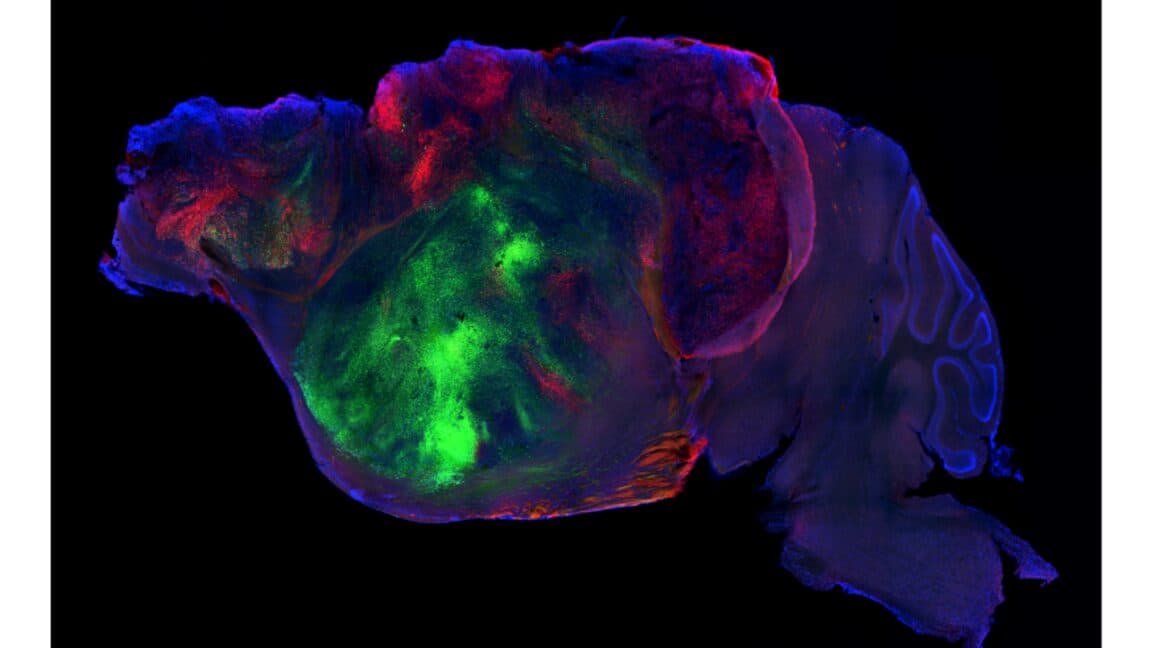
Stanford University's recent research led by Sergiu Pasca marks a pivotal moment in neuroscience, particularly in the study of human brain disorders. By genetically modifying mice to eliminate approximately 98% of their cortical volume, researchers created a unique environment for the implantation of human brain organoids. These organoids, derived from reprogrammed stem cells, were introduced into the brains of newborn mice, allowing for a living context that isolated organoids lack.
The results were striking: in successful cases, over 90% of the cortical cells in the modified mice were derived from human grafts, demonstrating a remarkable integration of human neurons. These neurons not only differentiated into major cortical subtypes but also formed synchronized activity and extended projections to the spinal cord, indicating a level of functionality previously unseen in such models. Behavioral tests revealed that these chimeric mice exhibited intermediate performance on memory and motor tasks compared to normal and cortex-deficient mice, suggesting that the human tissue was not just surviving but actively contributing to brain function.
This research is significant for several reasons. First, it provides a more accurate model for studying human neurodevelopmental disorders, such as autism and schizophrenia, which have been difficult to replicate in traditional animal models. The ability to observe human neural development in a living organism allows researchers to explore the complexities of these disorders in ways that were previously impossible. Second, the ethical implications of creating human-animal chimeras are profound, prompting discussions about the moral boundaries of scientific research. As these models become more prevalent, establishing ethical guidelines will be crucial to navigate the potential consequences of such advancements.
Moreover, the implications extend beyond academia. Pharmaceutical companies and biotech firms may find new opportunities for drug testing and development, as these chimeric models could lead to more effective treatments for human brain disorders. However, the research is still in its early stages, and the transition from laboratory findings to clinical applications will require rigorous testing and regulatory scrutiny.
Who feels it first (and how)
- Neuroscientists: Gain a powerful new tool for studying human brain disorders.
- Pharmaceutical companies: Potentially benefit from improved drug testing models.
- Ethicists: Engage in discussions about the moral implications of human-animal chimeras.
- Patients with neurodevelopmental disorders: May eventually see advancements in treatment options stemming from this research.
What to watch next
- Ethical guidelines: Monitor the development of ethical frameworks for human-animal chimeras, as these will shape future research directions.
- Clinical applications: Watch for advancements in drug testing and treatment protocols that emerge from this research, particularly for neurodevelopmental disorders.
- Regulatory responses: Keep an eye on how governments and regulatory bodies respond to the implications of this research, which could influence funding and research priorities.
The study successfully integrated human cortical tissue into mice, demonstrating significant behavioral improvements.
Ethical discussions will intensify as the implications of human-animal chimeras become more pronounced.
The timeline for translating these findings into clinical applications remains uncertain.
Frequently Asked Questions
- Why it matters?
- The development of human-mouse chimeras opens new avenues for studying complex brain disorders that affect millions globally.
- What happened (in 30 seconds)?
- On September 16, 2026, Stanford researchers published findings on genetically modified mice with human cortical tissue. The study involved implanting human brain organoids into mice with depleted cortical precursors, resulting in significant integration of human cells. Behavioral assessments showed these chimeric mice performed better than cortex-deficient controls, indicating potential for studying human brain disorders.
- What's really happening?
- Stanford University's recent research led by Sergiu Pasca marks a pivotal moment in neuroscience, particularly in the study of human brain disorders. By genetically modifying mice to eliminate approximately 98% of their cortical volume, researchers created a unique environment for the implantation of human brain organoids. These organoids, derived from reprogrammed stem cells, were introduced into the brains of newborn mice, allowing for a living context that isolated organoids lack. The result
- Who feels it first (and how)?
- Neuroscientists: Gain a powerful new tool for studying human brain disorders. Pharmaceutical companies: Potentially benefit from improved drug testing models. Ethicists: Engage in discussions about the moral implications of human-animal chimeras. Patients with neurodevelopmental disorders: May eventually see advancements in treatment options stemming from this research.
- What to watch next?
- Ethical guidelines: Monitor the development of ethical frameworks for human-animal chimeras, as these will shape future research directions. Clinical applications: Watch for advancements in drug testing and treatment protocols that emerge from this research, particularly for neurodevelopmental disorders. Regulatory responses: Keep an eye on how governments and regulatory bodies respond to the implications of this research, which could influence funding and research priorities.
Scientific research, space, environment, and health coverage.
"The New York Times is a globally recognized newspaper offering authoritative reporting with a center-left editorial stance."
— A47 Editor
These Mice Have Partly Human Brains
Researchers have developed mice with partially human brains, which may provide insights into the causes of brain diseases in humans and potential treatment pathways. This innovative approach raises significant ethical considerations that are already ...
In-depth reporting on tech, policy, and science including AI.
"Respected analysis for technically savvy readers, including AI topics."
— A47 Editor
Researchers swap in human brain cells for a mouse's cortex
Researchers have conducted an experiment where human brain cells were integrated into a mouse's cortex, yielding only marginal improvements compared to the absence of the entire brain structure. This study highlights the challenges faced in bridging ...
In-depth coverage of hardware, software, science, and policy.
"Ars Technica provides expert technology news, hardware reviews, and analysis for a technically savvy audience."
— A47 Editor
Researchers swap in human brain cells for a mouse's cortex
Researchers have conducted an experiment where human brain cells were integrated into a mouse's cortex, yielding only marginal improvements compared to the absence of the entire brain structure. This study highlights the challenges faced in bridging ...
Reports on climate change, environmental science, sustainability, and nature.
"BBC News is widely regarded as a reputable international news organization, known for its impartial tone and public service mandate."
— A47 Editor
Part-human part-mouse brain developed in science breakthrough
Researchers at Stanford University have achieved a significant breakthrough by genetically altering mice to incorporate human brain cells, resulting in the development of mice with partially human brains. This innovative approach could pave the way f...
Top international stories selected by The Guardian editors.
"The Guardian is known for its progressive editorial stance and in-depth analysis."
— A47 Editor
Scientists create mice with part-human brains
<p>Researchers hope to shed light on conditions such as schizophrenia, epilepsy, cerebral palsy, intellectual disability and rare forms of dementia</p><p>Researchers have created mice with half-human brains in an effort to understand and develop new ...
Reports on science policy, discoveries, and public debate in the scientific realm.
"The Guardian’s science section is known for thoughtful and critical reporting on global research, ethics, and public understanding of science."
— A47 Editor
Scientists create mice with part-human brains
<p>Researchers hope to shed light on conditions such as schizophrenia, epilepsy, cerebral palsy, intellectual disability and rare forms of dementia</p><p>Researchers have created mice with half-human brains in an effort to understand and develop new ...
Medical reporting with scientific depth and public service tone.
"NPR is a nonprofit media organization offering thoughtful, in-depth journalism and storytelling, often with a liberal or progressive slant."
— A47 Editor
Mice with human brain cells offer a tool to study disease. Ethicists ask: What's next?
Neuroscientists have achieved a significant breakthrough by successfully modeling human brain cells in mice, which provides a novel approach to studying neurological conditions such as cerebral palsy. This advancement raises important ethical questio...
Scientific discoveries, health, technology, and natural phenomena.
"Live Science reports on scientific discoveries, health, technology, and natural phenomena with a popular science tone."
— A47 Editor
Scientists shrank mice's brains and replaced the missing tissue with human 'organoids'
Scientists have successfully shrunk the brains of mice and replaced the missing tissue with human organoids, marking a significant advancement in biomedical research. This innovative technique allows for the integration of human brain tissue into liv...
Reporting on emerging tech including AI.
"Magazine covering AI’s business and social impacts."
— A47 Editor
Meet a mouse whose brain cortex is made up of human cells
A recent experiment observed a mouse whose brain cortex was significantly altered, with nearly half of its volume replaced by human cells. This study involved tracking the mouse's movements in a controlled environment, aiming to understand the implic...