
Anthropic Launches Wet Biology Laboratory in San Francisco Bay Area
Why it matters
Anthropic's wet biology lab signals a significant shift in how AI and life sciences can converge, potentially accelerating drug discovery and biological research.
What happened (in 30 seconds)
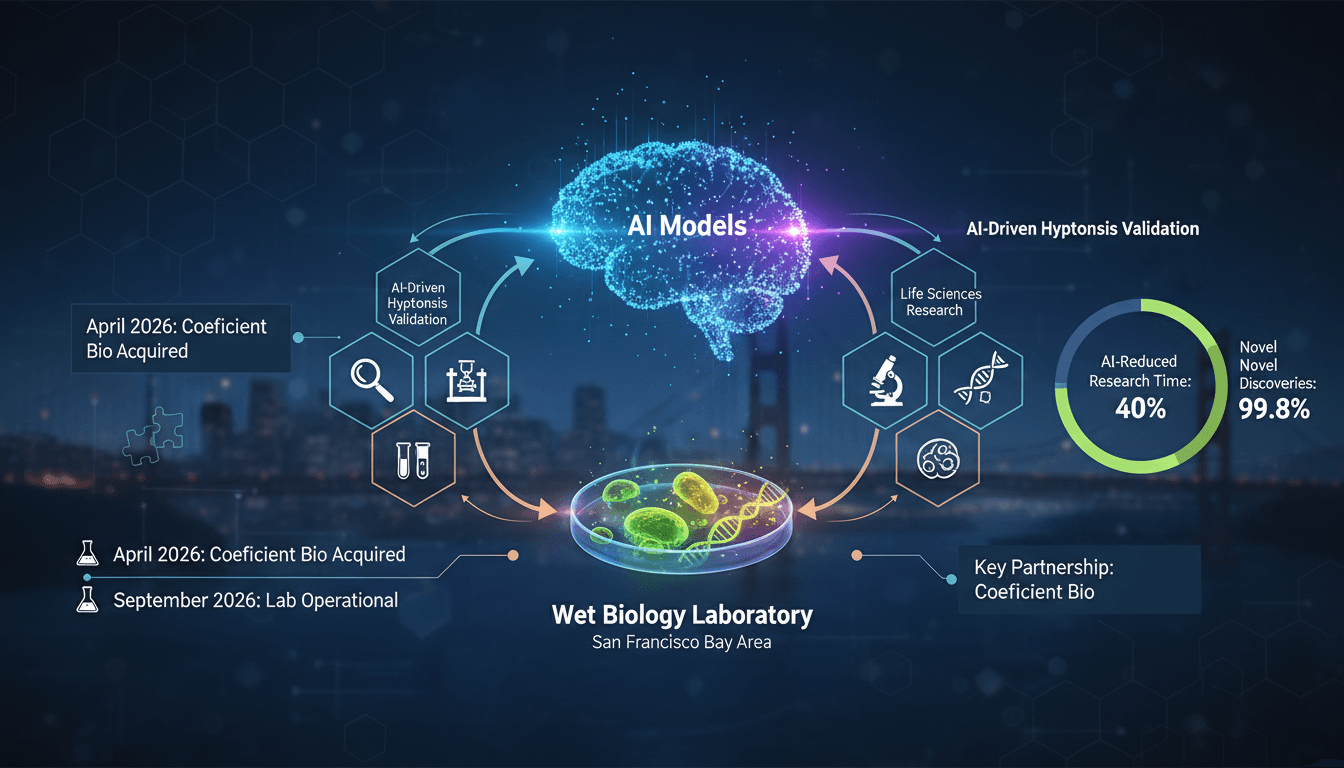
- Anthropic confirmed the operation of a wet biology laboratory in the San Francisco Bay Area on September 18, 2026.
- The lab focuses on fundamental biology research, integrating AI-generated hypotheses with physical experiments.
- This follows Anthropic's acquisition of Coefficient Bio in April 2026, enhancing its capabilities in life sciences.
The context you actually need
- Anthropic's acquisition of Coefficient Bio for approximately $400 million reflects a strategic move to bolster its AI applications in life sciences.
- The lab's operations align with broader industry trends aiming to leverage AI for accelerating disease research and drug development.
- CEO Dario Amodei's vision includes using AI to potentially cure major diseases within the next 5-10 years, emphasizing the urgency of integrating AI into biological research.
What's really happening
Anthropic's establishment of a wet biology laboratory is a calculated move to bridge the gap between computational biology and practical experimentation. By integrating AI models like Claude into the research process, Anthropic aims to validate AI-generated hypotheses through real-world experiments. This approach not only enhances the credibility of AI in life sciences but also positions Anthropic as a key player in a rapidly evolving sector.
The lab operates similarly to traditional biotech firms, focusing on fundamental biology rather than direct drug discovery. This strategic choice allows Anthropic to collaborate with pharmaceutical companies without directly competing with them. For instance, partnerships with established entities like Novo Nordisk are likely to flourish, as both sides can benefit from shared insights and resources.
Anthropic's recent research indicates that its Claude models achieved an overall hit rate of 26.7% in designing protein binders, significantly higher than the typical industry rates of 10-15%. This success, validated through external wet lab testing, showcases the potential of AI to enhance biological research outcomes. The lab's focus on AI-directed robotic automation further underscores its commitment to innovation in the life sciences.
However, this development also raises questions about the ethical implications of AI in biology. Anthropic has been vocal about AI safety, particularly concerning risks like bioterrorism. The juxtaposition of operating a biology lab while advocating for AI safety has drawn scrutiny from industry observers, including investors who highlight perceived inconsistencies in Anthropic's approach.
As the lab becomes operational, it will likely attract attention from regulatory bodies, although no specific governmental responses have been documented as of now. The market's reaction has been cautiously optimistic, with a continued focus on AI-biotech integration without immediate valuation shifts reported.
In summary, Anthropic's wet biology lab represents a significant step in the integration of AI into life sciences, with the potential to accelerate research and development while navigating the complexities of ethical considerations and industry partnerships.
Who feels it first (and how)
- Biotech companies: They may see enhanced collaboration opportunities and accelerated research timelines.
- Pharmaceutical firms: Partnerships with Anthropic could lead to innovative drug development strategies.
- AI researchers: Increased demand for expertise in integrating AI with biological research methodologies.
- Regulatory bodies: They will need to monitor the implications of AI in biological experimentation closely.
What to watch next
- Partnership announcements: Keep an eye on new collaborations between Anthropic and pharmaceutical companies, as these could redefine research strategies.
- Regulatory developments: Watch for any governmental responses or new regulations concerning AI applications in biology, which could impact operational frameworks.
- Research outcomes: Monitor the results from the lab's experiments, particularly in protein design and other biological applications, as they could set new industry standards.
Anthropic's lab is operational and focused on fundamental biology research.
Increased collaboration between AI firms and biotech companies will emerge as a trend.
The long-term regulatory landscape for AI applications in biological research remains uncertain.
Frequently Asked Questions
- Why it matters?
- Anthropic's wet biology lab signals a significant shift in how AI and life sciences can converge, potentially accelerating drug discovery and biological research.
- What happened (in 30 seconds)?
- Anthropic confirmed the operation of a wet biology laboratory in the San Francisco Bay Area on September 18, 2026. The lab focuses on fundamental biology research, integrating AI-generated hypotheses with physical experiments. This follows Anthropic's acquisition of Coefficient Bio in April 2026, enhancing its capabilities in life sciences.
- What's really happening?
- Anthropic's establishment of a wet biology laboratory is a calculated move to bridge the gap between computational biology and practical experimentation. By integrating AI models like Claude into the research process, Anthropic aims to validate AI-generated hypotheses through real-world experiments. This approach not only enhances the credibility of AI in life sciences but also positions Anthropic as a key player in a rapidly evolving sector. The lab operates similarly to traditional biotech fi
- Who feels it first (and how)?
- Biotech companies: They may see enhanced collaboration opportunities and accelerated research timelines. Pharmaceutical firms: Partnerships with Anthropic could lead to innovative drug development strategies. AI researchers: Increased demand for expertise in integrating AI with biological research methodologies. Regulatory bodies: They will need to monitor the implications of AI in biological experimentation closely.
- What to watch next?
- Partnership announcements: Keep an eye on new collaborations between Anthropic and pharmaceutical companies, as these could redefine research strategies. Regulatory developments: Watch for any governmental responses or new regulations concerning AI applications in biology, which could impact operational frameworks. Research outcomes: Monitor the results from the lab's experiments, particularly in protein design and other biological applications, as they could set new industry standards.
Startup news with frequent AI coverage.
"Covers launches, funding, and product updates in AI."
— A47 Editor
Anthropic is operating a lab that conducts biology experiments
Anthropic has established a new bio research lab in San Francisco, focusing on conducting biology experiments that could enhance its artificial intelligence capabilities. This move signifies a strategic expansion into physical experimentation, aligni...
AI news with an enterprise and cloud focus.
"Covers AI in the context of data infrastructure, cloud, and enterprise stacks."
— A47 Editor
Anthropic opens AI-powered biology research lab
Anthropic PBC has launched a new wet lab in the San Francisco Bay Area, focusing on biology research and utilizing robots powered by its Claude series of large language models to automate scientific tasks. This facility represents a significant step ...
Global business headlines with AI angles.
"General business outlet that frequently covers AI."
— A47 Editor
Anthropic Built Its Reputation On AI Software. Now It Is Running Biological Experiments In Its Own Lab.
Anthropic has established a bio research lab in San Francisco, marking a significant expansion into conducting biological experiments while maintaining human involvement in the process. This initiative aims to enhance the company's artificial intelli...
Curated insights and thought leadership in enterprise technology.
"Ciente.io delivers curated insights, thought leadership, and trends in B2B tech and innovation."
— A47 Editor
Anthropic Relaunches Projects in Claude Code
Anthropic has relaunched Projects in Claude Code, allowing users to deploy multiple AI agents that can work on different components of a single product simultaneously. This overhaul represents a significant shift in how artificial intelligence can fa...
Coverage of national news and events from across the United States.
"HuffPost is known for its progressive editorial stance, offering opinionated yet comprehensive coverage on social, political, and cultural topics."
— A47 Editor
Anthropic Quietly Sets Up Biology Lab As It Ramps AI Drug Program
Anthropic has established a new biology lab as part of its initiative to enhance its AI-driven drug development program, aiming to address diseases overlooked by the pharmaceutical industry. This move reflects the company's ambition to leverage artif...
Covers consumer technology, electronics, gadgets, and product reviews.
"Engadget is a trusted source for gadget reviews and consumer tech news, known for its hands-on analysis and industry coverage."
— A47 Editor
Anthropic has set up a bio research lab for physical experiments
Anthropic has established a bio research lab in San Francisco, marking a significant expansion into physical experiments that could enhance its artificial intelligence capabilities. This move aligns with the company's ongoing efforts to explore the i...
Consumer technology news with AI coverage.
"Gadget and tech site reporting on AI in products."
— A47 Editor
Anthropic has set up a bio research lab for physical experiments
Anthropic has established a bio research lab in San Francisco, marking a significant expansion into physical experiments that could enhance its artificial intelligence capabilities. This move aligns with the company's ongoing efforts to explore the i...
Latest AI/ML research news and breakthroughs.
"Aggregated research highlights across institutions."
— A47 Editor
Anthropic says its model Claude is helping to build the next version of itself
Anthropic announced that its AI model, Claude, is actively contributing to the development of its next iteration, enhancing its capabilities and intelligence. This advancement was highlighted in a recent announcement, showcasing Claude's role in the ...