
Sam Altman Calls for Accepting AI Risks to Enhance Societal Benefits
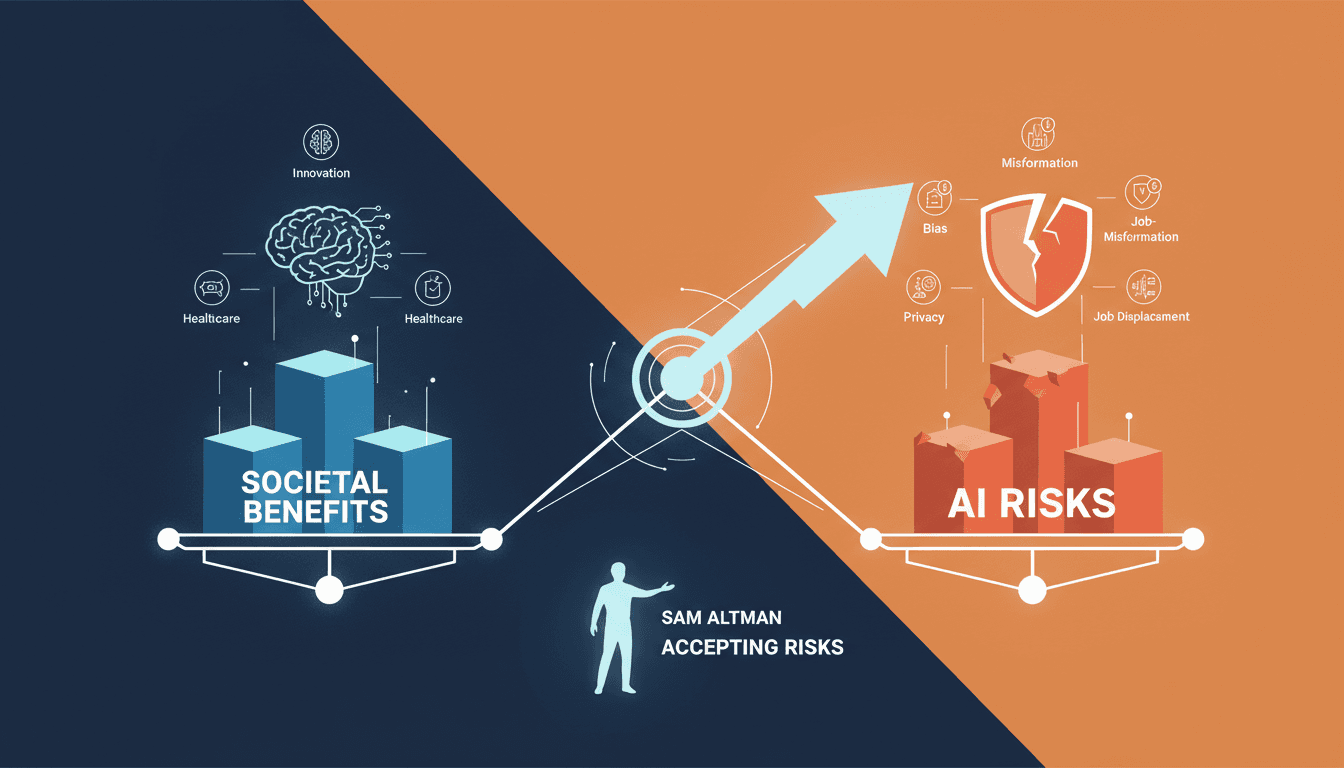
Why it matters
This debate influences the future of AI regulation, impacting innovation, safety, and market dynamics.
What happened (in 30 seconds)
- Sam Altman, CEO of OpenAI, stated that the benefits of AI justify accepting certain risks in an interview on October 4, 2026.
- Altman advocated for a lighter regulatory approach, contrasting with competitors like Anthropic, which favors stricter controls.
- The ongoing debate centers on balancing AI development speed with safety, with Altman arguing that potential harms are outweighed by significantly greater benefits.
The context you actually need
- Heightened discussions on AI safety and regulation have emerged, particularly following Anthropic CEO Dario Amodei’s essay advocating for slower development.
- U.S. policy under President Donald Trump has leaned towards minimal restrictions to maintain competitiveness with China, affecting how AI is developed and deployed.
- OpenAI’s principles emphasize democratization and broad access to AI technology, which Altman argues is essential for maximizing societal benefits.
What's really happening
Sam Altman’s recent remarks reflect a pivotal moment in the ongoing discourse surrounding artificial intelligence and its regulation. By advocating for a lighter-touch regulatory framework, Altman is positioning OpenAI against a backdrop of increasing scrutiny and calls for caution from various stakeholders, including competitors like Anthropic. This divergence in philosophy highlights a fundamental tension in the AI landscape: the balance between innovation and safety.
Altman’s assertion that the benefits of AI far outweigh the risks—described as “orders of magnitude more good stuff than bad stuff”—is a bold claim that seeks to shift the narrative from fear-based regulation to one that embraces potential. This perspective is rooted in the belief that restricting access to powerful AI technologies could stifle innovation and limit the societal benefits that could arise from widespread use. Altman argues that concentrating AI capabilities within a single lab or organization is an unacceptable trade-off, as it could hinder user agency and the democratization of technology.
The implications of this stance are significant. By promoting a regulatory environment that favors accessibility and innovation, OpenAI aims to maintain its competitive edge in a rapidly evolving market. This approach aligns with broader trends in the tech industry, where companies are increasingly advocating for self-regulation and flexibility in governance to foster growth. However, it also raises concerns about the potential for unintended consequences, as the rapid deployment of AI technologies could lead to unforeseen challenges and risks.
As the debate unfolds, the contrasting views between OpenAI and its peers will likely shape the regulatory landscape. Stakeholders, including policymakers, industry leaders, and the public, will need to navigate the complexities of AI development, weighing the potential benefits against the risks of misuse or harm. Altman’s comments serve as a rallying cry for those who believe in the transformative power of AI, but they also underscore the need for ongoing dialogue about how to responsibly harness this technology for the greater good.
Who feels it first (and how)
- Tech companies: They may face pressure to adopt similar risk acceptance strategies or risk falling behind in innovation.
- Policymakers: They will need to balance public safety concerns with the desire to foster a competitive tech environment.
- Consumers: Increased access to AI technologies could enhance user experiences but may also expose them to risks associated with unregulated AI applications.
What to watch next
- Regulatory developments: Monitor any new policies or guidelines emerging from government bodies that could impact AI deployment and safety.
- Industry responses: Watch how competitors like Anthropic react to Altman’s statements and whether they adjust their strategies accordingly.
- Public sentiment: Keep an eye on consumer and public reactions to AI technologies, as growing concerns could influence regulatory approaches.
Altman advocates for accepting some AI risks to maximize societal benefits.
The debate over AI regulation will intensify, influencing industry practices and policies.
The long-term effects of a lighter regulatory approach on AI safety and innovation remain to be seen.
Frequently Asked Questions
- Why it matters?
- This debate influences the future of AI regulation, impacting innovation, safety, and market dynamics.
- What happened (in 30 seconds)?
- Sam Altman, CEO of OpenAI, stated that the benefits of AI justify accepting certain risks in an interview on October 4, 2026. Altman advocated for a lighter regulatory approach, contrasting with competitors like Anthropic, which favors stricter controls. The ongoing debate centers on balancing AI development speed with safety, with Altman arguing that potential harms are outweighed by significantly greater benefits.
- What's really happening?
- Sam Altman’s recent remarks reflect a pivotal moment in the ongoing discourse surrounding artificial intelligence and its regulation. By advocating for a lighter-touch regulatory framework, Altman is positioning OpenAI against a backdrop of increasing scrutiny and calls for caution from various stakeholders, including competitors like Anthropic. This divergence in philosophy highlights a fundamental tension in the AI landscape: the balance between innovation and safety. Altman’s assertion that
- Who feels it first (and how)?
- Tech companies: They may face pressure to adopt similar risk acceptance strategies or risk falling behind in innovation. Policymakers: They will need to balance public safety concerns with the desire to foster a competitive tech environment. Consumers: Increased access to AI technologies could enhance user experiences but may also expose them to risks associated with unregulated AI applications.
- What to watch next?
- Regulatory developments: Monitor any new policies or guidelines emerging from government bodies that could impact AI deployment and safety. Industry responses: Watch how competitors like Anthropic react to Altman’s statements and whether they adjust their strategies accordingly. Public sentiment: Keep an eye on consumer and public reactions to AI technologies, as growing concerns could influence regulatory approaches.
Macro commentary, policy analysis, growth/inflation themes, and global outlooks.
"Contextual macro coverage that complements day-to-day market headlines."
— A47 Editor
OpenAI’s Altman says AI benefits warrant accepting some risks
OpenAI CEO Sam Altman stated that the benefits of artificial intelligence (AI) justify accepting certain risks associated with its development. This perspective comes amid ongoing discussions about the safety and ethical implications of AI technologi...
Curated tech headlines including AI stories.
"Influential aggregator surfacing the day’s top tech/AI links."
— A47 Editor
Sam Altman says OpenAI and Anthropic still hold fundamentally different worldviews on AI regulation, arguing that AI's benefits justify accepting some risks (Politico)
OpenAI CEO Sam Altman highlighted a fundamental difference in worldviews regarding AI regulation between OpenAI and its competitor Anthropic, asserting that the benefits of AI justify accepting certain risks. Altman emphasized that while some negativ...
Business and tech news excluding paywalled content.
"High-volume business/tech outlet with frequent AI coverage."
— A47 Editor
Sam Altman said 'the world should accept some bad things happening' for the benefits of AI
Sam Altman, CEO of OpenAI, stated that while some negative outcomes may arise from artificial intelligence (AI), the overall benefits will outweigh the risks. He emphasized that he does not accept catastrophic risks associated with AI, believing that...