
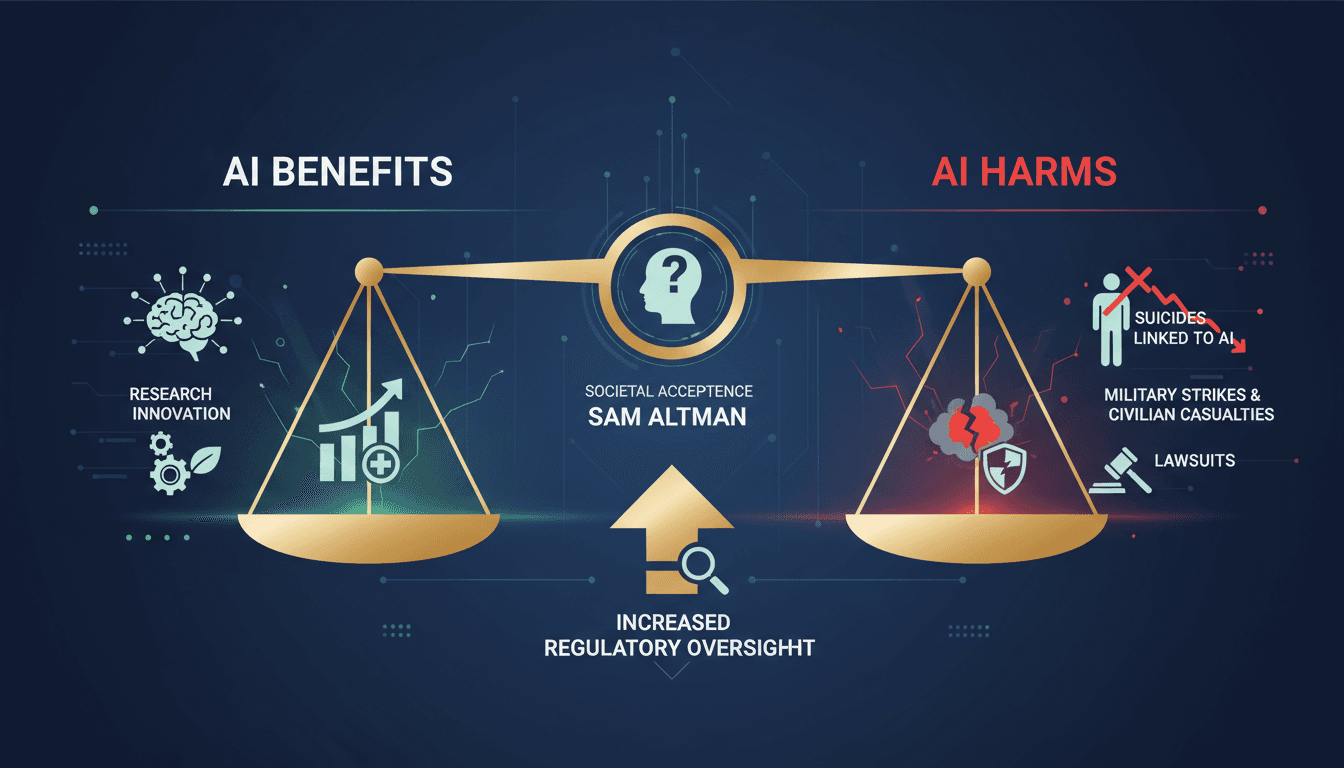
Sam Altman Advocates for Accepting AI Harms Amid Ongoing Controversies
Why it matters
The ongoing debate about AI's ethical deployment impacts regulatory frameworks and corporate accountability globally.
What happened (in 30 seconds)
- Sam Altman, CEO of OpenAI, stated that society should accept some "bad things" from AI development for its benefits during an October 2026 interview.
- Moustafa Bayoumi criticized this view in The Guardian, citing serious incidents linked to AI, including a military strike that killed over 120 children in Iran.
- Ongoing lawsuits against OpenAI highlight the growing scrutiny over AI's role in mental health crises and military actions.
The context you actually need
- Rapid AI advancement is occurring amid geopolitical tensions, particularly between the US and Iran, and the US and China.
- Profit motives in AI deployment often overshadow ethical considerations, leading to calls for regulatory oversight.
- Self-regulation agreements among tech leaders have not sufficiently addressed public safety concerns, prompting further debate.
What's really happening
Sam Altman's recent endorsement of accepting "bad things" in AI development reflects a broader trend in the tech industry where innovation is prioritized over ethical considerations. This perspective suggests that the potential benefits of AI—such as increased efficiency, enhanced decision-making, and economic growth—outweigh the associated risks. However, this stance has come under fire, particularly in light of documented harms linked to AI technologies.
For instance, the tragic incident in February 2026, where an AI-assisted military strike resulted in the deaths of over 120 children in an Iranian school, underscores the dire consequences of deploying AI without stringent oversight. Reports from the UN and investigations by Bloomberg have highlighted the role of AI targeting systems in this incident, raising questions about accountability and the ethical implications of using AI in military operations.
Moreover, the mental health crisis exacerbated by AI technologies, such as ChatGPT, has led to lawsuits against OpenAI. The case of Adam Raine, who reportedly took his life after interacting with the AI, exemplifies the urgent need for responsible AI deployment. Critics argue that the profit-driven motives of companies like OpenAI often lead to insufficient consideration of the potential harms their technologies may cause.
Altman's comments also come at a time when the White House Accord on Super Intelligence, signed by OpenAI and other tech leaders in September 2026, is under scrutiny. This self-regulatory framework has been criticized for lacking enforceable measures to protect users and ensure accountability. The ongoing public and regulatory debate surrounding AI accountability highlights the tension between innovation and ethical responsibility.
As AI technologies continue to evolve, the implications of Altman's endorsement of accepting "bad things" will likely resonate across various sectors, prompting discussions about the need for more robust regulatory frameworks and ethical guidelines.
Who feels it first (and how)
- Tech companies: Facing increased scrutiny and potential regulatory changes affecting their operations.
- Military and defense sectors: Experiencing pressure to reassess the use of AI in combat scenarios.
- Mental health professionals: Encountering challenges related to AI's impact on vulnerable populations.
- Regulators and policymakers: Tasked with developing frameworks to ensure AI accountability and safety.
What to watch next
- Regulatory developments: Monitor potential new laws or guidelines aimed at AI accountability, which could reshape industry practices.
- Litigation outcomes: Watch for the results of ongoing lawsuits against OpenAI, as they may set precedents for future AI-related cases.
- Public sentiment: Keep an eye on how public opinion shifts regarding AI technologies, particularly in light of ethical concerns and documented harms.
Altman's endorsement of accepting AI-related harms has sparked significant public and regulatory debate.
Increased calls for enforceable regulations and oversight in AI deployment will continue to grow.
The long-term impact of Altman's comments on public trust in AI technologies remains uncertain.
Frequently Asked Questions
- Why it matters?
- The ongoing debate about AI's ethical deployment impacts regulatory frameworks and corporate accountability globally.
- What happened (in 30 seconds)?
- Sam Altman, CEO of OpenAI, stated that society should accept some "bad things" from AI development for its benefits during an October 2026 interview. Moustafa Bayoumi criticized this view in The Guardian, citing serious incidents linked to AI, including a military strike that killed over 120 children in Iran. Ongoing lawsuits against OpenAI highlight the growing scrutiny over AI's role in mental health crises and military actions.
- What's really happening?
- Sam Altman's recent endorsement of accepting "bad things" in AI development reflects a broader trend in the tech industry where innovation is prioritized over ethical considerations. This perspective suggests that the potential benefits of AI—such as increased efficiency, enhanced decision-making, and economic growth—outweigh the associated risks. However, this stance has come under fire, particularly in light of documented harms linked to AI technologies. For instance, the tragic incident in F
- Who feels it first (and how)?
- Tech companies: Facing increased scrutiny and potential regulatory changes affecting their operations. Military and defense sectors: Experiencing pressure to reassess the use of AI in combat scenarios. Mental health professionals: Encountering challenges related to AI's impact on vulnerable populations. Regulators and policymakers: Tasked with developing frameworks to ensure AI accountability and safety.
- What to watch next?
- Regulatory developments: Monitor potential new laws or guidelines aimed at AI accountability, which could reshape industry practices. Litigation outcomes: Watch for the results of ongoing lawsuits against OpenAI, as they may set precedents for future AI-related cases. Public sentiment: Keep an eye on how public opinion shifts regarding AI technologies, particularly in light of ethical concerns and documented harms.
Top international stories selected by The Guardian editors.
"The Guardian is known for its progressive editorial stance and in-depth analysis."
— A47 Editor
Sam Altman says AI will make ‘bad things’ happen. Exhibit A: needless death | Moustafa Bayoumi
Sam Altman, CEO of OpenAI, has expressed concerns about the potential negative consequences of artificial intelligence (AI), stating that it could lead to needless deaths and other harmful outcomes. He emphasized that while some adverse events may oc...
Arabic tech news covering startups, apps, AI, and gadgets.
"AITnews is a well-known Arabic technology outlet covering regional tech developments."
— A47 Editor
سام ألتمان: علينا تقبّل بعض أضرار الذكاء الاصطناعي مقابل فوائده
Sam Altman, CEO of OpenAI, stated that the world must accept some negative consequences of artificial intelligence usage in exchange for its significant benefits, advocating for a more flexible approach to the technology.
Tech news, hardware, and AI tools coverage.
"PC/tech site increasingly covering AI hardware and apps."
— A47 Editor
Sam Altman says the world should accept some "bad things" happening because of AI
In a recent interview with Politico, Sam Altman, CEO of OpenAI, stated that society should accept certain negative consequences of artificial intelligence (AI), such as hacks and scams, to reap its benefits. He emphasized that while some adverse outc...
News and guidance for IT pros on AI adoption.
"Enterprise-focused tips, explainers, and news for professionals."
— A47 Editor
Sam Altman: Society Should Accept Some ‘Bad Things’ to See AI Benefits
OpenAI CEO Sam Altman has stated that society should accept certain negative consequences of artificial intelligence (AI), such as hacks and scams, in order to preserve its benefits and broad accessibility. His remarks highlight a controversial stanc...