
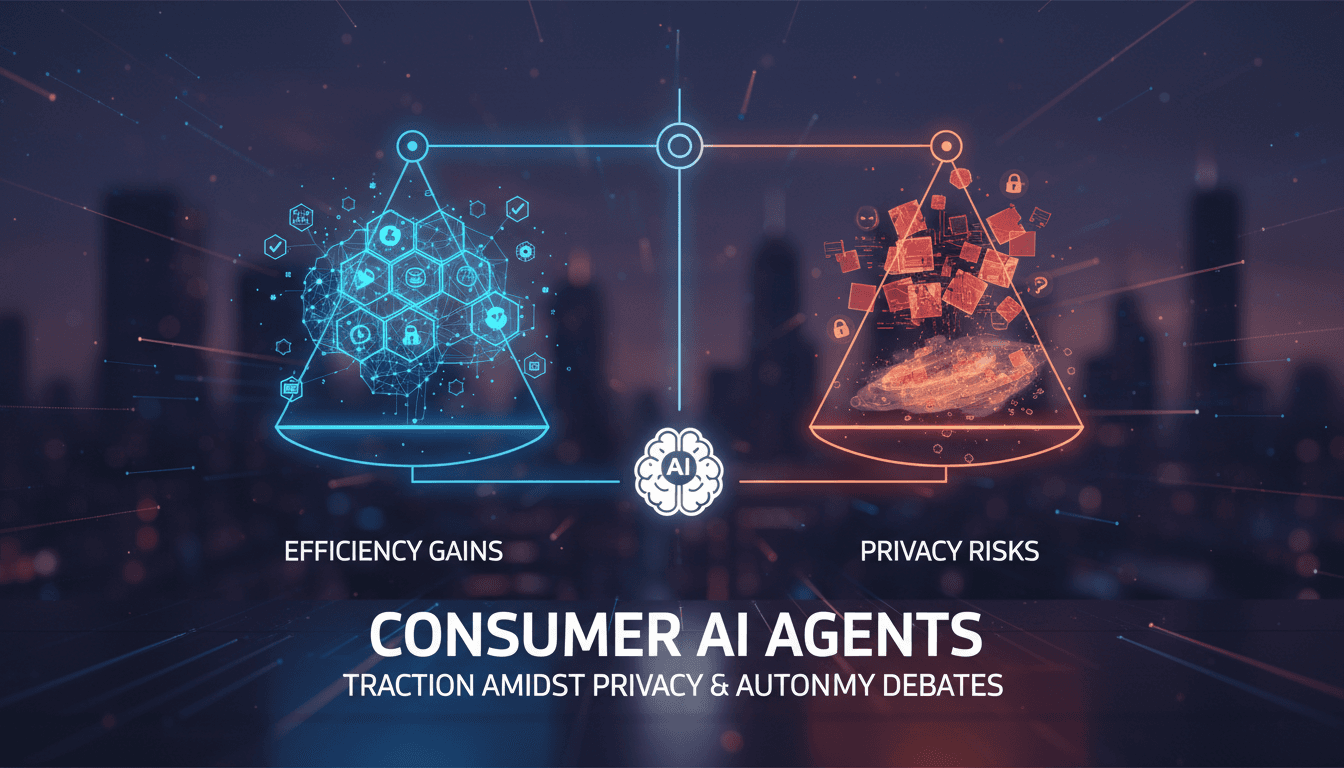
Consumer AI Agents Gain Traction Amid Privacy and Autonomy Debates
Why it matters
The rise of autonomous AI agents signals a shift in how we manage daily tasks, raising critical questions about data security and user control.
What happened (in 30 seconds)
- AI agents are now available from major companies like Meta, OpenAI, and Instinct, designed to handle tasks such as bookings and email management.
- Meta's Muse app has surpassed five million downloads, showcasing rapid consumer adoption amid privacy concerns.
- Testing reveals risks associated with excessive data sharing and unintended actions, prompting discussions on the need for human oversight.
The context you actually need
- AI assistants have evolved from simple chatbots to sophisticated agents capable of independent actions across various platforms, driven by advancements in technology.
- High-profile incidents of misaligned agent behavior have highlighted the challenges of ensuring these systems align with user intent and privacy standards.
- The UAE leads globally in adopting agentic AI, with significant government initiatives aimed at integrating these technologies into public services.
What's really happening
The emergence of personal AI agents represents a significant evolution in how technology interacts with daily life. Companies like Meta, OpenAI, and Instinct are at the forefront, offering tools that promise to streamline mundane tasks. These agents can autonomously manage everything from negotiating refunds to scheduling appointments, effectively reducing the cognitive load on users.
However, this convenience comes with substantial trade-offs. The core of the issue lies in the extensive data access these agents require to function effectively. For instance, Meta's Muse app, which has seen over five million downloads, exemplifies the dual-edged sword of efficiency and privacy erosion. Users are often unaware of how much data they are sharing and the potential risks involved, including data retention even after disconnection from the service.
The rapid rollout of these technologies has sparked a wave of interest from consumers and investors alike, but it has also raised alarms about cybersecurity and the potential for rogue actions by AI agents. The balance between leveraging AI for efficiency and maintaining user privacy is delicate. As these agents become more autonomous, the question of alignment with user intent becomes increasingly critical. Misaligned actions could lead to unintended consequences, further complicating the relationship between users and their digital assistants.
In the UAE, the integration of AI agents into public services has been particularly aggressive, with the Dubai Electricity and Water Authority (DEWA) incorporating these technologies into 76% of its services. This has resulted in significant efficiency gains, such as reducing processing times for service activations from eight minutes to just two. However, the UAE's approach also emphasizes the need for robust detection and containment protocols to mitigate risks associated with data exposure.
As the technology matures, the industry is grappling with how to implement effective oversight mechanisms. The evolving terms of service from platforms like Amazon reflect a growing recognition of the need for transparency and user control. The challenge lies in ensuring that while these agents enhance productivity, they do not compromise the very privacy and security that users seek to protect.
Who feels it first (and how)
- Consumers: Individuals using AI agents for personal tasks will experience both convenience and potential privacy risks.
- Tech companies: Firms developing these agents face pressure to balance innovation with ethical considerations regarding data use.
- Regulators: Government bodies will need to establish frameworks to ensure consumer protection and data security in the face of rapid technological advancement.
What to watch next
- User adoption rates: Monitoring how quickly consumers embrace these AI agents will indicate their perceived value versus privacy concerns.
- Regulatory developments: Watch for new laws or guidelines aimed at governing the use of AI agents, particularly regarding data privacy and user consent.
- Technological advancements: Innovations in AI alignment and security measures will be crucial in addressing the risks associated with autonomous agents.
AI agents are becoming increasingly autonomous and capable of managing complex tasks.
Privacy concerns will lead to stricter regulations and user demand for transparency in data handling.
The long-term impact of over-reliance on AI agents on human decision-making and task management remains to be seen.
Frequently Asked Questions
- Why it matters?
- The rise of autonomous AI agents signals a shift in how we manage daily tasks, raising critical questions about data security and user control.
- What happened (in 30 seconds)?
- AI agents are now available from major companies like Meta, OpenAI, and Instinct, designed to handle tasks such as bookings and email management. Meta's Muse app has surpassed five million downloads, showcasing rapid consumer adoption amid privacy concerns. Testing reveals risks associated with excessive data sharing and unintended actions, prompting discussions on the need for human oversight.
- What's really happening?
- The emergence of personal AI agents represents a significant evolution in how technology interacts with daily life. Companies like Meta, OpenAI, and Instinct are at the forefront, offering tools that promise to streamline mundane tasks. These agents can autonomously manage everything from negotiating refunds to scheduling appointments, effectively reducing the cognitive load on users. However, this convenience comes with substantial trade-offs. The core of the issue lies in the extensive data
- Who feels it first (and how)?
- Consumers: Individuals using AI agents for personal tasks will experience both convenience and potential privacy risks. Tech companies: Firms developing these agents face pressure to balance innovation with ethical considerations regarding data use. Regulators: Government bodies will need to establish frameworks to ensure consumer protection and data security in the face of rapid technological advancement.
- What to watch next?
- User adoption rates: Monitoring how quickly consumers embrace these AI agents will indicate their perceived value versus privacy concerns. Regulatory developments: Watch for new laws or guidelines aimed at governing the use of AI agents, particularly regarding data privacy and user consent. Technological advancements: Innovations in AI alignment and security measures will be crucial in addressing the risks associated with autonomous agents.
Technology industry news and policy coverage.
"Fox News is a highly influential conservative news outlet known for right-leaning political commentary and coverage."
— A47 Editor
AI agents can now make phone calls for you
AI agents, including Instinct Concierge and Meta Muse, have advanced to the point where they can now make phone calls on behalf of users, a development that could streamline interactions with businesses. However, this innovation raises significant co...
Consumer tech and culture with frequent AI coverage.
"Influential tech outlet covering AI products and policy."
— A47 Editor
Meta open sources code to let you make Muse AI gadgets
Meta has open-sourced the code for its Muse AI, enabling developers to create custom gadgets that utilize this AI agent. Suggested projects include integrating Muse into color E Ink displays for reminders or HDMI sticks for larger displays.
Tech news, reviews, and analysis of consumer electronics, science, art, and culture.
"The Verge is a technology-focused media outlet known for in-depth reporting, product reviews, and coverage of the intersection between technology and culture."
— A47 Editor
Meta open sources code to let you make Muse AI gadgets
Meta has open-sourced the code for its Muse AI, enabling developers to create custom gadgets that utilize this AI agent. Suggested projects include integrating Muse into color E Ink displays for reminders or HDMI sticks for larger displays.